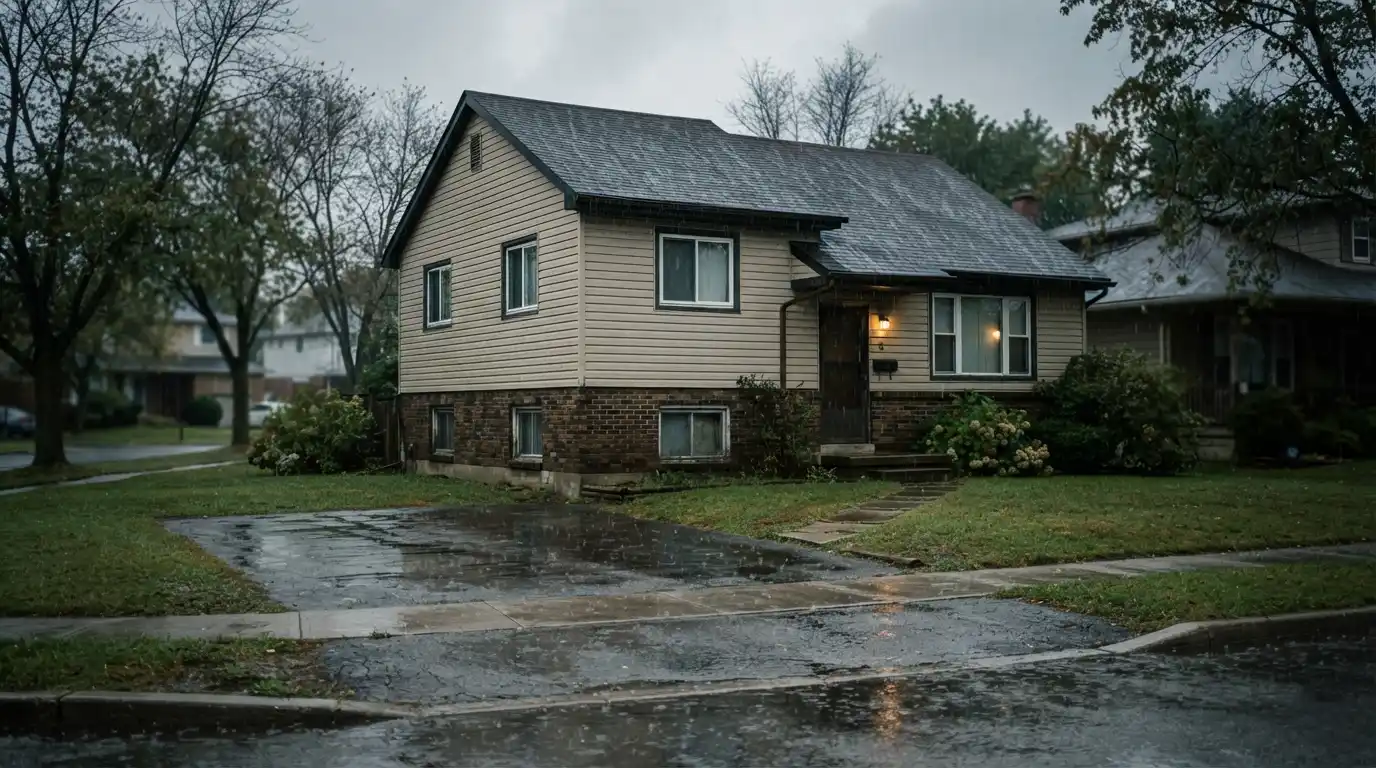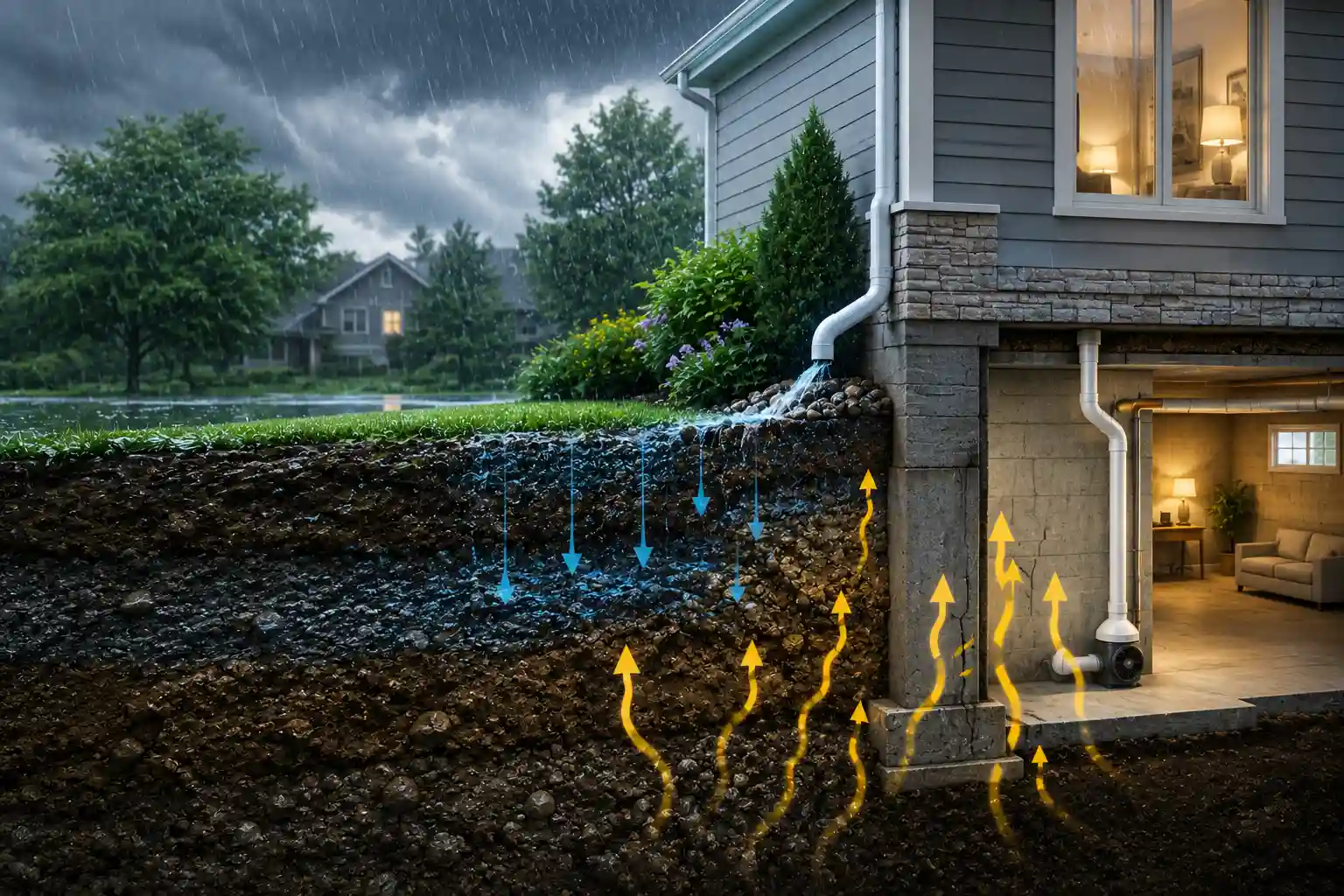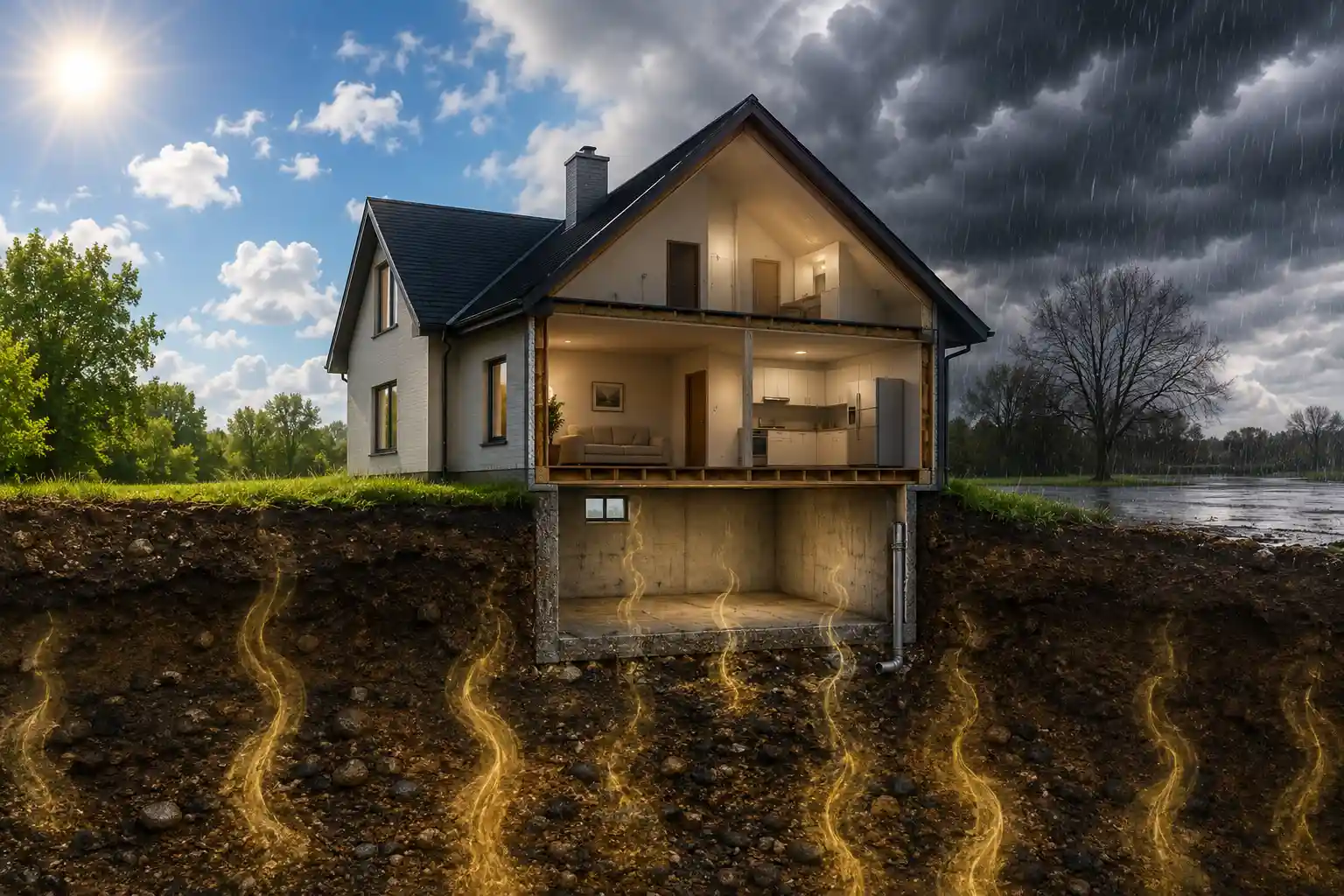

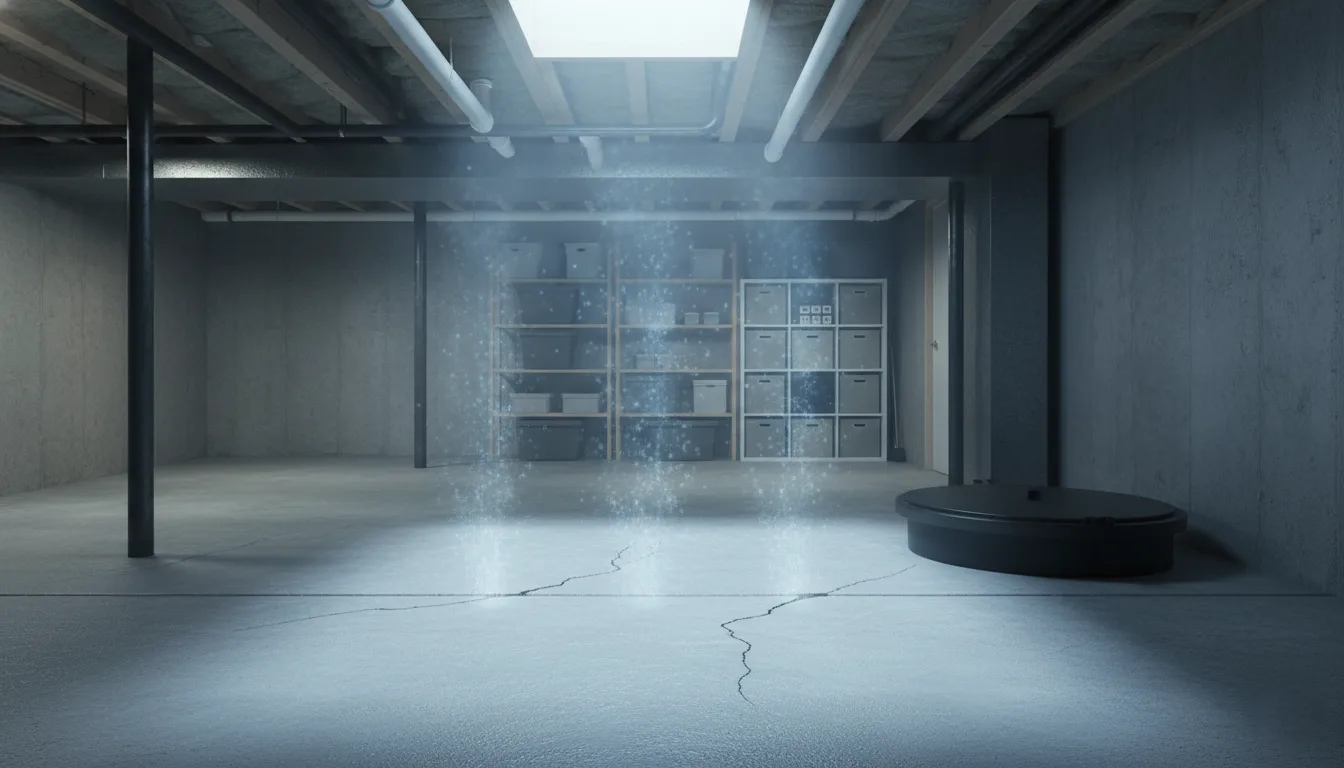
Radon come from the underground decay of uranium and thorium in rocks and soil. It migrates through the ground and can seep into homes and buildings through foundation cracks, gaps, or well water, where it may accumulate to dangerous levels.
Homeowners in Bayside, Brown Deer, Brookfield, and Cudahy, WI often ask this question after a home sale, a renovation, or a neighbor’s high test result. The short answer: radon isn’t caused by pollution, plumbing, or building materials in most cases it’s a geological process happening underneath the house, every day, whether anyone notices it or not.
The Science: How Uranium Becomes Radon Gas
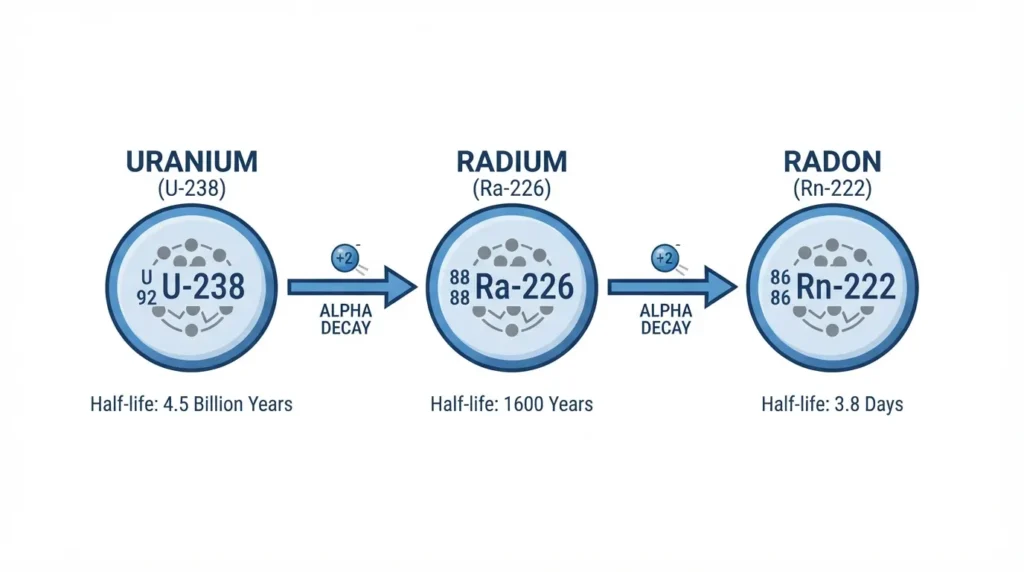
Uranium is present in trace amounts in nearly all soil and rock. Over thousands of years, it decays through a predictable chain of radioactive elements. Radium-226 is one link in that chain, and when radium decays, it releases radon-222 as a gas.
Unlike its solid parent elements, radon is a gas at room temperature. That means it can move. It travels through pore spaces, cracks, and fractures in soil and rock until it reaches open air including the air inside a house sitting on top of it.
This is why radon levels vary so much from one property to the next, even on the same street. Local geology, soil permeability, and bedrock type all affect how much radon is generated and how easily it migrates upward. To understand why this matters for a home’s air quality, see what radon is and why it’s dangerous.
How Radon Enters a Home
Radon follows the path of least resistance. Because indoor air pressure is typically lower than the pressure in the soil beneath a foundation, homes act like a vacuum, pulling radon-laden soil gas inside. Common entry points include:
- Cracks in the foundation slab or basement floor
- Gaps around sump pump pits and floor drains
- Openings around utility pipes and electrical conduits
- Hollow block foundation walls
- Exposed dirt floors in crawl spaces
- Well water, in homes served by private wells
Radon concentrations tend to be highest in basements and lowest above-grade levels, since those spaces sit closest to the soil source. This is a major reason homes develop elevated radon concentrations even when neighboring properties test differently.
Is Radon Only a Problem in Old Homes?
No. New construction, older homes, homes with basements, and homes on slab foundations can all have elevated radon. Construction quality and foundation sealing affect how much radon enters, but they don’t eliminate the source the soil underneath.
Radon-resistant new construction (RRNC) techniques reduce risk by sealing entry points and installing a passive vent pipe during the build. But even RRNC homes should be tested after move-in, since passive systems don’t always keep levels below the EPA action level on their own.
What Radon Levels Mean
The EPA measures radon in picocuries per liter of air, written as pCi/L. The EPA action level is 4.0 pCi/L. At or above that level, the EPA and the U.S. Surgeon General recommend fixing the home. Because there is no known safe threshold for radon exposure, the EPA also recommends considering mitigation for levels between 2.0 and 4.0 pCi/L.
Radon is classified as a Group 1 (Class A) human carcinogen by the World Health Organization’s International Agency for Research on Cancer. It is the leading cause of lung cancer among non-smokers in the United States and the second leading cause overall, according to EPA estimates.
Testing is the only way to know a home’s actual level there is no reliable way to predict radon based on location, age, or appearance alone. If you haven’t tested yet, learn why every homeowner should get a radon test before assuming risk based on guesswork.
Does Radon Come From Anything Other Than Soil?
Soil gas is the dominant source, but radon can also enter a home through:
- Well water — radon dissolved in groundwater can be released into indoor air during showering, washing, and other water use.
- Building materials — certain stone, concrete, or granite products contain trace uranium, though this is rarely a significant contributor compared to soil gas.
- Natural gas — in rare cases, radon can enter through gas lines, though modern processing removes most of it before it reaches homes.
For homes on well water, water testing is a separate process from air testing. Homeowners in Wisconsin relying on private wells should test both air and water to get a complete picture.
How Milwaukee-Area Homes Are Affected
Wisconsin sits on soil and bedrock formations known for elevated uranium content, which is why the state consistently reports some of the highest average indoor radon levels in the country. Communities across Bayside, Brown Deer, Brookfield, and Cudahy, WI sit on these same geological formations, meaning elevated radon is common regardless of a home’s age, size, or price point.
Basement additions, finished lower levels, and sump pump installations can all change how radon moves through a house, sometimes increasing indoor concentrations even in homes that previously tested low. Retesting after any major foundation or basement work is standard practice.
How Radon Problems Get Fixed
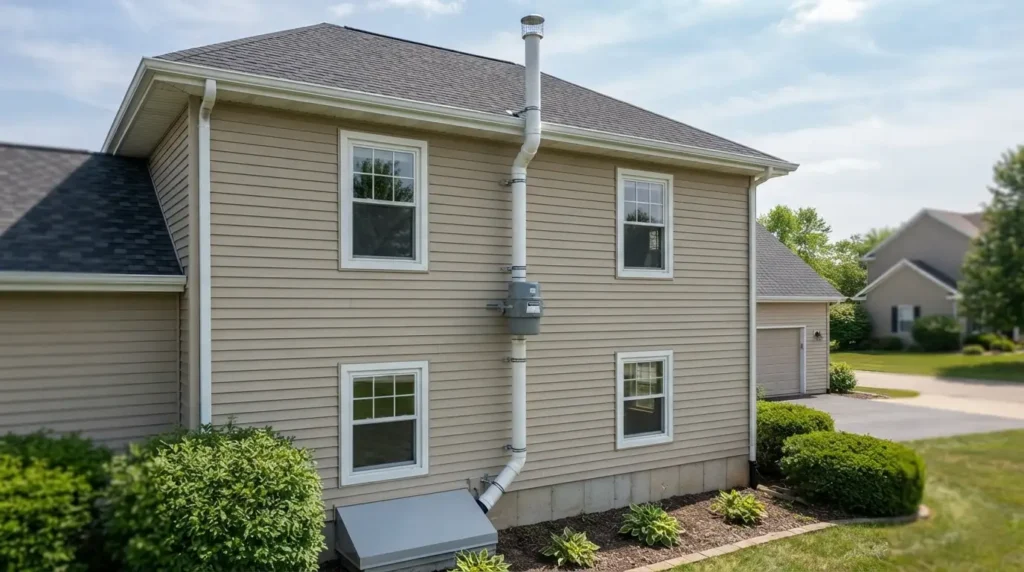
Once a home tests at or above 4.0 pCi/L, the standard fix is a mitigation system, most commonly sub-slab depressurization (SSD). An SSD system uses a radon fan connected to a vent pipe drawn from beneath the foundation slab, pulling soil gas from under the home and venting it safely above the roofline before it can enter living spaces.
A properly designed system typically reduces radon levels by 90% or more. To understand what installation involves, see how a radon mitigation system works and why it matters for long-term indoor air safety.
Mitigation and testing should always be performed by a certified professional. Look for technicians certified by the National Radon Proficiency Program (NRPP) or the National Radon Safety Board (NRSB), and systems installed to ANSI/AARST standards, the consensus standards recognized by the EPA for radon control.
FAQ
Does every home have radon?
Nearly every home has some detectable radon, since it comes from soil found virtually everywhere. Levels vary widely; testing is the only way to know a specific home’s concentration.
Can radon come from inside the house, not just the ground?
The vast majority of indoor radon originates from soil gas beneath the foundation. Well water and certain building materials can contribute smaller amounts.
Is radon more common in basements?
Yes. Basements sit closest to the soil source and typically have the most direct entry points, so they usually show the highest readings in a home.
Can I smell or see radon in my home?
No. Radon is colorless and odorless. Specialized testing devices are the only way to detect it.
What’s the fastest way to know if my home has a radon problem?
Schedule a professional radon test. Short-term tests can provide results within a few days, giving a clear reading against the 4.0 pCi/L action level.
Conclusion
Radon is a naturally occurring risk that can be measured and corrected. Milwaukee Radon Mitigation provides certified testing and mitigation services for homeowners in Bayside, Brown Deer, Brookfield, Cudahy, and the surrounding Milwaukee area. Call (414) 455-7279 to schedule a radon test or get a mitigation system quote.
Knowing the source of radon helps households take informed steps to protect themselves against indoor air quality problems. Regular testing, proper mitigation, and long term monitoring can significantly reduce exposure risks and create a healthier living environment for everyone inside the property.