
If you are reading this in an oversized window of information, the first thing you will want is a quick snapshot of why radon matters, what counts as a safe level, and how a device can help you protect the four‑walled home of your dreams.
The usually invisible element rarely draws attention, yet it silently leaches into the air in 13% of U.S. homes. In the United States the EPA calls radon the second leading cause of lung cancer.
The difference between a “deadly dose” and an everyday level can be clarified in fewer than two sentences:
- A radon level below four picocuries per liter is effectively safe for most homeowners.
- Anything above four indicating a high risk and a need for mitigation.
That is the synthesis that high‑quality radon testing devices provide.
Table of Contents
What Is Radon?
The first step to understanding a radon testing device is to learn about radon itself. Radon is a noble gas that is formed by the tiny invisible decay of uranium found in many types of rock and soils. Because it is a gas, it slips easily through cracks and field gaps into building ventilation systems.
- Mineral soils with a high uranium concentration produce higher radon.
- Foundations that are sealed or that have a concrete slab trap can create a natural well for the gas.
- Water from wells or aquifers that contains radium can also release radon into the home during showering or dish washing.
Radon is a broad‑band gas that does not contain O₂ or H₂O, making it odourless, colourless, and tasteless. The only sign that your house may have radon, if not tested, is an increase in the risk of developing lung cancer.
Health Risks and Statistics
Over the past fifty years the U.S. National Cancer Institute has identified an estimated 21,500 deaths a year caused by radon–related lung cancer. That figure is comparable to the annual deaths associated with contaminated tap water.
- The majority of radon‑related deaths are from smokers who also exposed themselves to high indoor radon.
- Non‑smokers in homes with radon above the EPA action level still experience an additional risk of 4–8% over a lifetime.
If you were to build a family of four in a typical high‑radon county, the health outcome could change dramatically if no testing takes place. That is why a radon testing device is indispensable.
How Radon Enters a Home
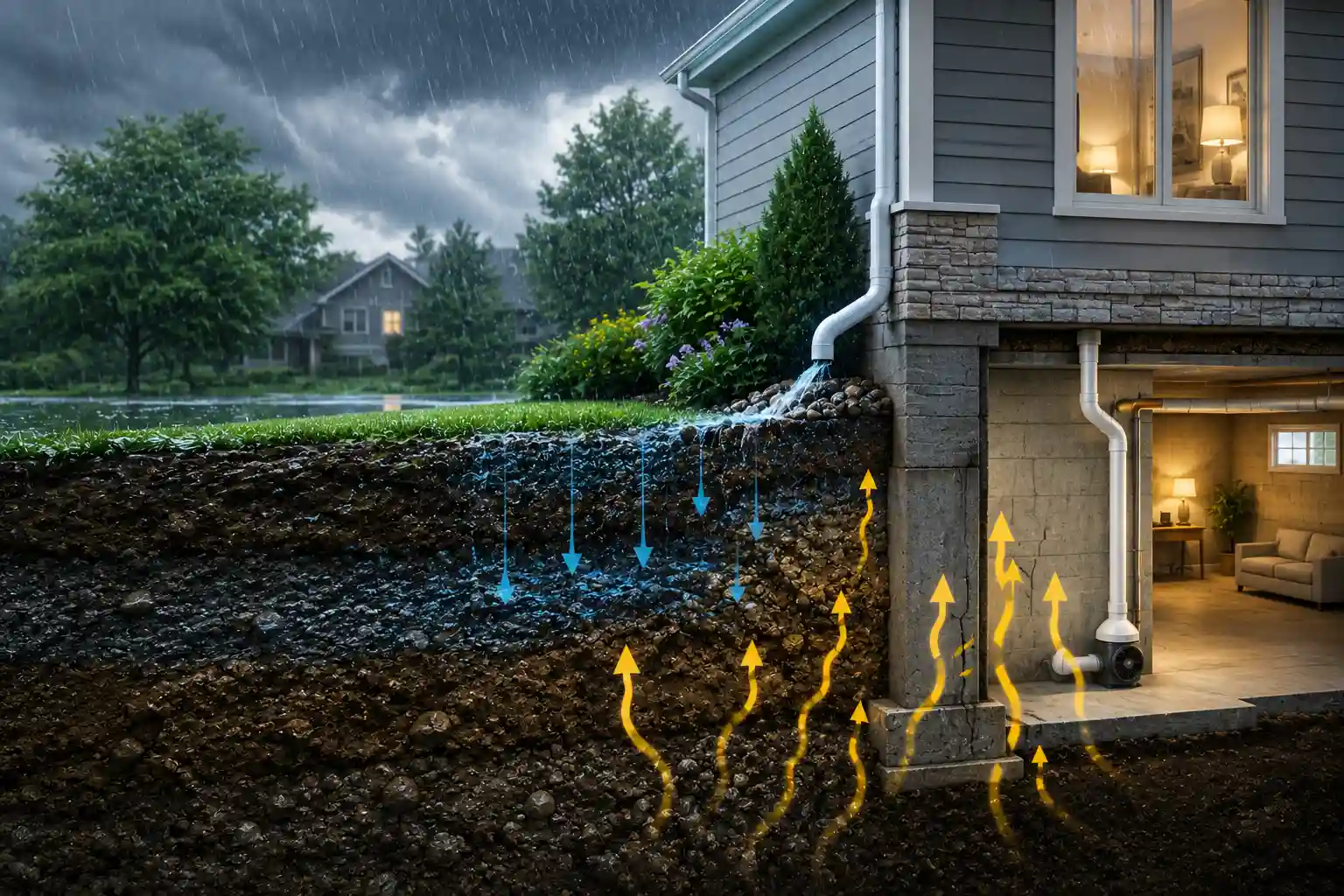
The science behind a radon testing device relies on how radon migrates. In most cases the salt and limestone of the ground release radon into the air. There are two primary airway routes:
- Soil gas infiltration through cracks, foundations, and moisture barriers.
- Ground‑water intrusion.
The lower a house is in relation to the ground level, the greater the risk of radon seepage. For example, 50‑foot basements can accumulate higher concentrations than a raised‑floor structure.
Measurement Science
A radon testing device measures radon concentration in counts of alpha particles tiny bursts of energy emitted when radon decays. In the laboratory, the same decay events are measured in units of picocuries per liter (pCi/L) or becquerels per cubic meter (Bq/m³).
- A higher luminous output on the device records a greater alpha‑particle count.
- The radon testing device calibrates to convert these counts to the standardized unit of pCi/L.
All reputable devices rely on a PICGA or ionization chamber. Both are fundamentally capable of capturing the small amounts of radon that a human eye never sees.
Types of Radon Testing
Below is an overview of common approaches.
Passive Testing Devices
These are the most widely used and most affordable for homeowners. They rely on an encapsulated absorbing material that collects radon over a period of time.
| Feature | What to Expect | Typical Duration |
|---|---|---|
| Charcoal Canister | 47 mL of activated charcoal | 48–30 days |
| Track‑Sheet | Short‑term snapshot of alpha hit counts | 48–14 days |
| Crystal Micro‑Track | Very high sensitivity but needs a lab | 28–90 days |
The main benefit stands apart from the fact that you do not need any external power source. The downside is you only learn after the test is finished and sent to a lab.
Active Testing Devices
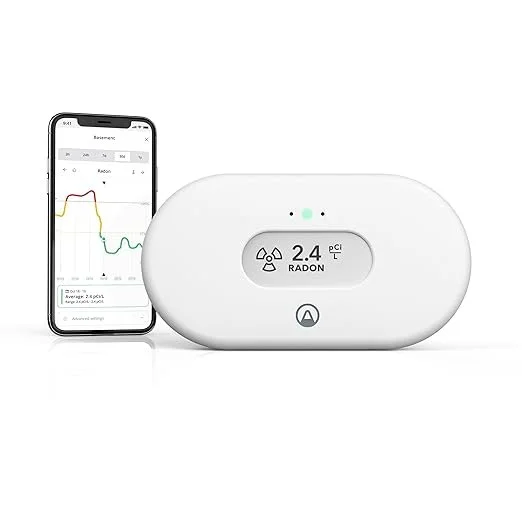
Active devices spin air through a sensor at a constant rate. Those that send sensor data back to a display deliver instant feedback.
| Feature | What to Expect | Typical Price |
|---|---|---|
| Digital Volumetric Monitor | Real‑time reading | $200–$360 |
| Battery‑Operated Sensor | Portable, no external power | $250–$500 |
| Wireless Smart Monitor | Sends data to a smartphone app | $300–$450 |
You can record peaks that may indicate due to wind, HVAC cycling, or use of a water‑producing appliance.
Digital Showers and Hard‑Water Monitors
The radon testing device number eight focuses on water. On some occasions, heavy indoor radon leak can be due to radium in well water. These small permanent monitors track radon only in the water supply.
Selecting the Right Radon Testing Device
The decision factors you want to consider:
- Testing Frequency – The need for a one‑time check or a permanent real‑time display.
- Testing Detail – A just‑above‑action level or a quick snapshot guide.
- Budget – A small investment (≈ $15) or a mid‑range ($200–$350) for continuous data.
- Convenience – Do you prefer a “plug‑and‑forget” device or do you want a device that alerts you via an app?
Consider the layout of your home. If you trust that a single passive test will be enough, save on cost. If your home sits in a high‑radon county, bring in a radon testing device that has an external display that logs the reading.
How to Conduct a Test
Preparation
- Locate a low‑draft area usually a room below a slab or drop‑in a basement.
- Remove mats, rugs, and lighting fixtures.
- Keep the door or window closed during the test.
For Passive Devices
- Open the charcoal canister or place the track‑sheet in a container.
- Seal it properly so air does not slip out.
- Return the device after the recommended period.
For Active Devices
- Align the Air‑Pump inlet and outlet.
- Use the device according to the instruction manual.
- Observe the reading for a set duration (most recommended 24–72 hours).
Interpreting Results
Using a radon testing device that records in pCi/L gives you the immune to get confused.
- Below 1 pCi/L – Low level. Monitoring may still be prudent.
- Between 1–4 pCi/L – Moderate level. Mitigation is optional but recommended for new homes.
- Above 4 pCi/L – High level. The EPA action level. Mitigation is highly recommended.
When you read a radon testing device showing numbers beyond those thresholds, remember that it is only for the specific location tested. The radon level can vary from room to room.
Radon Mitigation and Workflows
If a radon testing device shows high results, you have at least three broad mitigation paths.
Sub‑slab Venting
The most common approach; a vent pipe fans radon from the ground out of the house.
Heat‑Recovery Ventilation
A system that exchanges fresh air for stale, while controlling indoor pressure.
ACH and Sealing
Low-speed air currents with full‑house sealing may reduce indoor pressure, thereby preventing air from drawing in radon.
Pricing Quotes and Cost Breakdown
Below is a quick pricing snapshot for typical radon testing devices and associated mitigation.
| Category | Device Cost (approx.) | Mitigation System |
|---|---|---|
| Charcoal Canister | $12–$35 | N/A |
| Track‑Sheet | $15–$45 | N/A |
| Digital Volumetric Monitor | $200–$350 | $600–$1,100 |
| Battery‑Operated Smart Monitor | $250–$500 | $800–$1,300 |
| Permanent Smart Monitor | $300–$450 | $900–$1,500 |
FAQs
How long should I keep a passive detector before getting a lab readout?
The optimal period is 48–90 days. The longest is when the detector stabilizes at a steady rate under normal environmental conditions.
Can I rely on a single home radon testing device to protect the basement only?
A single room detector may miss radon hotspots in other parts. Professional advice is best for a full‑home assessment.
Do I need professional help to use an active radon testing device?
No, the device performs autonomous filtering and displays in real time. Just follow the manual.
How does weather affect radon readings?
Wind, temperature shifts, or pressure dips can cause level spikes. A monitoring duration longer than 14 days averages out variability.
Are there indoor radon testing kits that can be reused?
Many smart monitors are rechargeable and durable for multiple usages.
Conclusion
Radon is an invisible hazard that must be quantified by a trustworthy radon testing device. By understanding how the science works, how to deploy the right device, and how to interpret the data, the homeowner can transform an invisible risk into a simple number on a screen.
If your tests show a level above four pCi/L, the path forward is clear: install or upgrade a mitigation system, and then retest with a radon testing device to confirm that the new level stays below the action threshold.
Remember that a home is more than a roof; it is a body that deserves air of the highest quality. Your next step is to loop the local service centre. Call 414 455 7279 for guidance, a quote, and a certified technician who will bring you peace of mind.
Radon Testing Devices Explained Monitors Machines Accuracy is the stepping stone toward a future where your indoor air matters.