
Passive vs active Radon RRNC refers to two approaches to radon control in new construction. Passive systems rely on natural airflow to vent radon, while active systems use a fan to actively remove soil gas. Active systems provide more reliable radon reduction, especially in high-risk areas.
The difference between passive vs active RRNC is ventilation force. A passive radon system uses natural air pressure to vent radon, while an active radon system uses a fan to continuously pull radon from beneath the foundation, resulting in more consistent radon reduction.
Passive radon system
- No fan or electricity
- Lower installation cost
- Effectiveness depends on soil and pressure
- Can be upgraded later
Active radon system
- Uses a radon fan
- Higher radon reduction reliability
- Slight operating cost
- Best for high radon areas
Table of Contents
What Does RRNC Mean?
RRNC stands for radon resistant new construction. It is a set of design features that a builder incorporates during framing, concrete pour, and final finishing. The components typically include:
• A sealed concrete slab and foundation walls
• A vent pipe that runs from the sub slab space to the roof
• In the case of an active radon system, a fan powered by electricity
• A clear exhaust path that releases radon above the home where it dissipates
When these elements are installed correctly, the system can reduce indoor radon concentrations by up to ninety percent. Whether a builder chooses a passive vs active radon-resistant new construction configuration determines if a fan is needed.
Installation Steps for a Passive radon system
A well-executed passive radon system involves several precise steps, each designed to eliminate radon entry points.
- Seal all cracks, utility penetrations, and control joints in the slab with a high grade sealant.
- Install a vent pipe that passes through the slab and rises vertically through the wall or crawl space.
- Route the pipe through the attic or roof framing, ensuring a smooth rise without sharp bends.
- Extend the pipe above the roofline by at least ten feet to promote dispersion.
- Fit a termination cap that prevents rain, debris, and animals from entering the pipe.
- Conduct a pressure test to verify that the vent system creates the intended low pressure.
The entire process can be completed in a single day under normal weather conditions. Because the Passive radon system has no moving parts, maintenance after construction is limited to occasional visual inspections of the pipe and cap.
Installation Steps for an Active radon system
Installing an Active radon system adds a few extra tasks compared to a Passive radon system, but the overall workflow remains similar.
- Seal the slab and foundation with the same high-grade sealant used for a passive approach.
- Install the vent pipe as described in the passive method, ensuring the pipe is airtight.
- Mount the radon fan in the attic, crawl space, or mechanical room. The fan must be securely attached to a solid surface.
- Wire the fan to a dedicated 120-volt circuit with a switch or thermostat. Use a surge protector to guard against power spikes.
- Connect the fan to the vent pipe using a flexible coupling that maintains an airtight seal.
- Test the fan’s airflow with a calibrated anemometer to confirm that it achieves the recommended 0.3 cubic feet per minute.
- Verify that the termination point on the roof is clear of obstructions and that the exhaust direction does not blow radon back toward windows or doors.
Once installed, an Active radon system should be checked annually to ensure the fan continues to run at the proper speed and that the electrical connections remain secure.
Performance Comparison: Passive vs Active RRNC
Below is a side-by-side comparison that highlights how each approach performs under typical conditions.
| Feature | Passive radon system | Active radon system |
|---|---|---|
| Mechanism | Relies on natural pressure differentials | Uses a powered fan to create constant low pressure |
| Initial cost | Low – often $500 to $1,200 total | Higher – usually $1,200 to $2,500 total |
| Ongoing cost | None, no electricity needed | Small electricity bill, $2 to $3 per month |
| Maintenance | Visual inspection of vent pipe, replace sealant after decades | Fan inspection, replace fan after 8‑10 years, check wiring |
| Seasonal reliability | May be less effective in winter if house is tightly sealed | Consistently effective year round |
| Typical radon reduction | 70 % to 85 % | 85 % to 95 % |
This table demonstrates that while a Passive radon system offers a lower upfront investment, an Active radon system provides greater certainty of performance regardless of weather.
The decision in a passive vs active RRNC analysis ultimately depends on budget, climate, and how much ongoing maintenance you are willing to accept.
Factors to Consider When Choosing a Passive vs Active RRNC Solution
Climate and Seasonal Pressure
In colder regions, homes are built tighter to improve energy efficiency. This tight envelope reduces the natural pressure differential that a Passive radon system depends on, making an Active radon system a safer bet. In milder climates the natural airflow is sufficient for a Passive radon system, keeping costs low.
Local Building Codes
Several states have adopted the ICC 600 standard, which requires a fan to be installed in new construction. In those jurisdictions, the Active radon system becomes the mandatory choice for a Passive vs Active RRNC plan. Other states only require the vent pipe and sealing, allowing the Passive radon system to satisfy the code.
Builder Experience
Some contractors specialize in Passive radon system installations and can achieve excellent sealing with minimal waste. Others have more experience with the electrical work required for an Active radon system.
Choosing a builder who is comfortable with the system you select will improve installation quality and reduce errors in a Passive vs Active RRNC project.
Budget Constraints
The upfront price difference between a Passive radon system and an Active radon system can be significant. If initial cash flow is limited, a Passive radon system may be the practical choice.
However, if your long term goal is to guarantee the lowest possible radon levels, the extra expense of an Active radon system may be justified in your Passive vs Active RRNC cost benefit analysis.
Future Home Modifications
If you plan to finish a basement, add a crawl space, or build additional rooms, an Active radon system provides more flexibility. The fan can accommodate increased sub slab volume without requiring major redesign, making it a forward looking option in a Passive vs Active RRNC strategy.
Radon Science and Health Impact
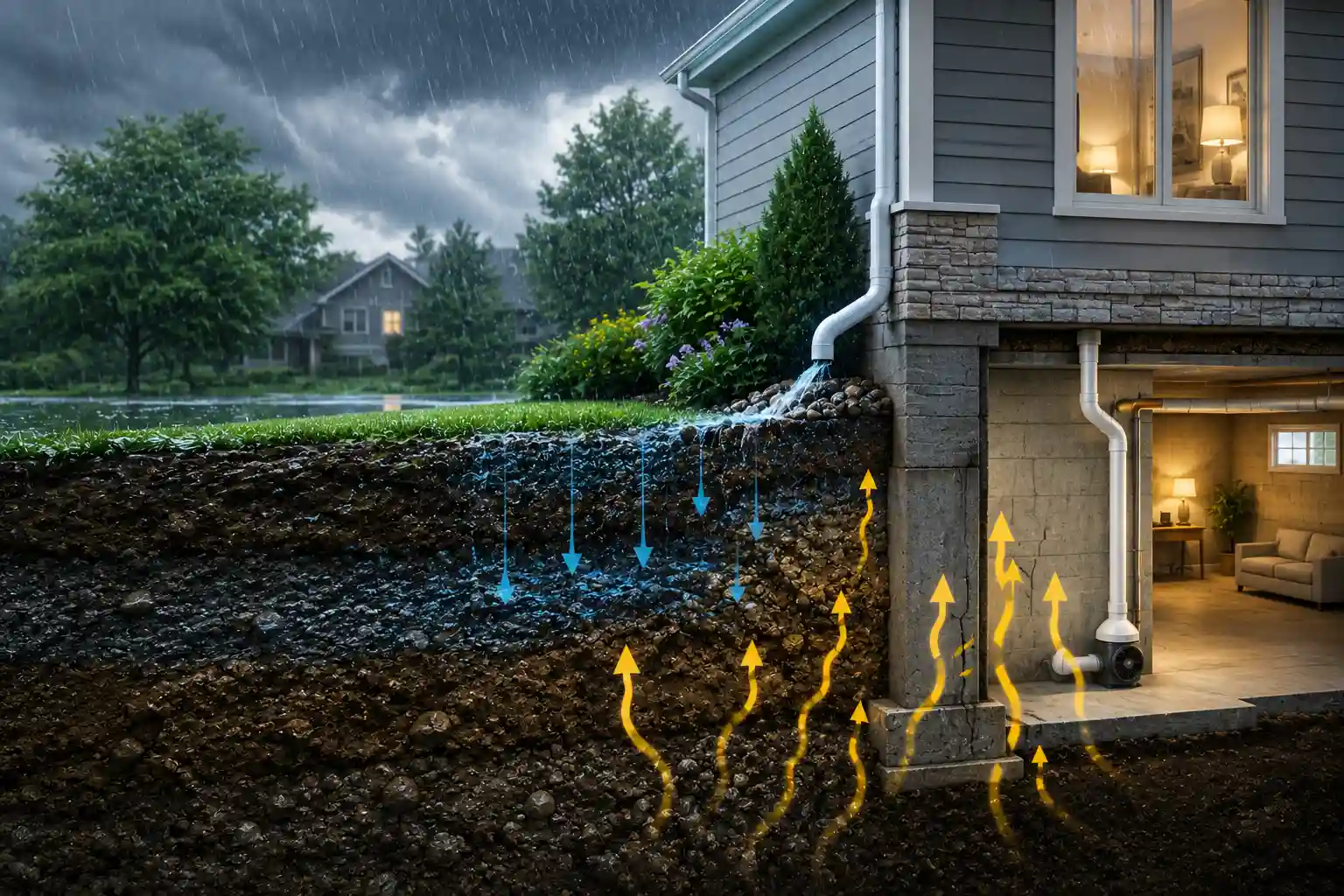
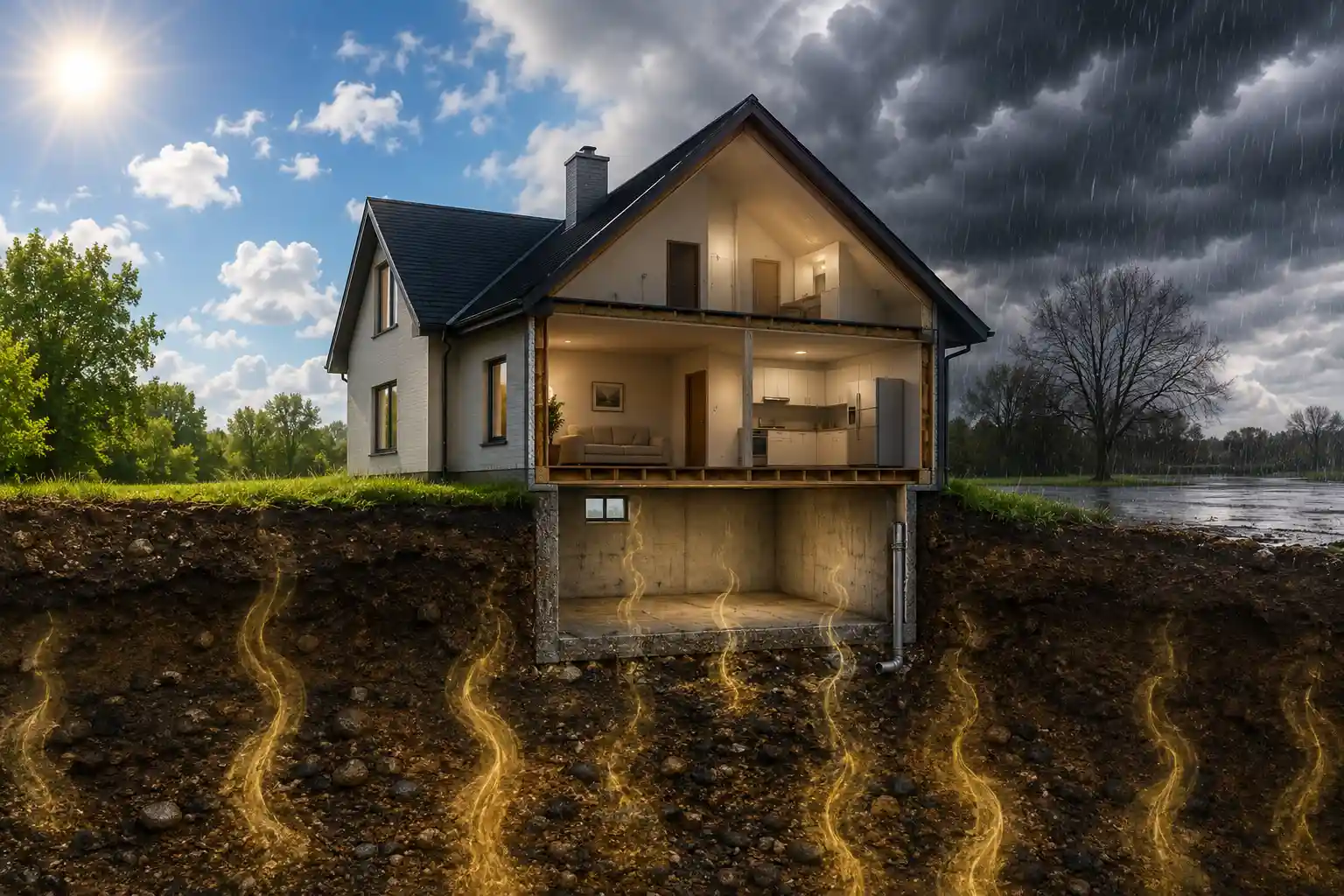
Radon is produced by the radioactive decay of uranium, which is present in varying amounts in soils across the United States. As uranium atoms break down, radium is formed and subsequently releases radon gas. Because radon is heavier than air, it tends to accumulate in low areas such as basements and crawl spaces.
When inhaled, radon decay products attach to lung tissue and emit short‑range alpha particles. These particles damage DNA and can initiate cancerous growth. Long term exposure to indoor radon concentrations above four picocuries per liter has been linked to an increased risk of lung cancer, especially among smokers.
Understanding these scientific facts clarifies why a Passive vs Active RRNC system is a critical element of residential construction. Both systems aim to redirect radon away from occupied spaces, but they do so with different mechanisms that affect reliability under varying conditions.
Building Materials and Infiltration Pathways
Concrete, brick, and stone are porous to varying degrees. Even a well-poured slab can contain microscopic pores that allow radon to seep upward. Gaps around utility penetrations, recessed lights, and pipe sleeves are common infiltration pathways.
A Passive radon system mitigates these pathways by sealing them with high-grade caulk or epoxy, then providing a passive vent path. An Active radon system adds a fan to ensure that any radon entering the sub-slab space is actively drawn upward, even if the sealant degrades over time.
Choosing the right combination of sealing materials, vent pipe diameter, and fan capacity is essential for a successful Passive vs Active RRNC design.
Planning and Permitting
Before construction begins, consult local building officials to confirm the required RRNC specifications. Many jurisdictions accept a plan that shows the vent pipe location, pipe diameter, and, if required, fan specifications.
In areas where the ICC 600 standard is enforced, a permit may be needed for the electrical work associated with an Active radon system. The permit process typically requires a diagram of the fan location, wiring route, and a pressure test record.
A well prepared permit application can streamline the construction schedule and avoid costly delays in a Passive vs Active RRNC project.
Detailed Design Considerations
Pipe Sizing
The vent pipe must be sized to allow sufficient airflow. A 3-inch pipe is the minimum diameter recommended for most homes. Larger homes or those with a high radon potential may benefit from a 4-inch pipe.
Fan Selection for an Active radon system
The fan should be rated for a minimum airflow of 0.3 cubic feet per minute. Low-power fans that operate on 120-volt circuits are common. Choose a fan with a built‑in speed controller if you want the ability to adjust airflow based on seasonal testing results.
Location of Fan and Termination
Mount the fan in an accessible location such as the attic or a mechanical room. The termination cap on the roof should be placed at least ten feet above the roof ridge and away from windows, doors, and air intake vents.
Integration with Mechanical Systems
If the home will have a forced-air heating system, locate the radon fan away from the return air plenum to prevent any accidental recirculation of radon‑laden air.
All these design decisions influence the effectiveness of your Passive vs Active RRNC system and should be reviewed with a qualified radon professional.
Smart Monitoring Integration
Modern homes often include smart air quality monitors that can track indoor radon levels in real time. Pairing a continuous radon monitor with an Active radon system allows homeowners to verify that the fan is operating correctly.
Some monitors can trigger an alert if radon levels rise above a preset threshold, prompting the homeowner to check fan operation or schedule a professional inspection. While a Passive radon system does not require power, adding a monitor still provides valuable data on overall indoor air quality.
Smart integration adds an extra layer of confidence to any Passive vs Active RRNC strategy.
Seasonal Performance Troubleshooting
Winter
During heating season, houses are tightly sealed, which can reduce the pressure differential needed for a Passive radon system to work optimally. If winter radon tests show elevated levels, consider adding a temporary fan or switching to an Active radon system for the season.
Summer
In warmer months, natural convection usually improves the performance of a Passive radon system. However, if windows are kept open for long periods, the vent pipe may draw in outdoor pollutants. Verify that the termination cap remains clear of debris.
Spring and Fall
These transitional periods can cause fluctuating pressure differentials. Conduct short term radon tests after any major weather change to confirm that your Passive vs Active RRNC system continues to perform as expected.
Maintenance Checklist
Passive radon system checklist
• Inspect vent pipe annually for cracks, blockages, or animal nests.
• Verify that the termination cap is intact and free of debris.
• Reapply sealant around slab penetrations every 10‑15 years.
Active radon system checklist
• Test fan operation monthly by listening for the motor hum.
• Measure airflow with a handheld anemometer at least once a year.
• Replace fan motor after eight to ten years of service.
• Check electrical connections for corrosion or loose wires during each home inspection.
Following these simple steps helps keep both types of systems operating efficiently and ensures long term protection in a Passive vs Active RRNC framework.
Long Term Cost Analysis
When evaluating a Passive vs Active RRNC solution, look beyond the initial outlay.
Passive radon system
• No electricity cost.
• Low chance of component failure.
• Potential need for sealant touch‑ups after many years.
Active radon system
• Annual electricity cost of $20 to $40.
• Fan replacement cost of $150 to $300 after eight years.
• Higher probability of a service call if fan stops working.
Over a 30 year home lifespan, the total cost of an Active radon system may rise to $4,000 to $5,000 when electricity and fan replacement are included, while a Passive radon system may remain under $2,000. The numbers illustrate how a Passive vs Active RRNC financial model can shape the homeowner’s decision.
Environmental and Energy Impact
A Passive radon system has virtually zero energy consumption, making it the most environmentally friendly option.
An Active radon system consumes a small amount of electricity, typically less than a nightlight, but that energy use adds to the home’s overall carbon footprint.
If your home is powered by renewable energy, the environmental impact of an Active radon system becomes negligible. However, in regions where electricity comes from fossil fuels, a Passive radon system offers a greener solution in the Passive vs Active RRNC debate.
Future Trends in Radon Resistance
The industry is exploring passive designs that incorporate ventilation stacks and earth tubes to enhance natural airflow without fans. Meanwhile, Active radon system manufacturers are developing variable speed fans that adjust airflow based on real time radon sensor data, reducing electricity use while maintaining protection.
Building information modeling (BIM) software now includes RRNC modules that allow architects to simulate radon flow during the design phase, helping them decide whether a Passive vs Active RRNC approach will be most effective before the foundation is poured.
Decision Flow for a Passive vs Active RRNC Project
- Determine local code requirements – if a fan is mandated, the route is an Active radon system.
- Assess climate – cold, tightly sealed homes favor an Active radon system, milder climates can often rely on a Passive radon system.
- Evaluate budget – if upfront cost is the primary constraint, a Passive radon system is the logical choice.
- Consider future remodels – plans for basements or additions tip the scale toward an Active radon system.
- Review builder expertise – select the system that matches the contractor’s proven skill set.
Following this flow helps you make a clear, data driven choice in the Passive vs Active RRNC decision process.
Detailed Pricing Quotes for Passive vs Active RRNC Installations
Below is a breakdown of typical costs you can expect when budgeting for a Passive vs Active RRNC project. Prices can vary based on region, foundation type, and contractor rates.
Passive radon system cost estimate
| Item | Typical price range (USD) |
|---|---|
| High grade sealant (gallon) | $80 to $120 |
| 3 inch vent pipe (per 10 ft) | $25 to $40 |
| Termination cap | $15 to $30 |
| Labor – sealing and pipe installation | $300 to $600 |
| Pressure test and certification | $100 to $150 |
| Total estimated cost | $500 to $1,200 |
Active radon system cost estimate
| Item | Typical price range (USD) |
|---|---|
| Radon fan (rated 0.3‑0.5 cfm) | $150 to $300 |
| Electrical wiring and conduit | $100 to $200 |
| Surge protector | $20 to $40 |
| Additional vent pipe (if larger diameter needed) | $30 to $60 |
| Labor – fan mounting, wiring, testing | $400 to $800 |
| Annual fan electricity (estimated) | $30 to $40 per year |
| Total estimated cost | $1,200 to $2,500 |
When evaluating these numbers within a Passive vs Active RRNC decision matrix, remember to factor in the long term electricity cost for an Active radon system, as well as the potential need to replace the fan after eight to ten years. The Passive radon system has minimal ongoing costs, making it an attractive option for homeowners seeking a set and forget solution.
Getting Professional Help – RRNC Types and Contact
If you are ready to discuss the best Passive vs Active RRNC solution for your project, reach out to a certified radon professional. You can request a free estimate, learn more about the specific RRNC Types, and ask any technical questions. Call today at 414 455 7279 to schedule a consultation.
Milwaukee Radon Home specialists can walk you through a Passive vs Active RRNC comparison and recommend the most suitable system for your home.
Frequently Asked Questions
What is the main difference between a passive and an active radon system?
A passive system relies on natural pressure differences to move radon upward, while an active system uses a powered fan to create constant low pressure that forces radon out of the house.
Can I install a passive radon system myself, or do I need a professional?
The basic components of a passive system are simple, but proper sealing of the slab and correct pipe installation require experience. Most homeowners benefit from a certified installer to ensure the system meets code and works as intended.
How often does an active radon system need maintenance?
The fan and electrical connections should be inspected at least once a year. Replace the fan if airflow drops below the recommended rate, and test the system after any major renovation.
Does a passive radon system affect my home insurance?
Insurance carriers typically do not differentiate between radon systems, but having any RRNC installed can be an argument for reduced risk. Some policies may even offer discounts for proven radon mitigation measures.
What is the typical lifespan of a passive radon system?
Since it has no moving parts, a well sealed passive system can last for the lifetime of the house. The limiting factor is usually the sealant, which may need reapplication after several decades.
Conclusion
Choosing between passive and active systems is not about fear. It is about understanding risk, performance, and long term value. The conversation around passive vs active RRNC comes down to reliability versus simplicity.
A passive radon system is affordable, quiet, and a smart baseline. An active radon system offers proven performance and peace of mind, especially in higher risk areas.
The best approach is to plan early, build smart, and test after construction. If radon levels demand more protection, activation is straightforward and effective.
For personalized advice, system evaluation, or cost guidance, you can always reach out at 414-455-7279. Building a safer home starts with informed decisions, and RRNC is one of the most practical steps you can take.