
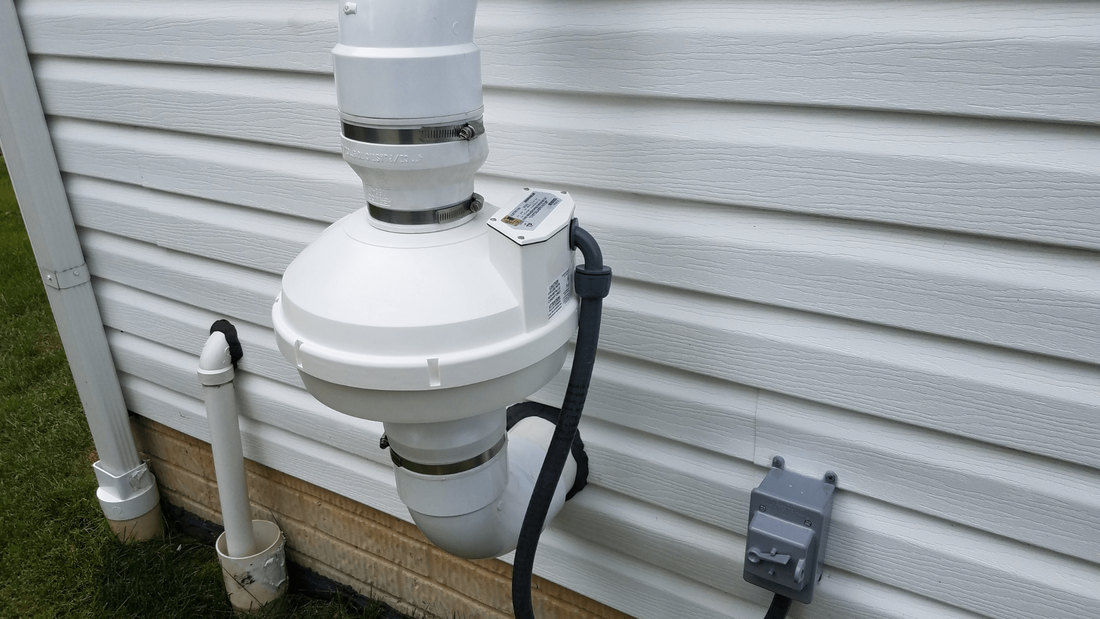
A radon fan is a specialized, continuous-duty motor designed to pull radioactive radon gas from beneath a home’s foundation and vent it safely outside.
Operating as the heart of an Active Soil Depressurization (ASD) system, the fan creates a constant suction (negative pressure), preventing radon from entering living spaces and venting it above the roofline.
Core purpose
- Reduce indoor radon levels to below the recommended action limit of 4 picoCuries per liter.
- Maintain a steady pressure differential that stops radon from migrating upward.
- Provide a reliable, low‑maintenance solution that works in all seasons.
Table of Contents
How a Radon Fan Works in a Mitigation System
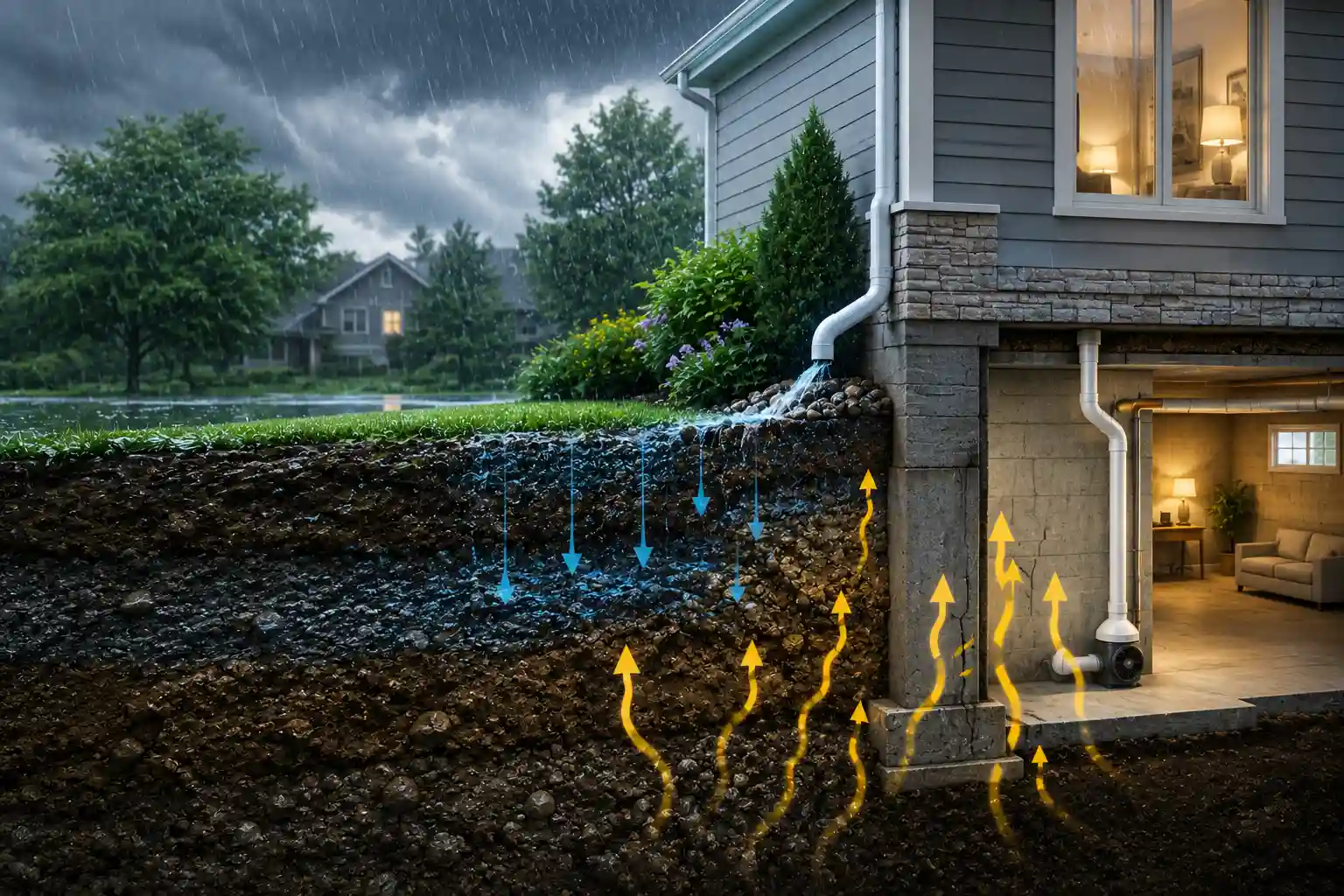
The physics behind what a radon fan is is simple yet effective. Radon gas forms in the soil as uranium decays. Because the gas is lighter than air, it rises through pores, cracks and joints in the foundation.
When a fan is installed, it draws air from the sub-slab region, lowering the pressure there. Air, and the radon it carries, follows the pressure gradient into the pipe and out through a vent placed at least ten feet above the roofline.
Step by step flow
- Suction: The fan pulls air from the intake pipe that runs under the concrete slab.
- Pressure drop: The removal of air creates a slight vacuum beneath the house.
- Radon migration: Soil gas moves toward the low‑pressure zone and enters the pipe.
- Discharge: The fan pushes the radon‑laden air through a vertical pipe that exits well above windows and doors.
- Dilution: Once released into the atmosphere, the radon mixes with outdoor air and its concentration drops to harmless levels.
Because the fan runs continuously, the pressure drop is maintained, preventing radon from re‑entering the living space.
What are the main components of a radon fan?
Understanding what is a radon fan also means knowing the parts that make it work.
| Component | Role | Typical features |
|---|---|---|
| Motor | Turns the impeller to move air | High efficiency, sealed bearings, low heat output |
| Impeller (fan wheel) | Generates airflow | Curved blades, balanced for low vibration |
| Housing | Encloses motor and impeller | Weather resistant, corrosion proof, gasket sealed |
| Controls | Switches or pressure sensors | Allows manual on/off, automatic shut‑off when pressure is adequate |
| Mounting brackets | Secures fan in place | Steel or reinforced plastic, vibration dampening |
| Power cord | Supplies electricity | Dedicated 120 volt circuit, UL listed plug |
These elements work together to deliver the steady air movement required for radon reduction.
What is a radon fan system?
When we answer what is a radon fan, we must place it inside the broader context of a radon fan system. The system consists of three linked parts: the fan, the intake pipe network, and the exterior vent.
- Intake network – PVC or ABS pipe that runs from the fan’s suction side to a hole drilled through the slab or crawlspace floor. The pipe must be sealed at every joint to prevent leakage.
- Fan unit – The central component that creates the pressure differential.
- Exhaust termination – A vent cap, often with a swirl or “whirl” design, that releases the air above the roofline.
Together, these elements form a complete radon mitigation system fan solution that keeps indoor radon levels low without compromising indoor comfort.
Types of radon fan system configurations
Knowing what is a radon fan helps you pick a configuration that matches your home’s needs. The most common setups are:
- Continuous run – The fan operates 24 hours a day, providing the most stable pressure. Ideal for homes with high radon potential or very airtight construction.
- Intermittent run – A pressure sensor turns the fan off when the pressure drop is sufficient and on again when it rises. Saves a small amount of electricity while still protecting the home.
- Solar powered – A small photovoltaic panel powers a low‑watt fan, with a battery backup for night‑time operation. Works best in sunny regions and for homeowners seeking a green solution.
- HRV integrated – Some energy‑recovery ventilators include a built‑in radon fan, allowing simultaneous fresh air supply and radon removal. This configuration is popular in new builds that aim for high indoor air quality.
Each approach uses the same fundamental principle creating a pressure drop beneath the foundation but they differ in power source, control strategy and cost.
How to choose the right radon fan
When you search for what is a radon fan you quickly discover the market offers many models. Use the checklist below to narrow down the best option for your home.
- Airflow capacity (cubic feet per minute) – Choose a fan that can move at least 100 cubic feet per minute for every 1,000 square feet of slab area.
- Static pressure capability – Look for a rating of at least 0.05 inches of water column to maintain the needed vacuum.
- Noise level – Aim for a device rated below 55 decibels to keep the fan unobtrusive.
- Energy efficiency – Motors labelled as EC (electronically commutated) use the least power.
- Durability – Stainless steel housings and sealed bearings resist corrosion from humidity.
- Warranty – A minimum three‑year motor warranty and five‑year housing warranty show confidence from the manufacturer.
- Installation flexibility – Models with dual voltage options and removable mounting brackets adapt to tight spaces.
If you need assistance selecting a specific fan, call the experienced team at 414-455-7279.
Step by step installation of a radon fan system
Below is a detailed, numbered guide that answers what is a radon fan in practice. Follow each step to ensure a safe, code‑compliant installation.
- Baseline testing – Conduct a short term radon test for at least 48 hours to record the starting level.
- Select a location – Choose a dry, ventilated area near a power outlet, such as a utility closet or basement corner.
- Drill the slab opening – Using a hammer drill with a masonry bit, make a 3‑inch hole through the concrete slab. Clean all dust from the hole.
- Install the intake pipe – Insert a 3‑inch PVC pipe into the hole, sealing the gap with a concrete based sealant. The pipe should slope upward slightly toward the fan.
- Mount the fan – Attach the fan to its brackets, making sure it sits level. Connect the intake pipe to the fan’s suction side using a rubber gasket.
- Run the exhaust pipe – Route the discharge pipe upward through the attic or crawlspace, keeping it as straight as possible. End the pipe at a vent that sits at least ten feet above the roofline.
- Wire the electrical supply – Turn off the breaker, then connect the fan to a dedicated 120 volt circuit with a fused disconnect. If the fan includes a pressure switch, follow the manufacturer’s wiring diagram.
- Start the fan – Turn the power on and verify that the fan runs smoothly, without vibration. Listen for any unusual noises that could indicate a loose part.
- Check pressure – Use a manometer to measure the pressure differential. The goal is a negative pressure of at least minus 0.02 inches of water column. Adjust the fan speed if the model allows.
- Seal all joints – Inspect every pipe joint, the slab opening, and the vent termination for gaps. Apply silicone sealant where needed.
- Post installation testing – Place a long term radon monitor in a living area and run it for at least three months. Compare the results to the baseline to confirm a reduction of at least 80 percent.
Following these steps answers what is a radon fan in real world terms and guarantees a properly functioning system.
Maintenance and troubleshooting for your radon fan
Even the most reliable fan needs occasional care. Below is a concise maintenance plan that keeps the answer to what is a radon fan effective for years.
- Monthly visual check – Look for dust build-up on the fan housing, loose wires, or signs of water intrusion.
- Quarterly pressure test – Use a manometer to confirm the system maintains the required negative pressure.
- Annual electrical inspection – Verify that the dedicated circuit is not tripped and that connections remain tight.
- Noise monitoring – If the fan becomes louder than 55 decibels, the bearing may need lubrication or replacement.
- Vent cleaning – Remove leaves, debris or animal nests from the roof‑line vent to prevent blockages.
- Replace worn seals – Over time, gaskets may dry out. Replace any that show cracks to avoid air leaks.
Common issues and quick fixes
| Symptom | Likely cause | Remedy |
|---|---|---|
| Radon level stays high after installation | Leak in intake pipe or incomplete seal | Reseal the slab opening and re‑check all pipe joints |
| Fan does not start | Tripped breaker or faulty pressure switch | Reset breaker, test switch, replace if defective |
| Excessive vibration | Loose mounting brackets or unbalanced impeller | Tighten brackets, check for impeller damage |
| Water pooling in pipe | Pipe slope too flat or blockage | Adjust pipe angle, clear any obstruction |
If troubleshooting does not resolve the problem, contact a certified professional at 414-455-7279 for on‑site assistance.
Frequently Asked Questions
What is a radon fan and why is it needed?
A radon fan creates a pressure difference that pulls radon from the soil below a building and vents it outside, protecting occupants from a known lung cancer risk.
How does a radon fan differ from a regular exhaust fan?
Unlike a regular exhaust fan, a radon fan is designed for low static pressure, high volume flow and continuous operation, and it is sealed to prevent corrosion.
Can I install a radon fan myself?
DIY installation is possible but many jurisdictions require a certified installer for permits and warranty compliance; professional fan installation ensures the system meets code.
How much electricity does a radon fan use?
Most models draw less than five watts, which adds only a few cents to the monthly electricity bill.
What size fan do I need for my home?
The required airflow depends on the square footage of the slab and the soil’s radon potential; a typical single‑family home needs a fan rated between 100 and 200 cubic feet per minute.
Conclusion
Answering what a radon fan is reveals a simple yet powerful device that protects families from a silent health hazard. By creating a steady low pressure under a home, the fan pulls radon out of the soil and vents it safely, keeping indoor levels well below the action limit.
Selecting the right fan, installing it as part of a complete radon fan system, and performing routine maintenance ensures the system works for decades. For personalized advice, cost estimates, or professional fan installation, call 414-455-7279 today and take the first step toward a healthier home environment.