
If your radon fan making noise has suddenly become impossible to ignore, the short answer is this: something has changed in the system. It could be normal vibration, colder temperatures, mounting issues, aging bearings, or internal wear. Some sounds are harmless. Others signal a failing unit. The key is understanding what kind of noise you are hearing and what it means before it turns into a full system failure.
A radon mitigation system is designed to run quietly in the background. Most homeowners forget it is even there. So when you notice a radon fan loud enough to hear inside your home, it feels alarming. Let’s break this down clearly, practically, and without fluff.
Table of Contents
Why Radon Fans Make Noise in the First Place
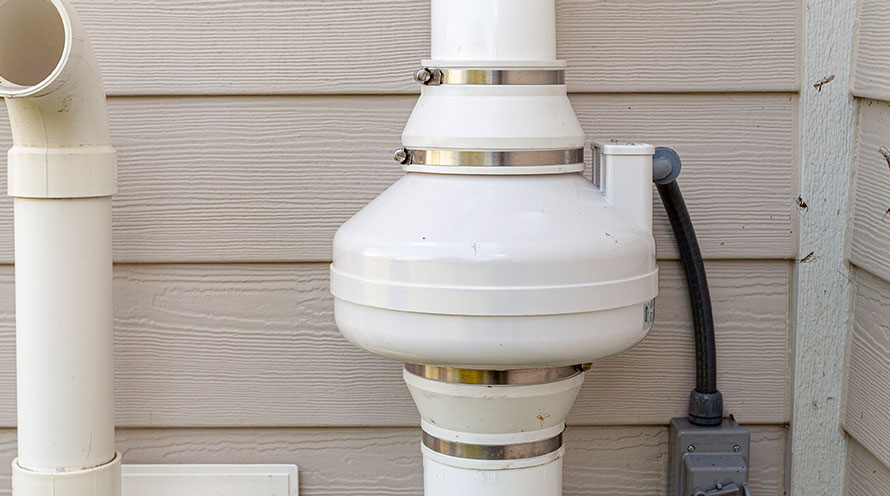
A radon fan is a continuously operating motor that pulls soil gases from beneath your foundation and vents them safely above your roofline. Because it runs nonstop, small mechanical or environmental changes can alter how it sounds.
In ideal conditions, you should hear very little. Maybe a faint hum near the exterior pipe. If the radon fan noise is now noticeable indoors, that tells us vibration, airflow, or mechanical balance has shifted.
Here are the most common reasons.
Normal Operating Hum
All radon fans produce some vibration. That is physics. Inside the fan housing, an impeller spins rapidly to create suction. That movement creates a hum.
A mild radon fan loud humming sound near the pipe outdoors is usually normal. The issue starts when the vibration transfers into framing, siding, or ductwork. That turns a quiet hum into an echo through walls.
What to Check
- Is the fan mounted tightly to siding without vibration isolation?
- Are rubber couplings present on both ends?
- Is the pipe secured too tightly against the house structure?
Sometimes the fan is not the problem. The installation is.
Loose Mounting or Hardware
Over time, mounting brackets can loosen. Rubber couplings may stiffen. Screws back out. The result is amplified vibration.
When a radon fan making noise sounds like rattling or shaking, especially in wind, hardware is often the cause.
Signs of Loose Installation
- Metallic rattling
- Shaking visible in the pipe
- Noise increases during storms
A simple resecure with proper isolation fittings can solve this completely.
Worn Motor Bearings
This is one of the most common reasons a radon fan loud situation develops after several years of operation.
Radon fans run continuously. That means 24 hours a day, 365 days a year. Most quality fans last 5 to 10 years depending on climate and model. When internal bearings begin wearing down, the sound changes from a smooth hum to grinding or buzzing.
What It Sounds Like
- Higher pitched whine
- Grinding undertone
- Increasing volume over weeks
If your radon fan noise keeps getting louder gradually, worn bearings are likely.
This is not repairable. It means replacement.
Cold Weather Effects
Many homeowners notice their radon fan loud when cold outside. That is not your imagination.
Cold temperatures change air density and motor performance. The fan works harder to move denser air. Lubricants inside bearings also thicken in low temperatures. This increases friction and noise.
In Wisconsin and other colder climates, winter noise spikes are common.
What to Watch For
- Noise appears only below freezing
- Sound reduces when temperatures rise
- No grinding or vibration present
If the noise disappears with warmer weather, it may be seasonal strain rather than failure.
Ice Blockage or Vent Obstruction
In colder regions, frost can accumulate at the discharge point. If airflow becomes restricted, the fan motor strains. That strain increases vibration and creates abnormal radon fan noise.
Blocked airflow can also happen from debris, nests, or collapsed piping.
Warning Signs
- Loud motor strain
- Suction gauge reading changes
- Reduced airflow at vent discharge
Never ignore this. Motor strain shortens lifespan significantly.
Improper Fan Sizing
Sometimes a radon fan loud humming issue stems from incorrect fan selection.
If the fan is oversized for the soil conditions, it may create excess pressure. That pressure can produce pipe vibration or resonance inside wall cavities.
Too small, and it strains constantly, creating motor stress noise.
Correct fan selection is about matching soil communication, foundation type, and sub slab pressure field.
Cracked Fan Housing
This one is rare but serious. Plastic housings can crack due to UV exposure or age. When that happens, the internal impeller can wobble slightly.
A cracked housing produces:
- Sharp buzzing
- Uneven vibration
- Sudden loud mechanical tone
At that point, fan replacement is required immediately.
Electrical Issues
Loose electrical connections or voltage irregularities can produce irregular motor sounds. If your radon fan making noise includes intermittent surging or inconsistent speed, electrical supply should be evaluated.
This is less common but possible.
When Is Radon Fan Noise Normal
- A steady, consistent hum outdoors is expected.
- A slight radon fan loud when cold condition that resolves in spring can also be normal.
- A sudden grinding, rattling, or escalating hum is not normal.
- If the volume increases indoors or you feel vibration through walls, something needs attention.
How to Troubleshoot Safely
Before calling a professional, you can perform simple checks.
Step 1: Listen Closely
- Is the sound steady or irregular?
- Is it louder in cold weather?
- Does it vibrate the wall?
Step 2: Inspect Mounting
Look for:
- Loose straps
- Missing rubber couplers
- Direct pipe contact with siding
Step 3: Check the Manometer
If your U tube gauge reading changes dramatically, airflow may be obstructed.
Never open the fan housing. Radon systems maintain negative pressure and should not be disassembled by homeowners.
When to Replace the Fan
If your radon fan loud humming evolves into grinding or whining, replacement is likely necessary.
Most radon mitigation fan replacements take under two hours. The key is choosing the right model and installing it correctly with vibration isolation.
Ignoring a failing fan can:
- Raise indoor radon levels
- Increase energy consumption
- Lead to full system shutdown
Cost Expectations
Radon fan replacement typically ranges from moderate to manageable depending on model and access location.
Factors include:
- Fan type
- Roof or exterior mounting height
- Electrical modifications
- Warranty coverage
If you are unsure, call 414 455 7279 for a system evaluation.
Why Professional Diagnosis Matters
A radon fan making noise might be simple vibration. Or it could indicate system imbalance that affects radon reduction performance.
Professional technicians evaluate:
- Static pressure
- Soil suction
- Pipe resonance
- Airflow efficiency
Noise is often a symptom. The real issue may be deeper in the system design.
Preventing Future Noise Problems
Proper installation prevents most complaints about radon fan loud operation.
Best practices include:
- Exterior mounting instead of attic when possible
- Rubber isolation couplings
- Secure but not rigid pipe bracing
- Correct fan sizing for soil conditions
Preventive inspection every few years keeps your system stable and quiet.
FAQs
How long does a radon fan last?
Most fans operate reliably for five to ten years. If your radon fan loud condition develops after several years of service, aging components are likely responsible.
Can I fix radon fan noise my self?
You can check for loose mounting or vibration transfer. Internal motor repairs are not recommended. If the radon fan noise continues, professional service is safest.
Why is my radon fan loud when cold?
A radon fan loud when cold situation happens because colder air is denser and internal lubricants thicken. If the noise reduces in warmer weather, it may be seasonal strain rather than failure.
Is a radon fan loud humming dangerous?
A mild radon fan loud humming is not dangerous by itself. However, if the sound becomes grinding or sharp, it may signal motor failure and reduced radon mitigation effectiveness.
Why is my radon fan making noise suddenly?
A sudden increase in radon fan making noise usually indicates mechanical wear, mounting looseness, or airflow restriction. It is rarely random and should be evaluated if the sound persists.
Conclusion
A quiet radon mitigation system is easy to ignore. A noisy one is impossible.
If your radon fan making noise, do not panic. Start by identifying the sound type. Hum, rattle, grind, or strain each point to different causes. Cold weather can temporarily increase noise, but progressive volume usually signals wear.
The goal is not just silence. It is protection. A properly functioning radon fan keeps your home safe from long term radon exposure.
If you are unsure whether your system is operating correctly or your radon fan loud humming keeps getting worse, call 414 455 7279 for professional guidance. A short radon inspection today can prevent a full system failure tomorrow.