

If you are building a new home or buying one that claims to be radon resistant, the big question is simple. Does it actually work. Not in theory. Not on paper. But in real homes, with real soil conditions, real foundations, and real families living inside.
Radon resistant construction is often described as a preventive approach rather than a cure. That framing is mostly accurate, but it also hides important nuance.
Some homes built with these techniques achieve very low radon levels without ever needing a full mitigation system. Others still require active mitigation later. The difference usually comes down to execution, local geology, and whether testing and follow up were taken seriously.
Radon resistant construction techniques are effective at reducing indoor radon levels by 30 to 70 percent in most homes, depending on soil conditions, construction quality, and local geology.
In high radon areas like Milwaukee, these techniques significantly lower risk but often still require testing and, in some cases, activation of a mitigation system to achieve safe levels.
Table of Contents
What is Radon Resistant New Construction
Radon Resistant New Construction refers to building techniques that reduce radon entry into a home by using sub slab gas collection layers, sealed membranes, vent piping, and foundation sealing. These systems are designed to lower indoor radon levels and allow easy activation of mitigation if needed later.
Key Components of Radon Resistant Construction
Radon resistant construction typically includes:
- Sealing of foundation cracks and penetrations
- A gas permeable layer beneath the foundation slab
- Plastic sheeting to block soil gas entry
- A vertical vent pipe routed above the roof
Understanding radon and why construction matters
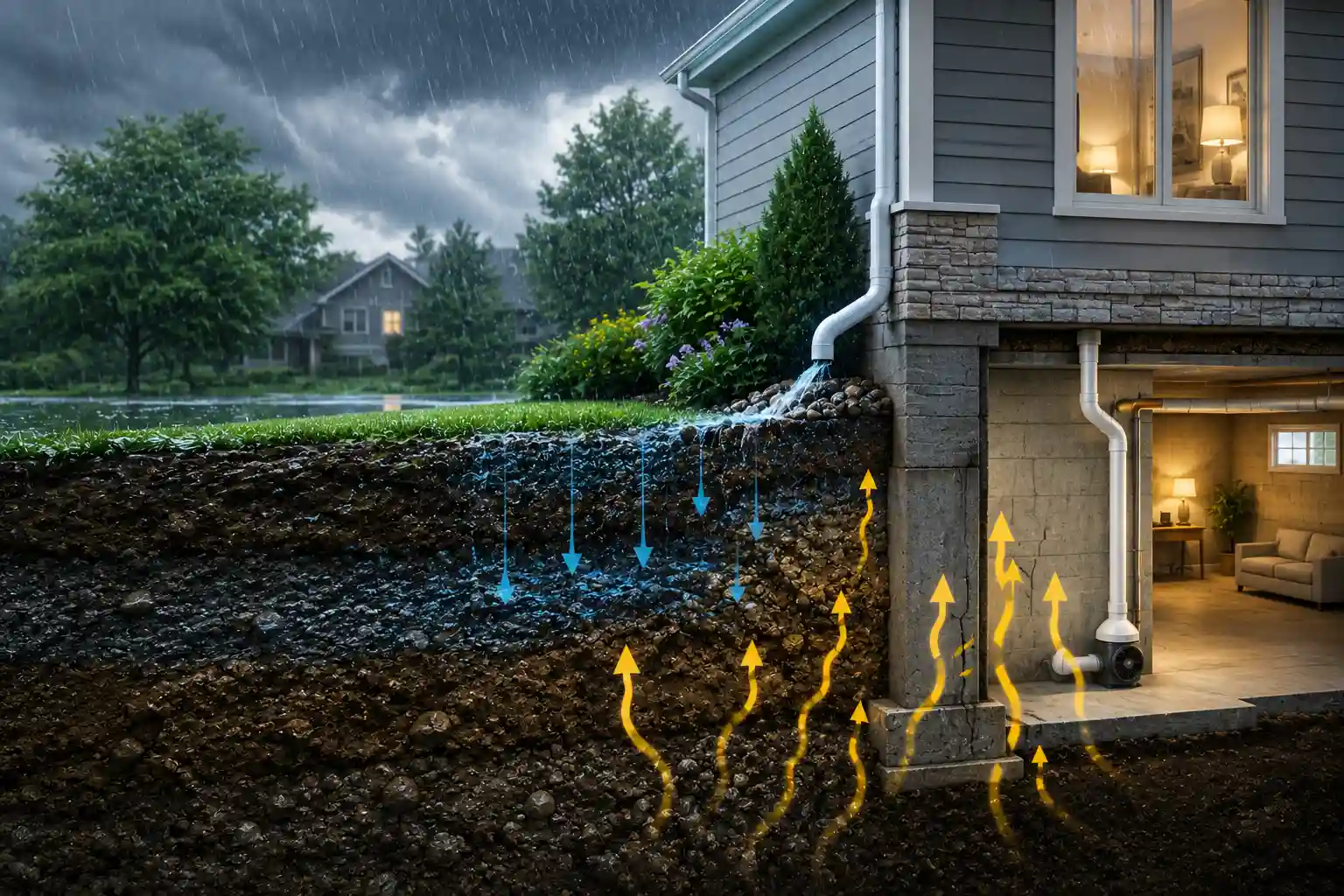
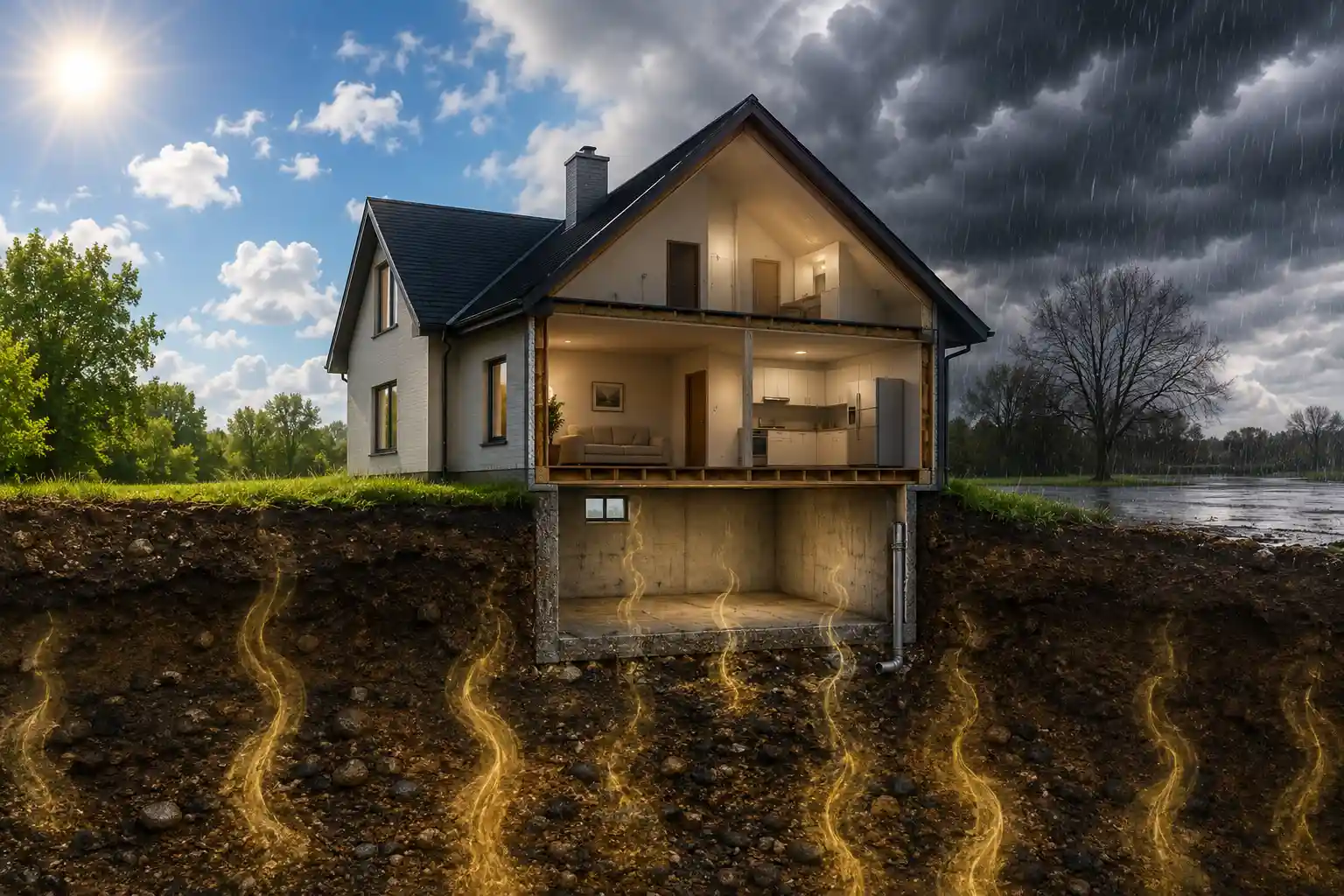
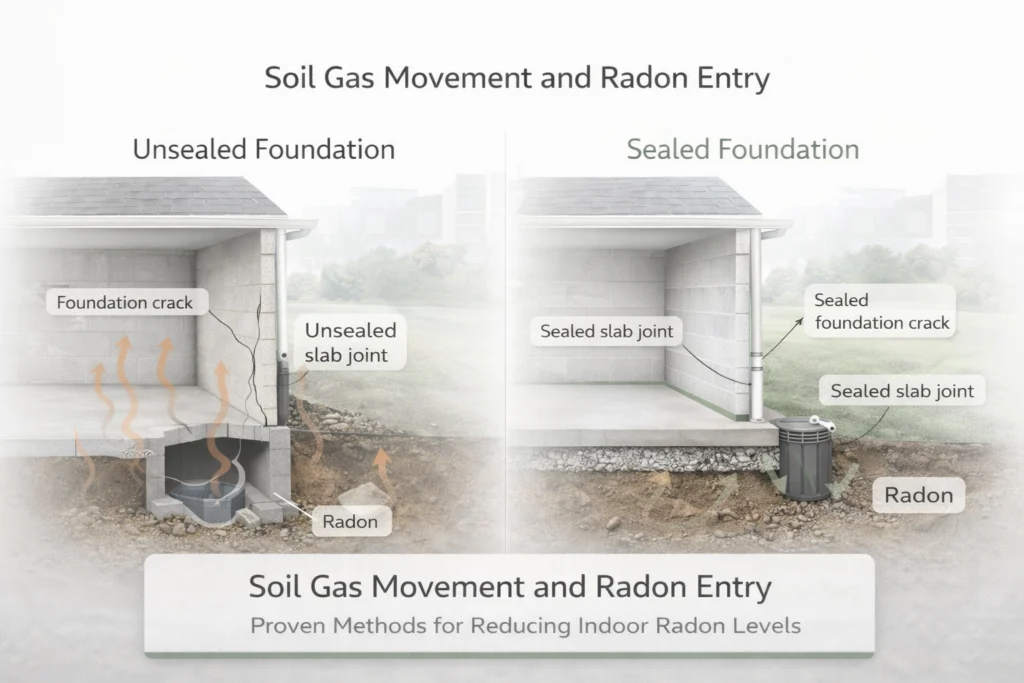
Radon is a radioactive gas that forms naturally from the breakdown of uranium in soil and rock. It has no smell, no taste, and no color. It enters homes through cracks in foundations, gaps around pipes, sump pits, and other openings where the structure meets the ground.
Once inside, radon can build up to dangerous levels. Long term exposure is the second leading cause of lung cancer after smoking according to the Environmental Protection Agency. The risk increases significantly when indoor levels rise above 4 picocuries per liter.
The reason construction matters is simple. Most radon entry points are created or influenced during the building process. Decisions about slab preparation, foundation sealing, drainage layers, and vent pathways all affect how easily radon can move from soil into indoor air.
Traditional mitigation focuses on fixing the problem after the home is built. Radon resistant construction aims to reduce the likelihood of the problem forming in the first place.
What Radon Resistant New Construction actually includes
The term Radon Resistant New Construction is often shortened to RRNC. It does not refer to a single product or system. It is a combination of design choices and installation practices intended to limit radon entry and make future mitigation easier if needed.
At its core, radon resistant construction usually includes a gas permeable layer beneath the slab. This is typically a layer of clean gravel that allows soil gases to move freely under the foundation instead of being forced upward through cracks.
Above that layer, a plastic sheeting or membrane is installed to act as a barrier between the soil and the slab. This sheet is sealed carefully around edges and penetrations.
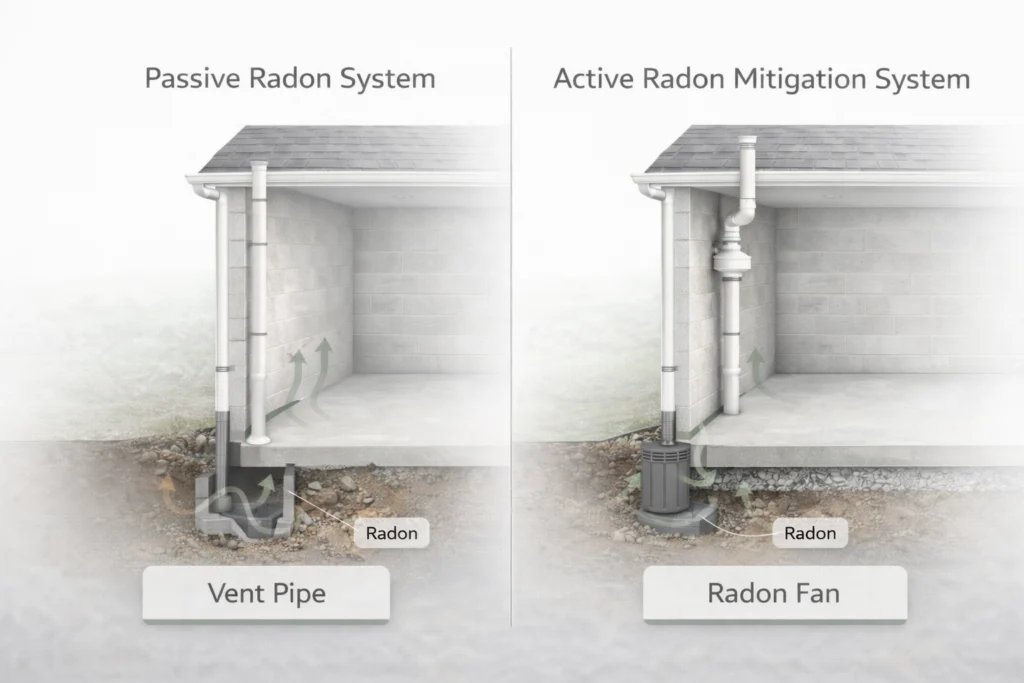
A vent pipe is then installed from beneath the slab and routed vertically through the house to terminate above the roofline. In passive systems, this pipe relies on natural pressure differences to draw radon upward and out of the home.
Finally, sealing and caulking are applied at known entry points. This includes control joints, sump covers, and utility penetrations.
When done correctly, these measures work together. The gravel layer provides a low resistance path for radon. The membrane and sealing reduce entry into the living space. The vent stack gives radon a preferred escape route.
Radon Resistant Construction vs Traditional Mitigation
Radon resistant construction reduces radon entry during the building phase, while traditional mitigation removes radon after elevated levels are detected. RRNC lowers initial risk and cost, but active mitigation systems are more reliable for achieving very low radon levels in high risk areas.
Passive versus active radon resistant systems
Most radon resistant homes are built with passive systems. That means there is no fan actively pulling radon out. The system relies on natural stack effect and pressure differences.
In areas with moderate radon potential, passive systems can be surprisingly effective. Many homes test below 4 picocuries per liter without any additional work. Some even test below 2.
However, in high radon zones like much of Wisconsin, passive systems do not always achieve acceptable levels on their own. Soil composition, moisture, and seasonal pressure changes can overwhelm passive airflow.
The good news is that most radon resistant homes are designed to be easily upgraded. Adding a fan to the existing vent stack converts the system into an active one. This is often faster and less expensive than installing mitigation from scratch.
How effective is radon resistant construction in real homes
Effectiveness depends on how you define success. If success means reducing radon levels compared to an identical home without these features, then the answer is clearly yes. Radon resistant construction consistently lowers indoor radon concentrations.
Studies and field data show that RRNC homes often have radon levels that are 30 to 70 percent lower than similar non resistant homes. In some cases, reductions are even greater.
If success means always keeping radon below the action level without additional mitigation, the answer is more mixed. In low to moderate radon areas, many homes meet that goal. In high radon areas like Milwaukee, a significant portion still require activation of the system.
This is why testing remains critical. Even the best construction techniques cannot guarantee safe levels without verification.
Radon resistant construction in Milwaukee and Wisconsin
Milwaukee Wisconsin radon levels are influenced by regional soil and bedrock conditions, making radon resistant construction especially valuable for new homes. While these techniques reduce radon exposure, testing and follow up mitigation remain essential in this region.
In these conditions, radon resistant construction should be seen as a baseline, not a final solution. It reduces risk and simplifies future mitigation, but it does not eliminate the need for testing.
Homeowners often ask whether RRNC can replace radon mitigation Milwaukee services. The honest answer is no. It complements them. In many cases, it reduces the scope and cost of mitigation if it becomes necessary.
Testing still matters even in new construction
One of the most common mistakes with radon resistant homes is skipping post construction testing. There is an assumption that new means safe. Radon does not care how new a house is.
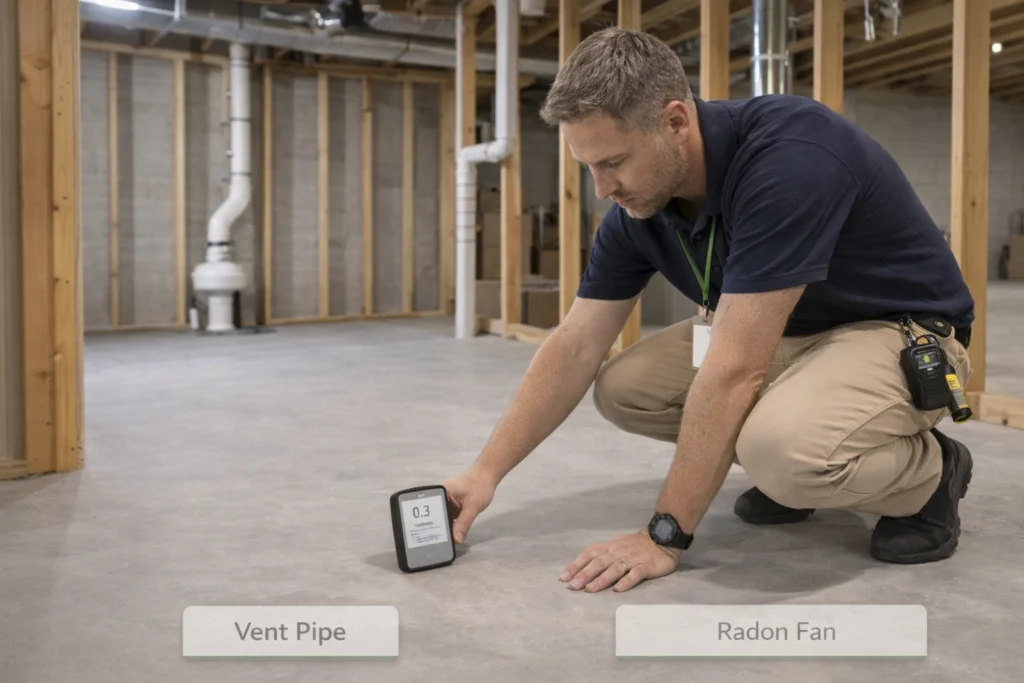
Testing should be done after occupancy once the home has been closed in and HVAC systems are operating normally. This provides a realistic picture of indoor air conditions.
If you are wondering how long does radon testing take Milwaukee homeowners typically see test durations of 48 to 96 hours for short term tests. Results are usually available shortly after the device is retrieved.
The radon testing timeline Wisconsin homeowners experience from scheduling to results often spans one week or less. This is a small investment of time compared to the long term health implications.
A radon inspection Milwaukee service can confirm whether the passive system is performing adequately or if activation is recommended.
Comparing radon resistant construction to traditional mitigation
Traditional mitigation systems are usually installed after a home tests high. They often involve cutting into the slab, installing piping, sealing sump pits, and adding a fan.
Radon resistant construction avoids much of this disruption by planning ahead. The vent pathway is already in place. The sub slab layer is already prepared. Sealing is integrated rather than retrofitted.
From an effectiveness standpoint, active mitigation systems tend to be more consistently successful at achieving very low radon levels. It is common to see post mitigation readings below 2 picocuries per liter and often below 1.
Radon resistant construction alone may not always achieve those numbers, but it narrows the gap significantly and lowers the barrier to reaching them.
Cost expectations for radon resistant construction
Cost is one of the strongest arguments in favour of RRNC. When incorporated during construction, the additional expense is relatively modest.
Radon resistant construction typically adds 500 to 1500 dollars to the cost of a new home. If a passive system requires activation later, installing a fan usually costs an additional 300 to 800 dollars.
By comparison, installing a full mitigation system in an existing home often ranges from 1200 to 2500 dollars in the Milwaukee area. Complex foundations or finished basements can push costs higher.
When viewed this way, radon resistant construction often pays for itself by reducing or simplifying future mitigation needs.
Performance expectations homeowners should have
It is important to set realistic expectations. Radon resistant construction reduces risk. It does not eliminate uncertainty.
A well built RRNC home should have lower radon levels than a similar non resistant home. Many will test below the action level. Some will still test above it.
The value lies in preparedness. The home is already equipped to handle radon if needed. The path to improvement is shorter, cleaner, and cheaper.
This is why many professional radon mitigation Milwaukee experts strongly recommend RRNC for new builds even when local codes do not require it.
Builder quality and oversight make a difference
Not all radon resistant homes are created equal. Effectiveness depends heavily on installation quality.
Poorly sealed membranes, disconnected vent pipes, or crushed gravel layers can all undermine performance. These issues are often invisible once the slab is poured.
Homebuyers should ask builders about their experience with RRNC and whether post construction testing is included. Independent testing provides accountability and peace of mind.
A follow up radon inspection Milwaukee service can verify that the system was installed correctly and is functioning as intended.
Long term durability and maintenance
One advantage of radon resistant construction is its durability. Most components are passive and have no moving parts.
Vent pipes and membranes typically last the life of the home. Sealing may need periodic inspection, especially if foundation settling occurs.
If a fan is added later, it becomes the primary maintenance item. Fans generally last five to ten years and are relatively inexpensive to replace.
Compared to many home systems, radon control is low maintenance once properly installed.
Health perspective and peace of mind
Radon risk is cumulative. The longer you live in a high radon environment, the greater the risk. Reducing exposure early has long term benefits.
For families building new homes, RRNC represents a proactive health decision. It acknowledges the reality of regional radon risk and addresses it before it becomes a problem.
For buyers, a radon resistant home is not a guarantee, but it is a strong positive signal. It shows that the builder considered indoor air quality and future mitigation.
When radon resistant construction is not enough
There are situations where RRNC alone is unlikely to be sufficient. Homes built on highly permeable soils with strong pressure differentials may still see elevated levels.
Split level designs, walkout basements, and complex foundations can also complicate airflow patterns.
In these cases, activation of the system or additional mitigation measures may be required. The difference is that the foundation is already prepared for them.
This is where radon mitigation Milwaukee specialists provide value. They assess the existing system and make targeted upgrades rather than starting from zero.
Frequently asked questions
How effective is radon resistant construction compared to full mitigation systems
Radon resistant construction is highly effective at reducing radon entry and lowering indoor levels, but active mitigation systems are more consistent at achieving very low readings. Many homes use both approaches together for best results.
Should every new home in Wisconsin include radon resistant features
Given the prevalence of elevated radon potential across Wisconsin, including Milwaukee, radon resistant construction is a practical and cost effective preventive measure even when not required by code.
How long does radon testing take in a newly built home
Homeowners asking how long does radon testing take Milwaukee typically see test durations of two to four days with results available shortly after, making it a quick step in the move in process.
Can a radon resistant home still fail a radon test
Yes, it can. Radon resistant construction reduces risk but does not guarantee results. Testing is the only way to confirm actual indoor radon levels.
What does it cost to upgrade a passive system to an active one
In most cases, adding a fan to an existing vent stack costs a few hundred dollars and can dramatically improve performance compared to passive operation alone.

Conclusion
Radon resistant construction is not a marketing gimmick and it is not a silver bullet. It is a practical, evidence based approach to reducing indoor radon risk at the most efficient point in a home’s life cycle.
In real world conditions, especially in areas like Milwaukee with known radon challenges, these techniques consistently lower radon levels and make future mitigation easier and less expensive. They do not replace testing or professional evaluation, but they stack the odds in your favor.
For homeowners who care about long term health, cost control, and peace of mind, Radon Resistant New Construction is a smart foundation to build on. When paired with proper testing and, if needed, professional radon mitigation Milwaukee services, it forms a complete and effective strategy for managing radon exposure.
If you are planning a build, buying a new home, or evaluating radon risk, a simple test and an informed conversation can make a lasting difference. For guidance or scheduling, many homeowners reach out directly to local experts at radon mitigation Milwaukee providers or call 414 455 7279 to understand their options and costs clearly before problems arise.