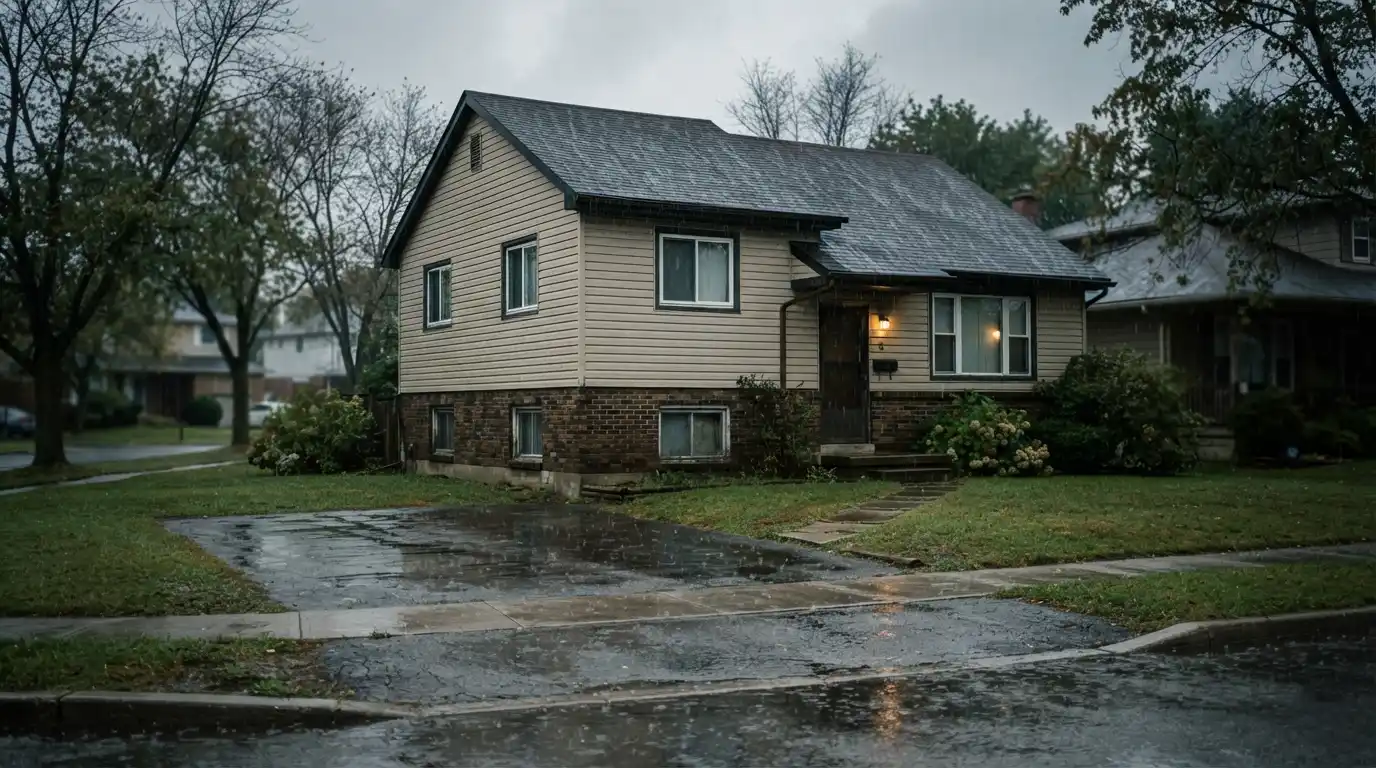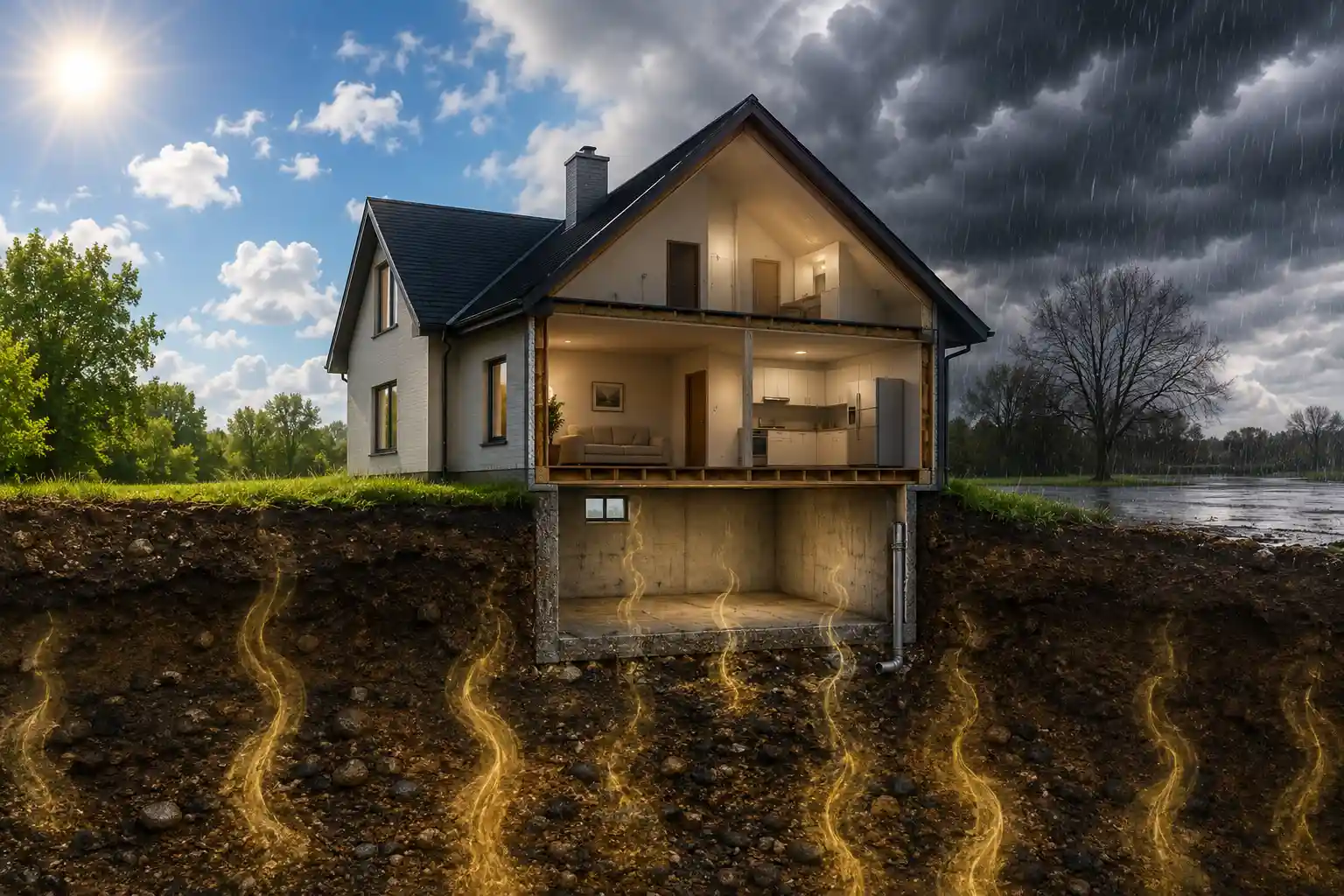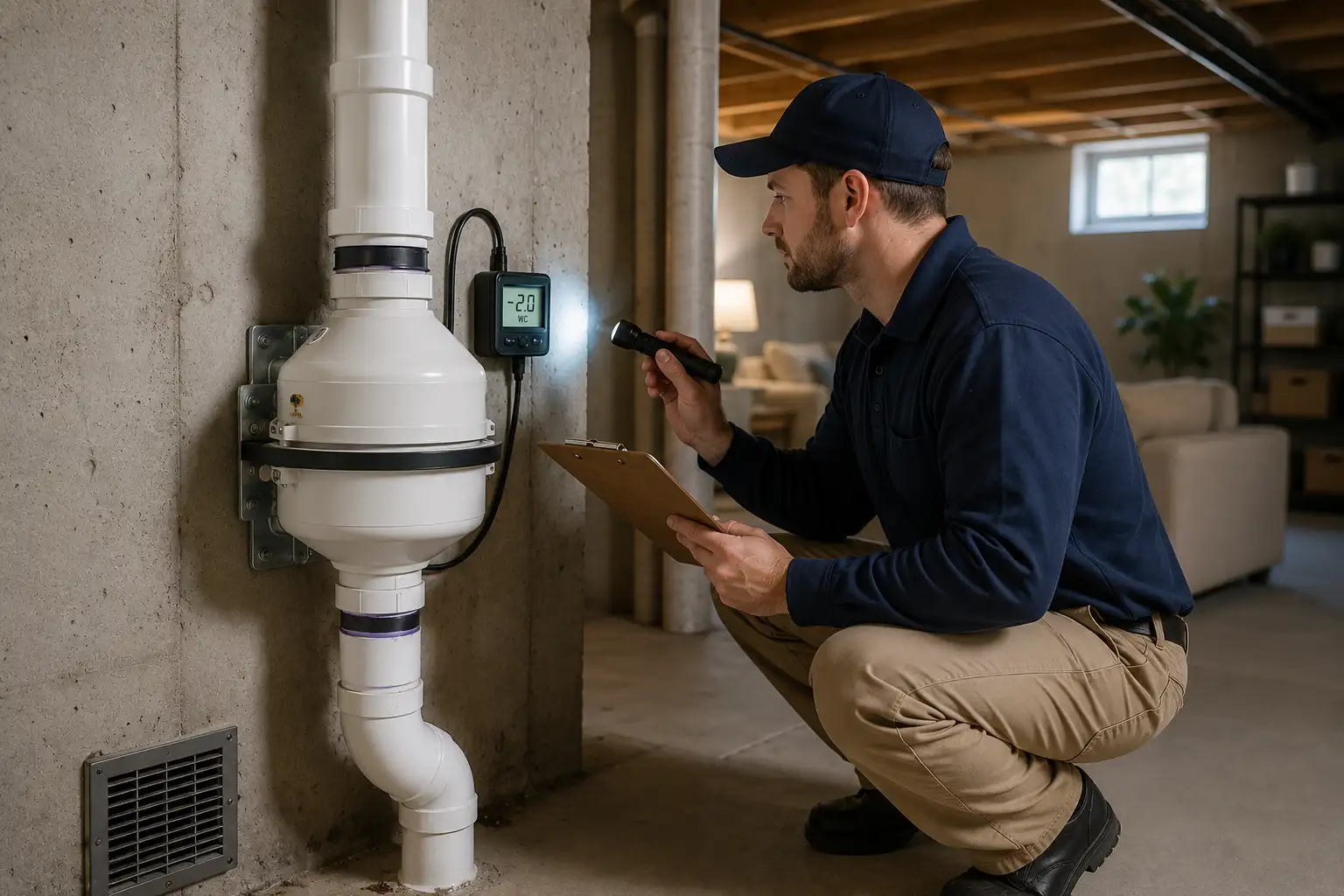

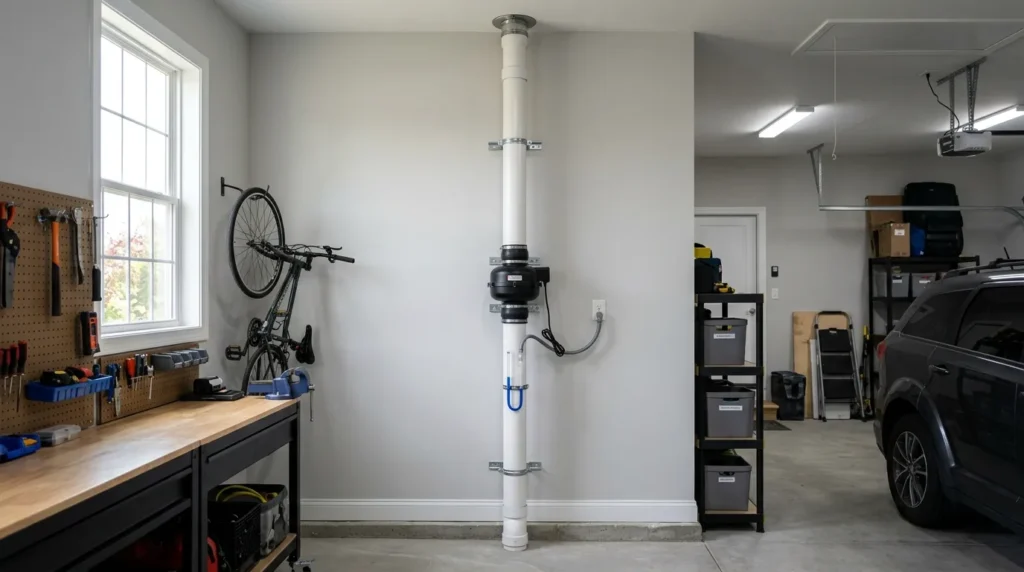
The fastest way to get rid of radon is to install an active soil depressurization (ASD) system, which uses a fan and a vent pipe to pull radon gas from beneath the foundation and release it above the roofline. A correctly sized and installed ASD system typically cuts indoor radon levels by up to 99 percent, often within 24 to 48 hours of startup. Sealing cracks and improving ventilation can support a mitigation system, but neither one reliably brings a high reading down to a safe level on its own.
The main techniques homeowners and contractors use to get rid of radon:
Water treatment: aeration or granular activated carbon filtration for radon dissolved in well water
Active soil depressurization (ASD): the standard fix for most homes, whole-basement coverage
Crawl space mitigation: vapor barrier plus a dedicated suction point for homes with crawl spaces
Sub-membrane depressurization: a variant of ASD used with sealed crawl space membranes
Sealing cracks and openings: reduces entry points but is a supporting step, not a standalone fix
Radon-resistant construction: built-in venting and sealing installed during new construction
Table of Contents
What Causes Radon to Build Up in a Home
Radon is a radioactive gas that forms when uranium in soil and rock breaks down. That breakdown happens continuously and cannot be stopped at the source. What determines whether radon becomes a problem is how a specific home interacts with the soil beneath it.
Warm indoor air rises and leaks out through the upper levels of a house, especially during Wisconsin’s long heating season. As that air leaves, it pulls replacement air from somewhere, and the path of least resistance is often the soil under the foundation. If that soil carries radon, the house draws it inside through foundation cracks, sump pits, floor drains, and gaps around utility pipes.
Basements and crawl spaces sit in direct contact with soil, which makes them the most common entry point. Slab-on-grade homes are not exempt. Even a well-built, newer home can have a radon problem if the geology underneath it produces radon, since the issue depends on soil and rock, not construction quality.
How Does Radon Get Into a House?
Radon moves through very small openings. Common entry points include foundation cracks, control joints, gaps around pipes and wiring, sump pits, floor drains, and the exposed soil in an unsealed crawl space.
Radon can also enter through well water. Showering, running the dishwasher, and doing laundry release dissolved radon gas into indoor air, which matters most for homes on private wells rather than municipal water.
Radon levels can differ sharply between two homes on the same street. Soil composition, foundation type, air pressure inside the home, and how tightly the house is sealed all affect the reading, so a neighbor’s test result is not a reliable stand-in for your own.
Health Risks of Radon Exposure
Radon is the second leading cause of lung cancer in the United States after smoking, and the leading cause among people who have never smoked. The EPA and the U.S. Surgeon General’s office estimate radon causes more than 21,000 lung cancer deaths each year, and the risk compounds sharply for smokers exposed to elevated radon.
Inhaled radon breaks down into radioactive particles that lodge in lung tissue and damage cells over years of exposure, not immediately. There is no cough, no smell, and no early symptom that flags a problem. Testing is the only way to know whether a home is affected.
Children and long-term occupants carry a somewhat higher cumulative risk simply from more time spent breathing indoor air, though there is no separate EPA action threshold for households with kids. The exposure math is the same for everyone: risk rises with concentration and with time.
What Radon Level Requires Action?
Radon is measured in picocuries per liter of air (pCi/L). The EPA recommends fixing a home at or above 4 pCi/L and suggests considering mitigation between 2 and 4 pCi/L, especially in a home that’s occupied often. There is no level considered fully risk-free. Radon risk is a continuum, not a line that’s safe on one side and dangerous on the other.
Radon Testing: What to Know Before You Test
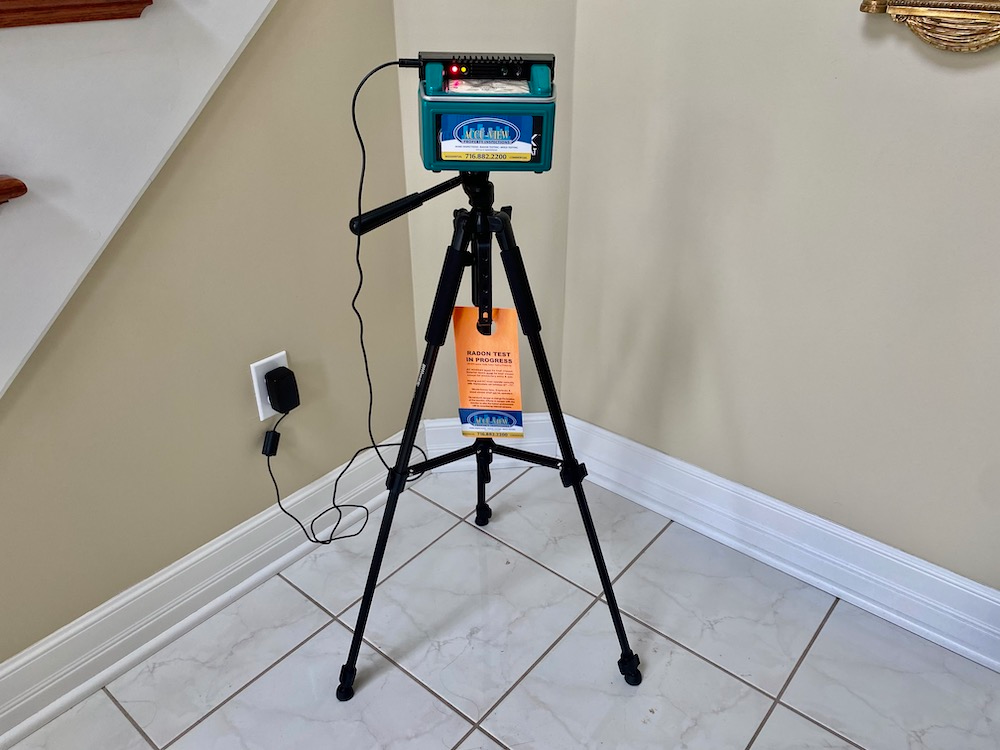
Testing comes before any mitigation decision. Short-term tests run two to seven days and are common during real estate transactions. Long-term tests run ninety days or more and give a more accurate picture of year-round average exposure, since radon levels shift with the seasons. Radon Testing should happen in the lowest livable level of the home, typically a basement used for storage or living space, not an unfinished crawl space.
Winter readings tend to run higher than summer readings because homes are sealed tighter and the stack effect that pulls soil gas indoors is stronger in cold weather. A single short-term test done in July can understate a home’s real winter exposure, which is one reason a long-term test or a retest gives a fuller picture.
DIY kits provide a reasonable first screening. Professional testing uses calibrated continuous monitors and controlled protocols, and it holds up better as documentation during a home sale.
How Radon Mitigation Systems Work
Every method above falls under one of a few radon mitigation system designs, and the right one depends on foundation type. For a full breakdown of each design and when a contractor would choose one over another, see our guide to the types of radon mitigation systems.
Active Soil Depressurization
ASD creates lower air pressure beneath the foundation than inside the home, which stops radon from being pulled indoors in the first place. A quiet, continuously running fan, usually mounted in an unconditioned space like an attic or garage, pulls soil gas through a vent pipe and releases it above the roofline. Properly designed and installed, this method reduces radon by up to 99 percent and is the most common approach used by certified radon mitigation professionals nationwide.
Crawl Space Mitigation
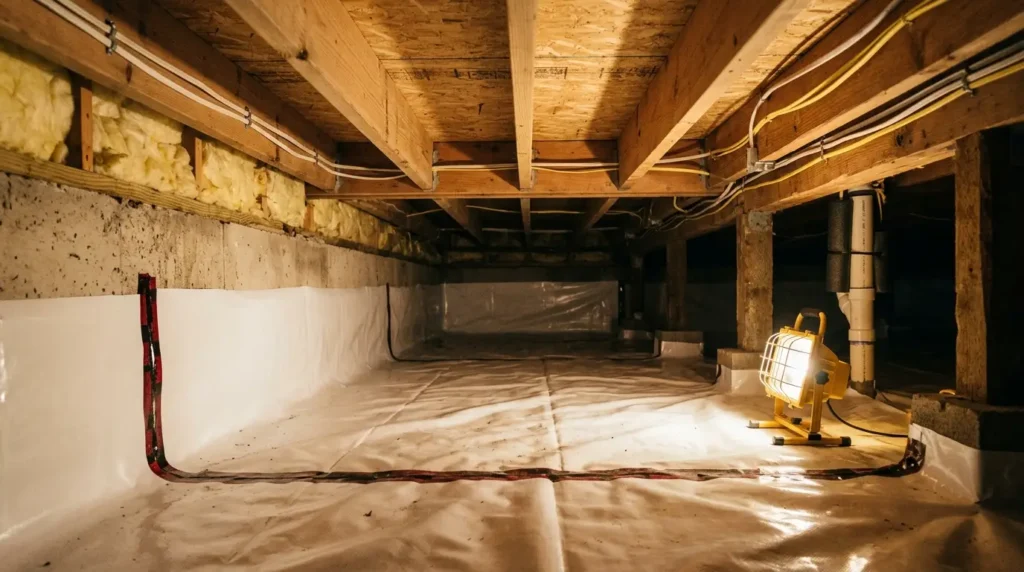
A heavy-duty vapor barrier gets sealed over the exposed soil and to the crawl space walls and support piers, then a vent pipe and fan draw air from beneath that barrier. This approach also cuts moisture in the crawl space, which helps indoor air quality and structural health beyond just radon.
Sealing and Ventilation: Supportive, Not Standalone
Caulking foundation cracks and sealing openings makes an ASD system more efficient, but sealing alone rarely brings a high reading down to a safe level, since radon finds new paths through concrete and soil over time. Ventilation upgrades, including heat recovery and energy recovery ventilators, dilute radon through increased air exchange, but they’re a secondary strategy in mild climates or very tightly sealed homes, not a primary fix in a Wisconsin winter.
Treating Radon in Well Water
Homes on private wells sometimes need water treatment alongside or instead of soil-gas mitigation. Aeration systems spray water inside a tank and vent the released gas outdoors. Granular activated carbon filters are an alternative but need regular maintenance to stay effective. Waterborne radon is less common than soil-gas radon, but it’s worth testing for specifically if your home is on well water and your air test comes back elevated with no obvious soil-gas explanation.
What Does Radon Mitigation Cost?
Cost depends on foundation type, home size, radon level, and system complexity. As of an April 2026 update from Angi, the average cost for a professional radon mitigation system installation runs around $1,000, with most jobs landing in the $800 to $2,500 range.
These figures come from a national aggregator, not from Milwaukee Radon Home’s own job data. Please verify against actual MRH invoices before this goes live and swap in real local numbers if they differ meaningfully from the national range.
Factors that push cost up or down:
- Foundation type: homes with basements or block walls generally cost more to mitigate than slab-on-grade homes
- Radon concentration: higher readings sometimes need a more powerful fan or additional suction points
- Crawl space work: vapor barrier installation adds material and labor beyond a standard ASD setup
- Access and layout: finished basements or complex floor plans can require a more customized design
- Local labor rates: pricing varies by region and contractor availability
For a full breakdown of what drives price up or down in a Milwaukee-area installation, see our guide to the cost of radon mitigation.
Fan electricity use and fan replacement cost. The previous version of this page cited specific kWh and dollar figures for fan operating cost and a 10-to-15-year replacement interval with no source. Fan lifespan and power draw vary by model and installation, so these belong in MRH’s own field data rather than a generic industry figure. Flagging for the team to supply real numbers rather than republishing the old, unsourced ones.
Radon in Milwaukee and Wisconsin Homes
Milwaukee County sits in a part of Wisconsin with meaningful radon potential under the EPA’s Map of Radon Zones, which assigns every U.S. county a zone based on geology, soil permeability, and measured indoor radon data.
Several regional radon contractors cite Milwaukee County as EPA Zone 2 (predicted average indoor levels of 2 to 4 pCi/L), but I could not confirm the exact zone number directly against the EPA’s own zone spreadsheet in this session. Please verify the zone number against the EPA source file linked above before this figure goes live.
Two local factors matter regardless of the exact zone number. Much of Milwaukee’s older housing stock sits on foundations built before radon-resistant construction techniques were standard, and many homes have basements in direct contact with soil, the single biggest radon entry point. Wisconsin’s long, cold winters also keep homes sealed tight for months at a time, which strengthens the stack effect that pulls soil gas indoors. Practically, that means winter test results in Milwaukee often run higher than a summer reading from the same house.
Wisconsin does not require a state license to install a radon mitigation system. There is no state contractor licensing board for radon work here, which surprises a lot of homeowners comparing quotes. The credential that matters instead is certification through the National Radon Proficiency Program (NRPP) or the National Radon Safety Board (NRSB), the two national bodies that train and certify radon professionals. Ask any contractor for their NRPP or NRSB certification number before hiring, since there’s no state license to check instead.
For more on how mitigation systems get designed and installed specifically for Milwaukee’s housing stock and climate, see how radon mitigation systems work in Milwaukee.
How to Choose a Qualified Radon Mitigation Contractor
Since Wisconsin has no state licensing requirement, the vetting burden falls more heavily on the homeowner. A few checks matter more than a sales pitch:
- Confirm current NRPP or NRSB certification and ask for the certification number directly
- Ask what warranty covers the system and how long it lasts
- Request a written proposal that specifies suction points, fan model, and pipe routing, not just a lump-sum price
- Ask whether post-installation testing is included or billed separately
- Get more than one bid if the first quote seems unusually high or low for the home’s size
We cover the full vetting process, including the specific questions to ask before signing anything, in our guide on how to hire a certified radon mitigation contractor in Milwaukee.
Some homeowners consider installing a system themselves. We cover what that realistically involves, and where it tends to go wrong, in DIY radon mitigation: does it work?.
Does Radon Mitigation Actually Work?
Yes, when designed and installed correctly. A properly sized ASD system reduces radon by up to 99 percent in most homes. The real-world failure cases almost always trace back to an undersized fan, a poorly sealed sump pit, or a suction point placed without accounting for the home’s specific soil and foundation conditions, not a flaw in the method itself. We go deeper on effectiveness data and what can go wrong in does radon mitigation really work.
Life After Mitigation: Maintenance and Retesting
A mitigation system is not a set-it-and-forget-it fix. Post-mitigation testing, done shortly after installation, confirms the system actually brought levels down. After that, retest every two years or after any major renovation, HVAC change, or foundation work. A Radon System Inspection can catch fan failures, blockages, or pressure problems before radon levels climb back up. Watch the system’s pressure gauge periodically between formal inspections. A reading outside the normal range usually means the fan needs attention.
Radon Myths That Delay Action
A few misconceptions keep homeowners from testing or fixing a known problem:
- “New homes don’t have radon.” Tighter building envelopes in newer construction can sometimes trap radon at higher concentrations than older, leakier homes.
- “Opening windows fixes it.” Ventilation can temporarily lower a reading, but it is not a reliable long-term solution and doesn’t address the source.
- “Radon is only a problem in certain regions.” Elevated radon has been measured in every state and in homes across every foundation type, which is why testing matters everywhere, not just in high-zone counties.
Taking the Next Step
If your home hasn’t been tested, that’s the place to start. If a test comes back at or above 4 pCi/L, the next step is a system designed for your foundation type by an NRPP- or NRSB-certified installer. For the full picture of how a mitigation system is designed and installed for a specific home, see our radon mitigation system overview. Milwaukee Radon Home handles testing, system design, installation, and follow-up inspection for homes across the Milwaukee metro. Call (414) 455-7279 to schedule testing or talk through what a system would look like for your home.
Frequently Asked Questions
Does Wisconsin require a license to install a radon mitigation system?
Is radon only a problem in homes with basements?
No. Radon can affect any home regardless of foundation type. Slab-on-grade homes, crawl spaces, and split-level houses can all have elevated radon, since the source is the soil underneath, not the basement itself.
What happens if my post-mitigation test is still above 4 pCi/L?
A properly designed system should bring levels well below the action threshold. If a retest still comes back high, the usual next step is a system adjustment, an added suction point, or a larger fan, not a full system replacement. Most reputable installers include a callback or adjustment period in their warranty specifically to cover this.
How long does it take to install a radon mitigation system?
Most single-suction-point ASD installations take one day. Homes needing multiple suction points, crawl space vapor barrier work, or more complex routing can take two to three days.
Does having a radon mitigation system increase home value?
It doesn’t reliably add resale value on its own, but it often improves buyer confidence during a sale. Documented test results and an installed system with warranty paperwork can smooth negotiations, especially with health-conscious buyers who might otherwise ask for a price reduction to cover mitigation themselves.
Conclusion
Radon is invisible, but it’s a solvable problem. Testing tells you where you stand, and a correctly designed active soil depressurization system brings even a high reading down to a safe level in most Milwaukee-area homes. Wisconsin’s lack of a state contractor license makes the certification check more important, not less, so confirm NRPP or NRSB credentials before hiring anyone.
Milwaukee Radon Home handles testing, mitigation system design, installation, and inspection for homes throughout the Milwaukee metro. Call (414) 455-7279 or visit our radon mitigation to schedule an evaluation.