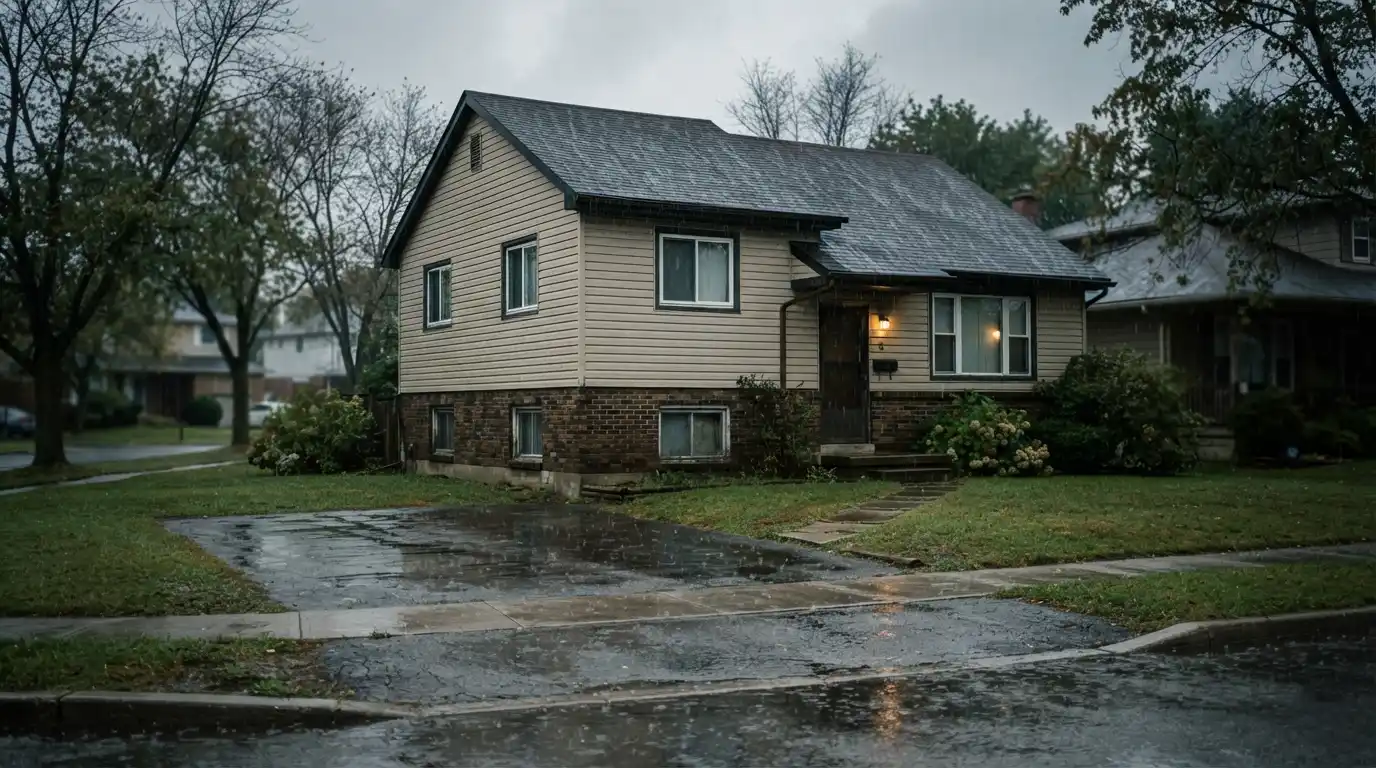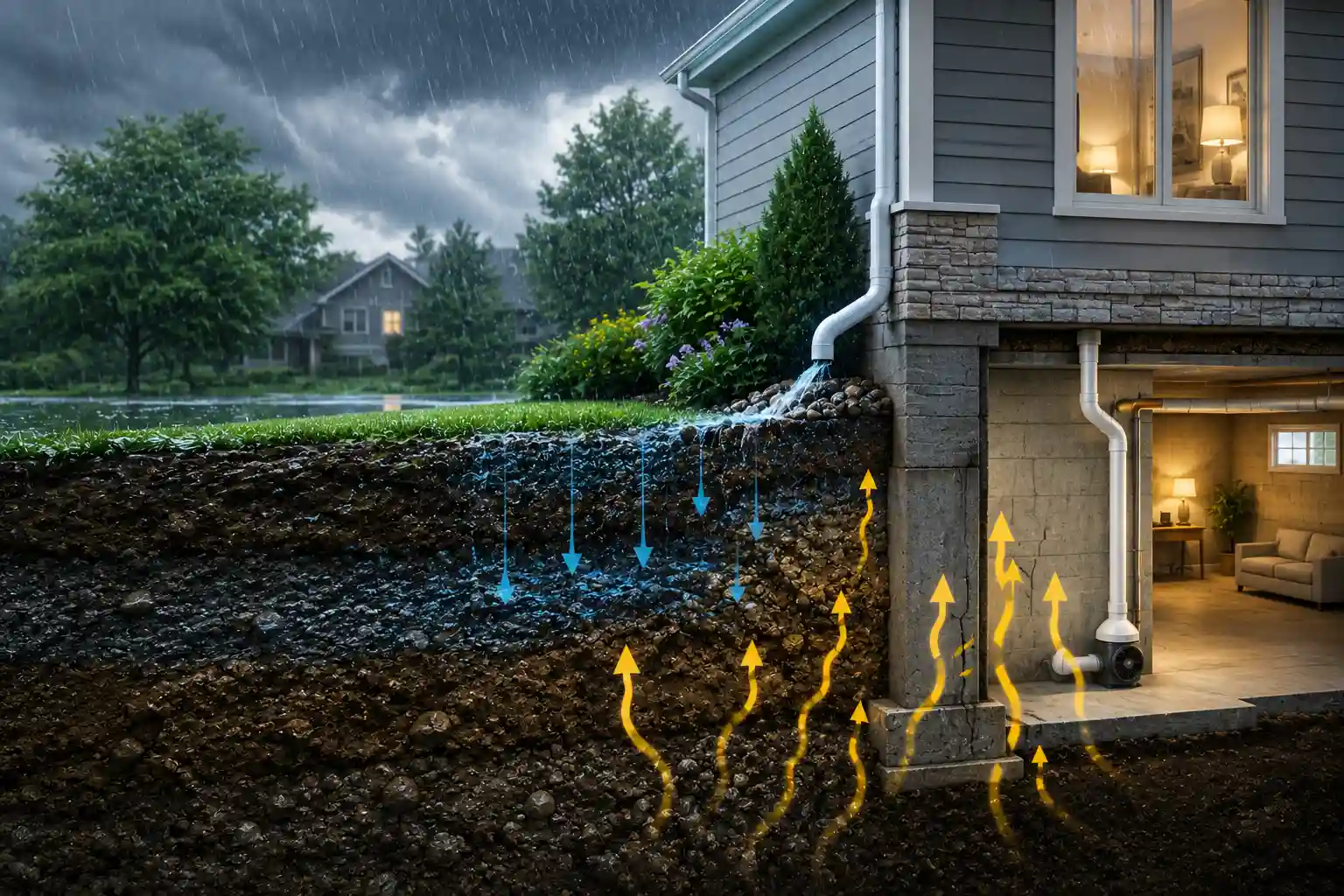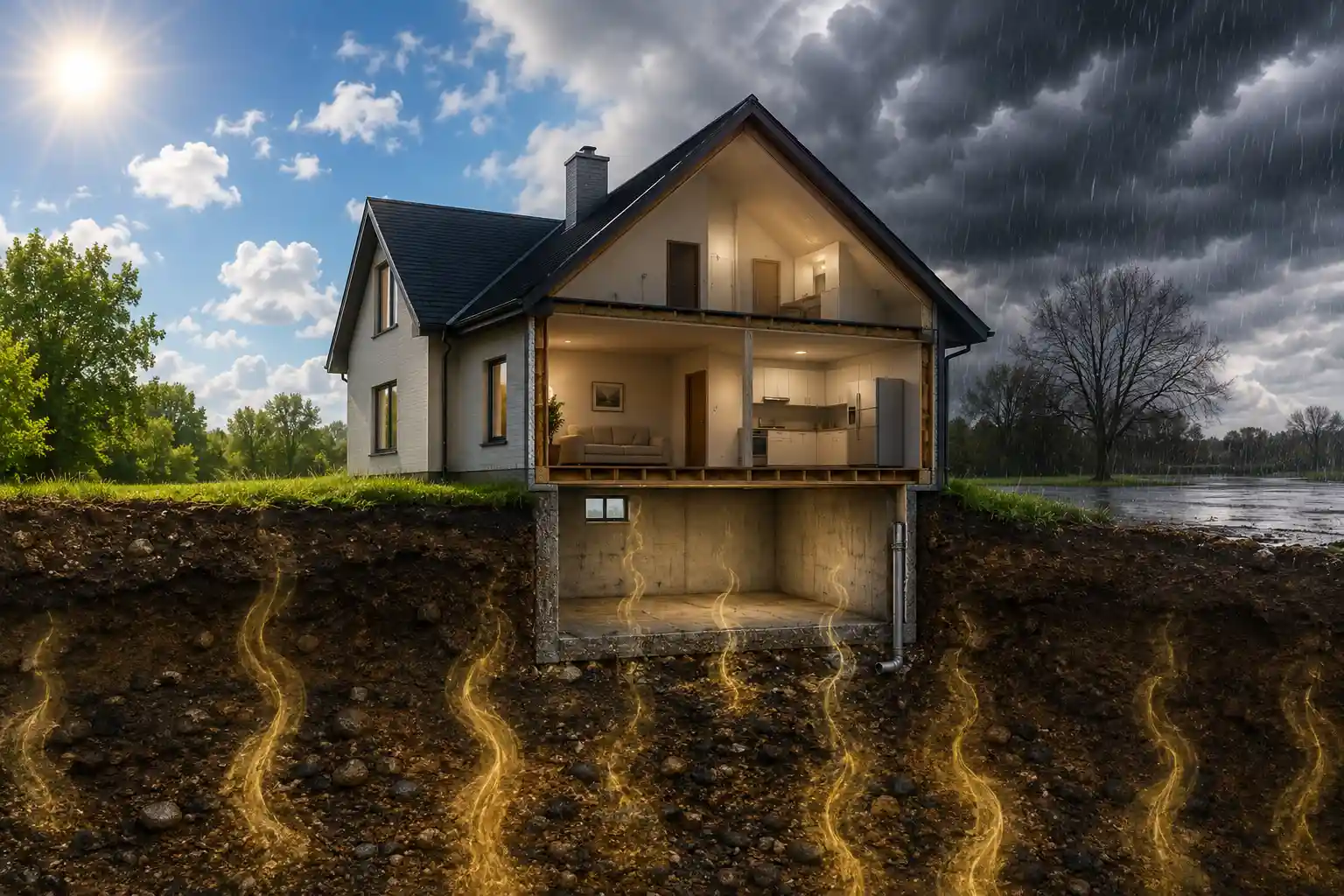

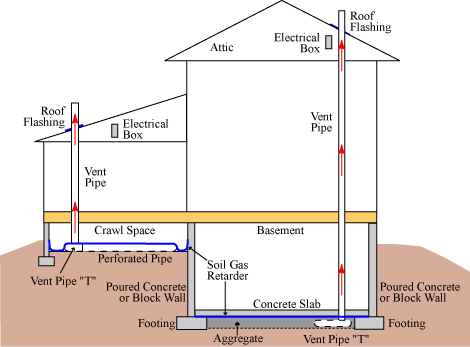
Radon Resistant New Construction systems prevent radon from entering a home by controlling soil gas beneath the foundation and venting it safely above the roof.
They use a gas permeable layer, sealed barrier, and vertical vent pipe to reduce radon entry through the slab and foundation openings. Most systems work passively, with the option to add a fan if testing shows elevated radon levels after construction.
Table of Contents
Why Radon Matters
Radon is a naturally occurring gas that forms when uranium breaks down in soil, rock, and water. It rises through the earth and can enter homes through cracks in the foundation, floor joints, and gaps around utility penetrations. Because radon is colourless and odourless, occupants are unaware of its presence unless they test the air.
When radon decays it releases alpha particles that damage lung cells. Prolonged exposure to high radon levels is linked to lung cancer. In the United States radon is the second leading cause of lung cancer after smoking. For that reason a built‑in radon resistant system is the most reliable way to protect occupants from this hidden hazard.
The Core Idea Behind RRNC Systems & How It Works
The phrase RRNC Systems & How It Works describes a holistic approach that begins at the moment the house contacts the ground. The three pillars of the method are:
- Radon resistant foundation – a sealed concrete base that prevents gas from moving upward through walls or floor edges.
- Radon resistant slab – a concrete floor that incorporates a vent pipe and a vapor barrier so radon cannot bypass the system.
- Ventilation network – a pipe that routes radon from under the slab to the outdoors, either by passive pressure differences or by a low‑power fan.
When these components are installed together, the system creates a continuous low‑pressure pathway that constantly draws radon away from living spaces. This is exactly what RRNC Systems & How It Works aims to achieve.
Step‑by‑Step Design Process
Pre construction radon assessment
Before any concrete is poured, a soil radon test is performed. The test informs the engineer whether the site is in a high, moderate, or low radon zone. The result determines the level of venting required and whether an active fan should be part of the design.
Selecting materials
- Concrete mix – low water‑to‑cement ratio, high density, and no excessive admixtures that increase porosity.
- Sealants – radon‑rated silicone or polyurethane that remains flexible after curing.
- Vapor barrier – six‑mil polyethylene sheet that resists gas diffusion.
- Vent pipe – schedule 40 PVC, three or four inches in diameter, with perforations spaced about twelve inches apart.
All material selections are guided by the objectives of RRNC Systems & How It Works.
Layout of the vent network
A simple serpentine pattern under the slab provides uniform suction. The pipe starts near the foundation wall, runs back and forth across the slab’s footprint, and ends at a rising conduit that exits the building above the roof line. The design avoids sharp bends to keep airflow resistance low.
Determining passive or active ventilation
If the house will have a tight envelope and will be heated or cooled regularly, passive pressure differentials often provide enough suction. In colder climates, or where the building envelope is exceptionally airtight, an electric fan rated for 0.5 to 1.0 cubic feet per minute per square foot of slab area is added. The fan operates only when a radon sensor detects elevated levels, ensuring energy efficiency.
Construction Phase – From Foundation to Finish
Building the radon resistant foundation
- Excavation – soil is removed to the required depth, and a granular base is compacted to provide a stable support.
- Footing installation – rebar is placed according to engineering specifications, and concrete is poured without gaps.
- Joint sealing – after the concrete cures, all control joints receive a radon‑rated sealant.
- Perimeter drainage – a perforated pipe is laid behind the footing and sloped away from the house to keep the ground from becoming saturated, which can increase radon emissions.
These steps ensure the foundation acts as a solid barrier, the first line of defense in RRNC Systems & How It Works.
Preparing the slab area
- The compacted subsoil is smoothed and a six‑mil polyethylene sheet is rolled out, overlapping seams by at least twelve inches and sealing with compatible tape.
- The perforated vent pipe is placed on top of the sheet, following the engineered serpentine layout.
Pouring the radon resistant slab
Concrete is poured over the pipe and barrier, filling the slab to the designed thickness—usually four to six inches for residential homes. During the pour, workers avoid stepping on the pipe and keep the sheet intact. Once the concrete reaches sufficient strength, the slab is finished with a smooth trowel.
Installing the vent termination
At the slab edge the perforated pipe transitions to a rigid conduit that rises through the wall or roof. The pipe‑to‑conduit joint is sealed with radon‑rated caulk, and a vent cap is placed on the exterior. The cap prevents rain, leaves, and insects from entering while allowing radon to escape.
Final testing
After construction, a blower door test creates a slight negative pressure inside the house. A manometer measures the pressure drop across the vent pipe, confirming that the low pressure pathway is functional. A short term radon test is also run to verify indoor radon levels are well below the EPA action level of four picocuries per liter.
How RRNC Systems & How It Works Maintain Low Indoor Radon
The system’s effectiveness relies on three physical principles:
- Diffusion resistance – the polyethylene sheet slows radon migration through the slab.
- Pressure differentials – heating, cooling, and wind create a drop in indoor pressure that naturally pulls gas toward the vent.
- Active extraction (when needed) – an electric fan boosts airflow when passive forces are insufficient.
Because the vent pipe runs beneath the entire slab, radon is collected evenly and expelled continuously. This constant removal prevents accumulation no matter how the house is used, whether occupied, vacant, or undergoing renovation.
Cost Breakdown and Pricing Quotes
Below is a detailed cost estimate for a typical 2,000‑square‑foot home built with a radon resistant system. Prices are averages for the United States in 2024 and may vary by region, labor rates, and material availability.
| Component | Description | Low estimate | High estimate |
|---|---|---|---|
| Radon resistant foundation | Concrete mix, joint sealant, perimeter drain, embedded vent pipe | $1,200 | $2,000 |
| Radon resistant slab | Polyethylene sheet, perforated pipe, concrete pour, edge seal | $1,500 | $2,500 |
| Vent pipe and optional fan | Schedule 40 PVC, rising conduit, vent cap, low power fan (if required) | $300 | $800 |
| Pre construction radon test | Soil gas probe, laboratory analysis | $150 | $300 |
| Post construction radon test | Short term indoor detector, certification | $150 | $400 |
| Total | All items combined | $3,300 | $6,000 |
Example quote for a specific project
Client: New single‑family home in a moderate radon zone
Scope: Radon resistant foundation, slab, passive venting, testing
Estimated cost: $4,250
For an exact, site‑specific quote, call 414‑455‑7279 and ask for a “radon resistant new construction estimate.”
Maintenance Checklist
A properly installed RRNC Systems & How It Works solution requires minimal upkeep, but a short annual review helps keep performance optimal.
- Annual radon test – use a short term detector for a 48‑hour measurement.
- Fan inspection (if installed) – verify that the fan runs when the sensor signals high radon, and clean any debris from the vent cap.
- Seal inspection – look for cracks in the foundation or slab joints; reseal with radon‑rated caulk as needed.
- Drainage check – ensure the perimeter drain remains clear of obstructions that could cause water pooling.
Document any observations and keep the test results with the home’s warranty files.
Frequently Asked Questions
Do I need a radon mitigation fan if my house is tightly sealed?
In most moderate radon zones a tightly sealed home still creates enough pressure differential for passive venting.
In high radon zones or when the envelope is extremely airtight, an electric fan provides extra assurance. The decision is based on the pre construction radon test and the engineer’s recommendation.
Can I add a radon resistant system to an existing home?
Yes, but retrofitting involves drilling holes in the slab, installing a vent pipe, and sealing the foundation, which is more costly and disruptive than building a system in from the start.
How long does the installation add to the construction schedule?
Typically one to two days are added for the extra work on the foundation and slab, which is scheduled alongside the normal concrete pours, so the overall timeline is minimally impacted.
Is the cost of a radon resistant system worth the investment?
When compared to the expense of a full mitigation retrofit later, the incremental cost of a built‑in system is modest. It also protects the health of occupants and can increase resale value, making it a prudent investment.
What maintenance is required for the vent pipe?
The vent pipe itself is passive and requires no service. If an active fan is installed, check the fan operation annually and keep the exterior vent cap clear of leaves and debris.
Conclusion
Radon is an invisible danger that can be stopped at the source. By understanding RRNC Systems & How It Works, homeowners can make informed decisions that embed protection into the very foundation of their new house.
A radon resistant foundation, a radon resistant slab, and a properly designed ventilation network together create a continuous low‑pressure pathway that carries radon safely to the outdoors. The system is cost‑effective, easy to maintain, and compliant with many local building codes.
If you are planning a new build, ask your builder to include a radon resistant system and request a detailed estimate. For personalized guidance, cost clarification, or to schedule a pre‑construction radon assessment, call 414‑455‑7279 today.
Protect your family, protect your investment, and enjoy peace of mind knowing the air inside your home is as safe as the air outside.