Radon Mitigation Systems in Milwaukee, Installed by a Certified Pro
If your radon test came back at 4.0 pCi/L or higher, a radon mitigation system is the proven fix. Milwaukee Radon Mitigation designs and installs active sub-slab depressurization systems in homes across Greater Milwaukee. Owner Brian Thompson, an NRPP-certified radon mitigation specialist with 10+ years of radon work, plans the suction point and pipe route around your basement, seals the slab and sump, and verifies the result with a follow-up test. You get a fair, upfront quote, a clean install and numbers you can see drop.
- Fast Estimates
- Transparent Pricing
- Clean Installations
- NRPP-Certified Specialist
- Fast Estimates
- Transparent Pricing
- Clean Installations
- NRPP-Certified Specialist



What does a radon mitigation system do?
A radon mitigation system uses a fan and sealed pipe to pull radon from the soil under your slab and vent it above the roofline before it enters your home. In Milwaukee, Milwaukee Radon Mitigation in West Allis installs these active sub-slab depressurization systems, led by NRPP-certified radon measurement and mitigation professional Brian Thompson.
Why a High Radon Result Is Worth Fixing
Radon is a colorless, odorless gas from uranium in soil, and the EPA and U.S. Surgeon General name it the second leading cause of lung cancer after smoking. Wisconsin DHS estimates about 1 in 10 Wisconsin homes has a high level.
The good news: radon is one of the most fixable home problems there is. A correctly installed system usually brings levels well below the action level, and our customers have seen drops like 9.5 to 0.30 pCi/L. Read more from the EPA and Wisconsin DHS.
Residential Radon Mitigation Built Around Your Foundation
No two Milwaukee basements are the same. Most Milwaukee-area homes we see have block foundation walls with an older sump and clay or concrete drain tile, plus floor cracks and floor drains. Newer homes may have a sealed sump. The system has to match what is under your floor.

Sub-slab depressurization (our main method)
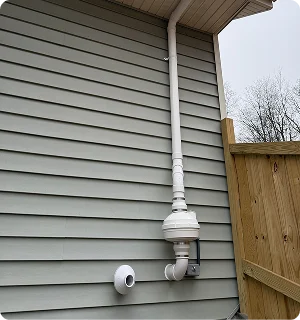
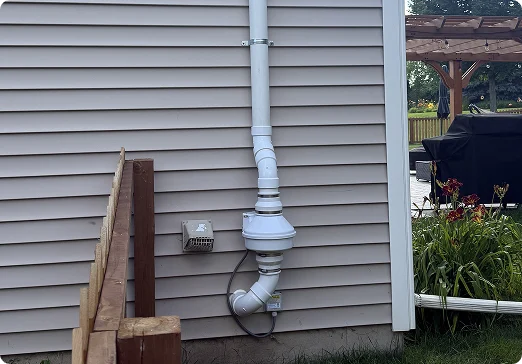
We drill a suction point through the basement slab, dig out a small pit beneath it, and connect a sealed PVC pipe, typically 3–4 inches, to an inline radon fan. The fan runs continuously, creating low pressure under the slab so soil gas is pulled into the pipe instead of seeping into the house. The pipe discharges above the roofline, away from windows.
Sump and drain tile systems
Where a home has drain tile, the sump pit can often serve as the suction point. We fit a custom-cut clear Lexan sump lid that is airtight and removable, so you can still see and service the pump, and add Dranjer floor drain seals where needed. Need a new sump pump or battery backup? Brian installs those too.
Crawl spaces and mixed foundations
Homes with a crawl space get a sealed membrane with suction beneath it, tied into the same fan system. See crawl space radon mitigation.
A pressure gauge (manometer) on the pipe shows at a glance that the fan is pulling suction.
Radon Mitigation for Homes, Commercial Buildings and Daycares
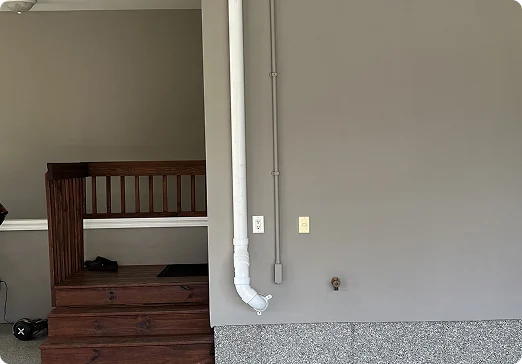
Residential: Most of our installs are in single-family homes and rentals in Milwaukee County and nearby suburbs. We work around finished basements, choose pipe routes that are tidy inside and out, and explain the system before we leave.
Commercial: Offices, retail, multifamily buildings and condo associations have larger slabs, multiple suction points and occupants, so they need their own plan, with after-hours visits when needed. See commercial radon mitigation.
Daycares: Since March 2023, Wisconsin DCF requires licensed child care providers to test for radon and mitigate when results are above the EPA action level. We test and mitigate licensed child care centers, home daycares and schools, and retest after every fix.

Radon Mitigation Results From Real Customers
Andrew S.
9.5 → 0.30
Before: about 9.5 pCi/L (peaks near 10). After: about 0.30 pCi/L.
Steve L.
7.1 → 1.1
Before: about 7.1 pCi/L. After: about 1.1 pCi/L.

“The estimate was fair and that is what we paid.” Pam, whose summer install is “still working great even during the harsh cold weather.”
“Went above and beyond to create a unique solution for our unique situation.” Matt F.
 Posted on Google

 Matthew Ware
Trustindex verifies that the original source of the review is Google.
Brian is the epitome of professionalism. We moved into our home a few months ago that had a radon mitigation system installed in 2011, but it was not performing well, and our levels were between 4-9 pCi/L. Brian came out immediately and thoroughly assessed our system. He discovered several ways our system could be improved and in detail went through the process and sent a quote in less than 24 hours. He was extremely kind, personable, thoughtful and spent time explaining the process of radon movement and how the mitigation would best function in our current situation. We had existing cedar siding issues with a small amount of paint that was chipped off in the process. He wanted to paint the area for us and then offered a second coat when he returned to pick up our professional post-installment radon test. I have referred him to family and friends. Brian has far exceeded our expectations and gone above and beyond. His communication was phenomenal. He arrived a few minutes early to every appointment. Our radon level was near atmospheric levels (0.4 pCi/L) within 24 hours following the installment. We can’t thank him enough for his wonderful work and our peace of mind.Posted on Google ZER HERI can’t say enough great things about Brian and his team at MKE Radon Mitigation! They were absolutely excellent to work with from start to finish. One of the things I appreciated most was their communication. Brian was responsive, professional, and kept everyone informed throughout the process, which makes such a difference when you’re working through a real estate transaction. We had a very tight nine-day closing timeline, and they were able to get the radon mitigation system installed within that timeframe. They also worked with my sellers to allow payment at closing, which was incredibly helpful because they had already invested a significant amount of money into foundation work. I truly appreciate working with people who go above and beyond to create an excellent customer experience. Brian and his team made the process easy, accommodated our tight timeline, and helped us get the deal across the finish line. If you need radon mitigation, I highly recommend MKE Radon Mitigation. Great service, great communication, and a team that genuinely cares about their customers!Posted on Google
 Aryanna WocelkaBrian was wonderful to work with! We wanted someone we could trust given the safety of our family. He was very helpful in answering all of our questions, is extremely knowledgeable and made the process easy. We were so impressed with the seamless work he completed, how quickly we were able to get scheduled and unmatched communication. There’s no hesitation to have Brian help with your Radon needs, we’d hire him over again and will recommend to our friends and family. Thank you, Brian!Posted on Google
 Lauren NicoleWe recently had Brian out to add a radon mitigation system to our 100 year old house. We thought we had drain tiles, however, it turns out we don't. Brian did a great job installing the system and providing clear communication on how the lack of drain tile adds extra time to the installation process. Brian was great at explaining the system and answering any questions we had. The installation looks great and is extremely clean. I would absolutely recommend Milwaukee Radon Mitigation!Posted on Google
 Ty AshBrian was great and super responsive! In about five days, he had our radon system repaired, re-tested, and ready to go including a weekend visit. Definitely will work with them again and share with our friends.Posted on Google
 Jane MareeWorking with Brian was such a pleasure. Communication was consistent. He was precise and fair with his estimate and price. He went above and beyond to ensure the unit was installed in a place that was aesthetically pleasing. He guarantees the unit will work and will show up if there’s issues down the road. 10/10!Posted on Google
 Chelsea WeaverBrian recently replaced the fan that went out in our radon mitigation unit. He was extremely responsive and professional. He got us a quote quickly, pointed out another minor issue that we could get fixed for a very reasonable price (but was not at all pushy about it--just an FYI we wouldn't have known about otherwise). He was very flexible in scheduling, as we personally don't have simple schedules. He arrived on time, performed the job quickly, and payment was super straightforward. I'd highly recommend Brian and his company for any of your radon needs.Posted on Google
 Luke SchroederNeeded to write a review for Milwaukee Radon after our stellar experience working with Brian to install our home radon mitigation system. Brian is friendly, an excellent communicator, and both knowledgeable and experienced which was on full display as he walked us through the process and approach to crafting the right solution for our home. Additionally, he does the installs himself so you know that you will have an experienced installer doing the job for you which is great! But what I was most impressed by was Brian’s integrity and dedication to detail. Brian clearly takes pride in his work: not just in doing the job but doing the job well. And that’s something you definitely can’t find just anywhere. I would 100% recommend MKE Radon to anyone looking into a home radon mitigation install. Based on my experience, I’m sure you’ll be very pleased by the job that is done and in working with Brian!Posted on Google
 Jennifer FerreraBrian was so responsive and easy to communicate with. He was able to fit in our radon mitigation on a tight timeline and get our home’s radon to a safe level. I would recommend his services to anyone in need.Posted on Google
 Nicholas MatulaCouldn't be happier with my radon mitigation system and installation. Brian is super friendly, responsive, and knowledgeable. Was able to obtain a 95% reduction and reach outdoor radon levels. I wouldn't recommend anyone else.
What Affects the Price of a Radon System in Milwaukee
Every quote is based on your house, not a one-size price. The main factors:
| Factor | Why it matters |
|---|---|
| Foundation type | Basement slab, crawl space or a mix changes the materials and labor. |
| Soil under the slab | Tight soil or clay may need a larger suction pit or a second suction point. |
| Sump pit and drain tile | A sealed sump can act as the suction point; an open sump needs an airtight cover. |
| Pipe route | An interior route through a closet or garage costs differently than an exterior run. |
| Fan choice | Fan size depends on how much suction your slab needs. |
| Cracks and openings | More sealing means more labor. |
| Electrical | The fan needs a nearby outlet or a dedicated circuit; the electrical connection is made by a licensed electrician. |
Typical range for a standard Milwaukee-area home: most homes fall between $1,200 and $1,500, and the follow-up test is included with every install. Homes that need extra suction points, crawl space work or other add-ons are quoted per job, so request a free quote for your exact price.
For a full breakdown of costs, see our radon mitigation cost guide.

How to Choose a Radon Mitigation Contractor in Milwaukee
Searching “radon mitigation near me” brings up national franchises, handymen and local specialists. Before you hire anyone, check these five things. Here is how we measure up.
- Current certification. Ask for an NRPP or NRSB credential and look it up. Brian Thompson is an NRPP Radon Mitigation Specialist (109619-RMS) and Radon Measurement Professional (109591-RMP); you can check both with the NRPP search tool at nrpp.info.
- A site visit or a detailed look at your home. A good quote names the suction point, pipe route and fan, not just a price.
- A clear quote with no surprises. Pam wrote, “The estimate was fair and that is what we paid.”
- A post-mitigation test. The only proof a system works is a new number. Every install includes a follow-up test, and every system is backed by a written results guarantee and a lifetime workmanship warranty.
- Clear communication. Julissa L. chose us for quick, knowledgeable answers and said Brian explained how the system works.

Got a High Radon Test? Let's Fix It.
Send us your result and a few details about your basement for a free, no-pressure quote.
Installed to National Radon Standards
Our systems are designed to the ANSI/AARST standards used across the radon industry, which cover suction point placement, pipe sizing and labeling, fan location outside living space, exhaust height and distance from windows, and system monitoring. Brian is NRPP certified in radon measurement and mitigation, and the EPA action level of 4.0 pCi/L is the target every system is built to beat.

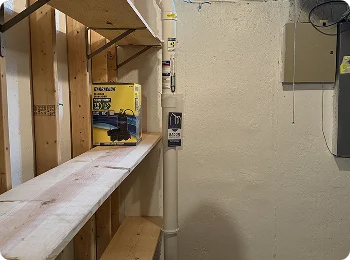
Active vs Passive Radon Systems
Active systems
Active systems use a fan to create continuous suction under the slab. They are the standard fix for existing Milwaukee homes that test high.
Passive systems
Passive systems are pipes installed during construction that rely on natural airflow. They help, but often not enough on their own. Wisconsin DHS notes that when piping is already in place, a contractor can add a fan to turn a passive system into an active one. See passive radon systems and radon resistant new construction.

How We Install a Radon Mitigation System
1. Review your test and your home.
We look at your radon result, foundation, sump, finished areas and the best place for the pipe to exit. If you have no recent test, we start with one.
3. Installation day.
We core the slab, create the suction pit, seal cracks and the sump, run and support the pipe, mount the fan outside living space and add a pressure gauge (manometer). A licensed electrician makes the fan's electrical connection. Then we clean up. A standard install takes about 4 hours.
2. Design and quote.
You get a plan that shows the suction point, pipe route and fan location, and a clear price, usually the same day or within 24 hours.
4. Post-mitigation test.
No sooner than 24 hours and no later than 30 days after installation, Brian runs the follow-up test, or pays for a third-party lab test, so you can see your new level. He also shows you how to read the manometer.

1. Review your test and your home.
We look at your radon result, foundation, sump, finished areas and the best place for the pipe to exit. If you have no recent test, we start with one.

2. Design and quote.
You get a plan that shows the suction point, pipe route and fan location, and a clear price, usually the same day or within 24 hours.

3. Installation day.
We core the slab, create the suction pit, seal cracks and the sump, run and support the pipe, mount the fan outside living space and add a pressure gauge (manometer). A licensed electrician makes the fan's electrical connection. Then we clean up. A standard install takes about 4 hours.

4. Post-mitigation test.
No sooner than 24 hours and no later than 30 days after installation, Brian runs the follow-up test, or pays for a third-party lab test, so you can see your new level. He also shows you how to read the manometer.

What a Typical Milwaukee Radon Mitigation Job Looks Like
Most homes we work on are within about 25 minutes of our West Allis base, and many have a basement with block foundation walls and an older sump with clay or concrete drain tile. A standard install takes about 4 hours: a suction point at the slab or sump, a custom-cut clear Lexan sump lid, 3–4 inch pipe to an exhaust above the roofline and a fan outside living space. The follow-up test comes 24 hours to 30 days later. In Brian’s experience, typical results are below 2.0 pCi/L, with more than 90% of homes below 1.0 pCi/L.
Related Radon Services
Radon Fan Replacement
Already have a system and the fan has gone quiet? We replace fans on any system.
Radon System Inspection
Bought a home with a system in it? We check that it is working and up to standard.
Radon Testing
Not tested yet, or need a second opinion on an inspection result? Start with a professional test of at least 48 hours.
Radon Mitigation System FAQs
What affects the price of a radon system in a Milwaukee home?
The price of a radon system in a Milwaukee home depends mostly on your foundation, the soil under the slab, whether you have a sump pit, how the pipe has to be routed and which fan is needed. A simple basement with an interior route usually costs less than a split-level with a crawl space. Our radon mitigation cost guide breaks down the numbers.
How long does it take to install a radon mitigation system?
Most single-family radon mitigation systems are installed in one visit, and the house can be lived in as normal while we work. The exact time depends on the foundation, the pipe route and how much sealing is needed. A standard home takes about 4 hours. The follow-up test, included with every install, is done 24 hours to 30 days after installation.
Do radon mitigation systems really work?
Yes. A properly designed sub-slab depressurization system reliably lowers indoor radon, and the EPA recognizes it as the main method for existing homes. Our customers have reported drops from about 9.5 to 0.30 pCi/L and from about 7.1 to 1.1 pCi/L. A post-mitigation test confirms your own result.
What happens on installation day?
On installation day we core a hole in the slab, dig a small suction pit, seal cracks and the sump, run sealed PVC pipe to the exhaust point, mount the fan outside living space (a licensed electrician makes the electrical connection) and add a pressure gauge (manometer). Then we clean up and explain the system. Handy homeowners can read our DIY radon mitigation guide, but we recommend a certified install.
How do I choose a certified radon mitigation contractor?
Choose a contractor with a current NRPP or NRSB certification you can look up, a written quote that names the system design, and a post-mitigation test included in the job. Read recent reviews for comments on honesty and cleanliness. Brian Thompson is an NRPP-certified radon measurement and mitigation professional and rated 5.0 on Google. Request a free quote to start.
What is sub-slab depressurization?
Sub-slab depressurization (SSD or ASD) is the most common radon mitigation method. A fan connected to a pipe through your basement floor creates lower pressure under the slab than inside the house, so radon is drawn into the pipe and vented outdoors above the roof instead of leaking into your living space.
Ready for a Radon Mitigation Quote?
Share your test result and address and Brian will follow up with a plan and price.
Radon won't wait, why should you?
Contact Milwaukee Radon Mitigation today for expert radon testing, mitigation, and system installation services in Milwaukee, WI. Ensure a healthy indoor environment for your family by reaching out to our certified professionals for reliable and efficient radon solutions.
6301 West National Avenue West Allis, WI 53214
Radon Mitigation Systems Across Greater Milwaukee
We install systems in all 19 communities we serve, including West Allis, Wauwatosa, Greenfield, Brookfield and New Berlin. See all service areas.