
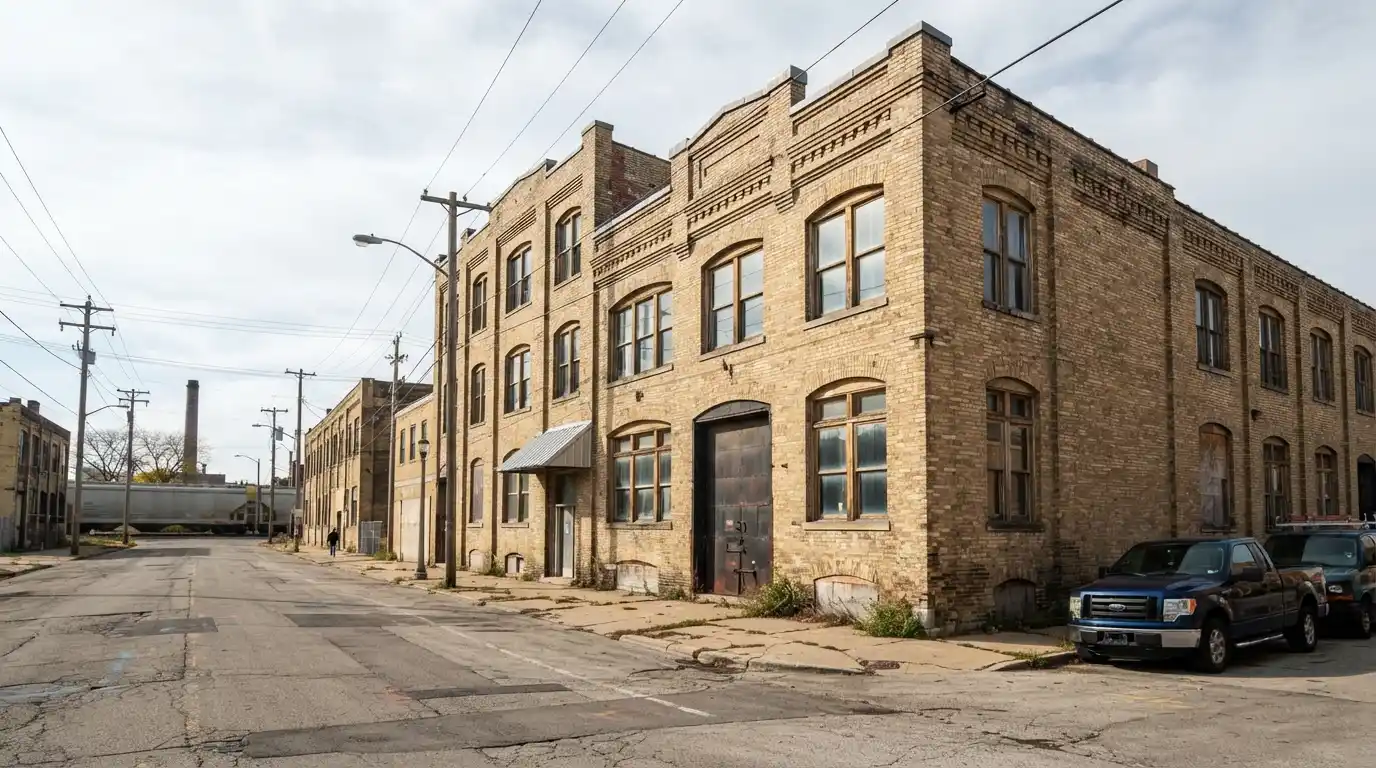
Vapor intrusion testing Milwaukee starts with one rule: Wisconsin requires screening at every contaminated site. That obligation sits in the state’s environmental cleanup rules, and the Wisconsin DNR states it directly: screening must be conducted at every contaminated site, without exception for building type or size.
For a Milwaukee commercial property owner, the practical question is not whether the rule exists. It is whether your property falls inside it, and what you are actually required to do if it does. Both are answerable, and one of them you can check yourself in about five minutes.
Table of Contents
What Vapor Intrusion Testing Milwaukee requires
The obligation is triggered by contamination, not by occupancy or by a complaint. If a property is a contaminated site under the state’s rules, the vapor pathway has to be screened as part of the site investigation. It is not an optional module a consultant can decline to include.
The framework document is RR-800, the DNR’s guidance on addressing vapor intrusion at remediation and redevelopment sites in Wisconsin. It covers screening, investigation, immediate response actions, mitigation, and long-term stewardship.
Two features of the Wisconsin approach matter more than people expect:
- Future buildings count. The obligation extends to buildings that could be affected, not only those standing today. A vacant parcel with contamination beneath it carries a vapor consideration into whatever gets built on it.
- Mitigation is not cleanup. Installing a system controls exposure. It does not resolve the contamination or close the file, and the DNR is explicit about the distinction.
Does this apply to my Milwaukee property?
You can check this yourself, free, before you call anyone.
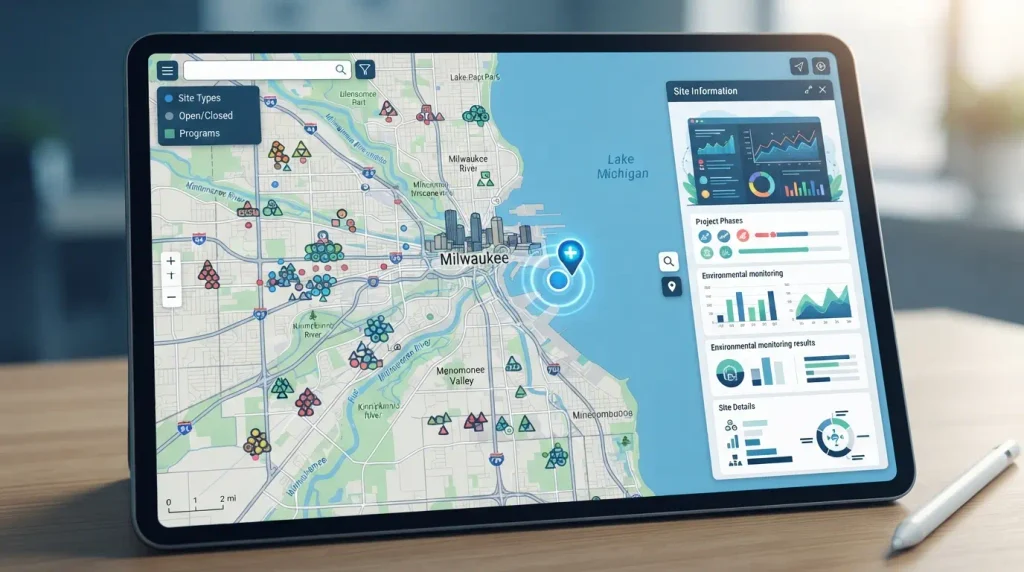
The DNR publishes a public mapping tool, the RR Sites Map, showing contaminated properties and cleanup activity across Wisconsin. It runs in a browser on a phone or a desktop. Enter an address and you can see open and closed cleanup sites, properties carrying continuing obligations, landfills, and sites that received brownfield funding. The companion database, BRRTS on the Web, holds the detailed records behind each mapped activity.
What to look for:
- Your own parcel. An open or closed activity on your property means a file exists, and the vapor pathway should have been addressed in it.
- The surrounding blocks. Contamination migrates. A site upgradient of you can put a plume under your building even though nothing was ever spilled on your land.
- Continuing obligations. These are requirements attached to a property after a case closes, and they transfer with ownership. If your parcel carries one, you are already inside a regulatory framework whether or not anyone told you at closing.
- Activity type. Leaking tank cases and environmental repair cases point at different contaminant families, and solvent cases carry more vapor risk than fuel cases at the same distance.
A blank map is reassuring but not conclusive. The database covers what was reported to the DNR. Releases that were never discovered or never reported do not appear, which is a real limitation in a city with this much industrial history.
Worth doing before a purchase closes. Twenty minutes on the RR Sites Map ahead of a Phase I will not replace professional due diligence, but it tells you early whether the vapor pathway is likely to become part of the conversation.
Why Milwaukee has more of these sites than most of Wisconsin
Milwaukee County carries a dense layer of manufacturing, metal finishing, printing, and fuel storage going back well over a century, alongside decades of small dry cleaners in neighborhood retail strips.
That history produces the two contaminant families that drive most vapor work. Chlorinated solvents came from degreasing and dry cleaning, and they persist underground for a very long time. Petroleum came from fuel storage and leaking tanks, and it breaks down more readily but still matters at close range.
It also means a large share of the county’s commercial building stock sits on or near parcels with some history. Older industrial corridors and the blocks around them carry more of this than newer suburban development in Waukesha or Ozaukee counties, though none of those areas are exempt.
What testing is required, and when
Screening comes first and is often the end of it. Screening is an evaluation rather than a sampling event: the consultant looks at what contamination is present, where it sits relative to buildings, and whether a vapor pathway is plausible.
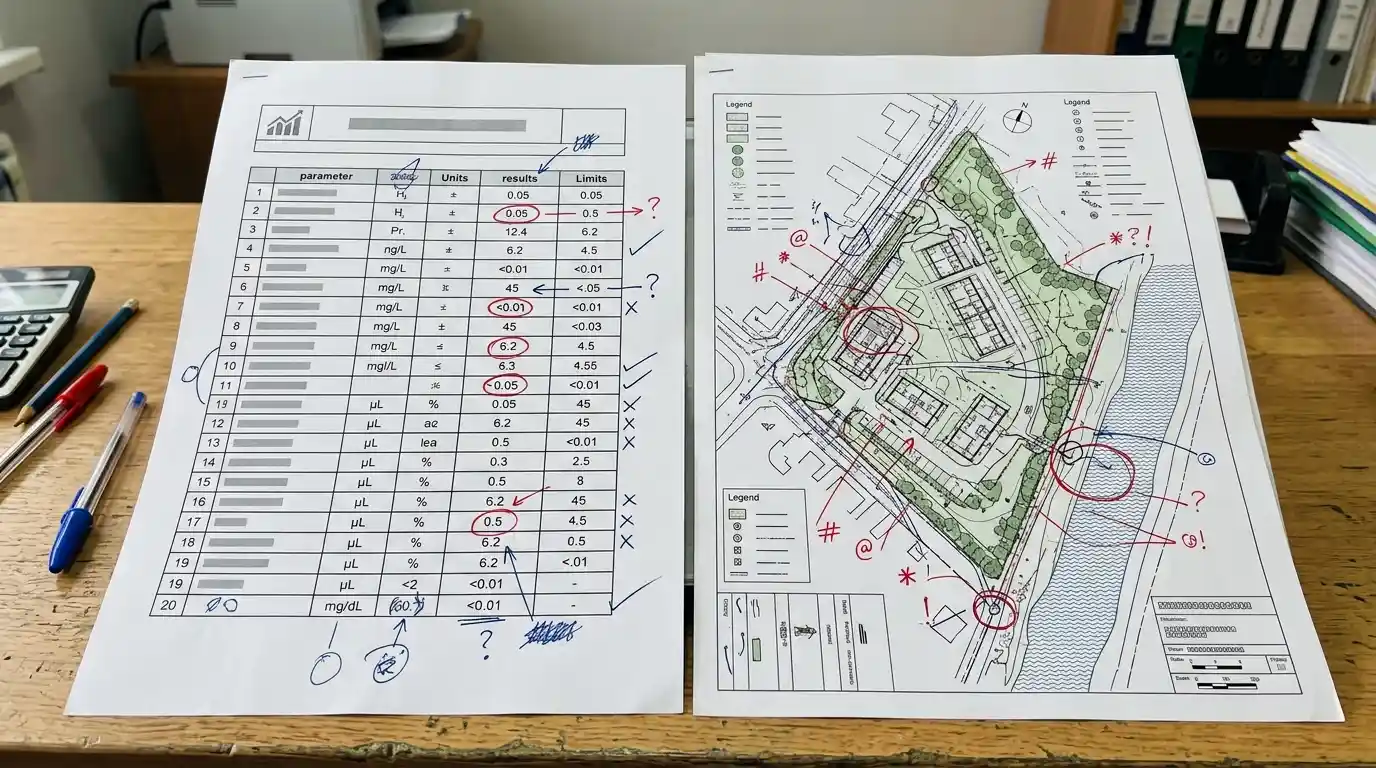
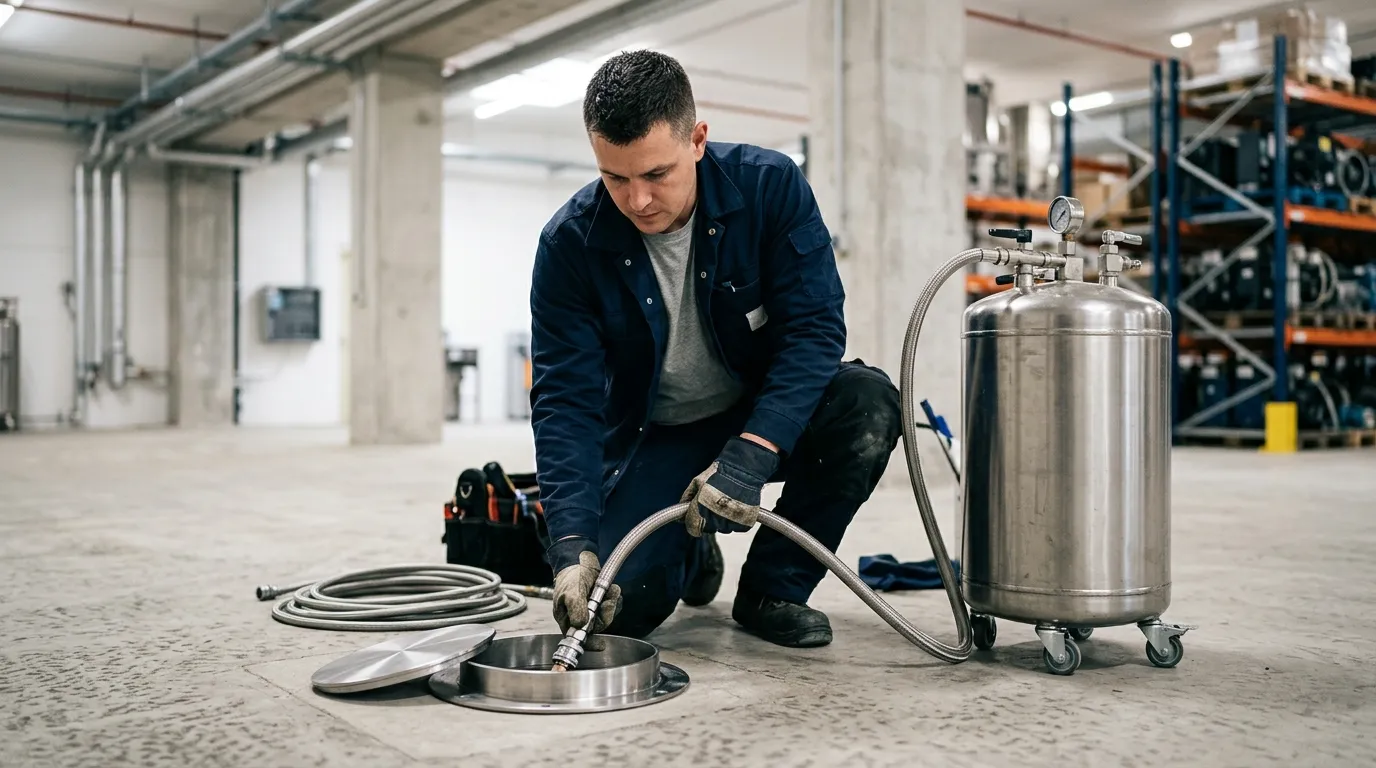
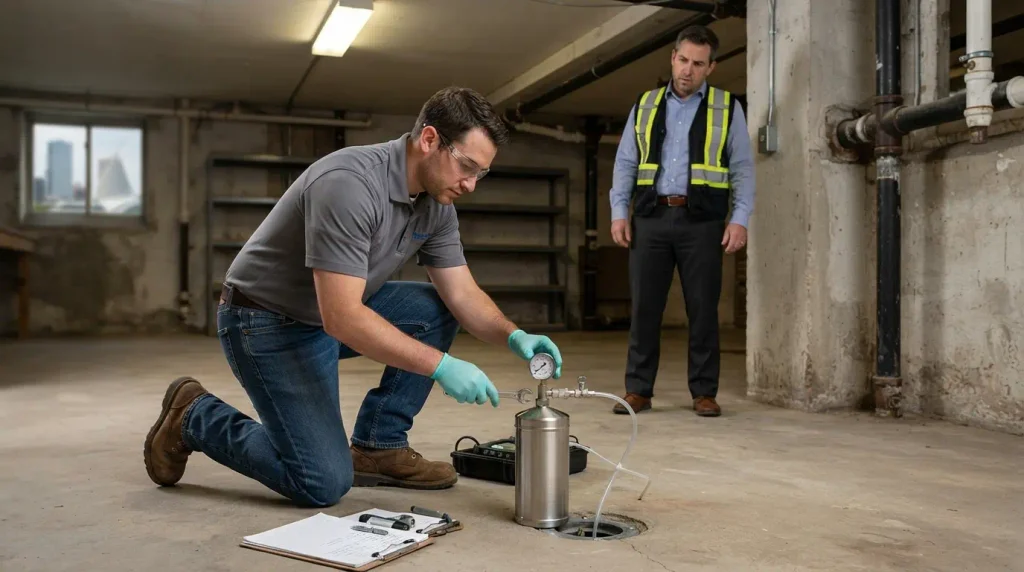
If screening indicates potential for vapor intrusion, the investigation escalates. That typically means sub-slab vapor samples taken beneath the building and indoor air samples from the occupied space, collected together and analysed at a laboratory. Results are compared against Wisconsin’s own vapor action levels and vapor risk screening levels rather than against EPA’s published numbers directly.
Where TCE is the contaminant, the timeline compresses. Wisconsin treats TCE as an acute concern and calls for expedited assessment, with interim actions permitted before a full investigation concludes.
How vapor intrusion testing works covers the sampling process in detail, and understanding your test results explains how Wisconsin’s screening values work and why they differ from EPA’s.
What you actually have to do as the property owner
The obligations depend on your position. Three common situations:
| Your situation | What is generally expected of you |
| Your property has an open cleanup case | The vapor pathway must be screened as part of the investigation. Your consultant handles the work and the DNR project manager oversees it |
| A neighbor’s responsible party requests access | Access is normally requested rather than compelled. The sampling is usually funded by them. Review the access agreement before signing |
| You are buying or redeveloping | No automatic obligation outside a regulatory case, but vapor is a recognised pathway in environmental due diligence and lenders increasingly ask |
In practice the sequence for an owner inside an open case looks like this:
- Find out what file already exists. The RR Sites Map and BRRTS tell you whether there is a case and who the assigned DNR project manager is.
- Engage an environmental consultant. Investigation and regulatory reporting under the state cleanup rules is consulting work. They write the sampling plan and deal with the DNR.
- Provide building access. Sampling needs the lowest level, mechanical spaces, and often tenant areas. Access coordination is usually the slowest part of the process.
- Review results against Wisconsin values. Your consultant compares the data. Check which building category was applied, since it changes the answer.
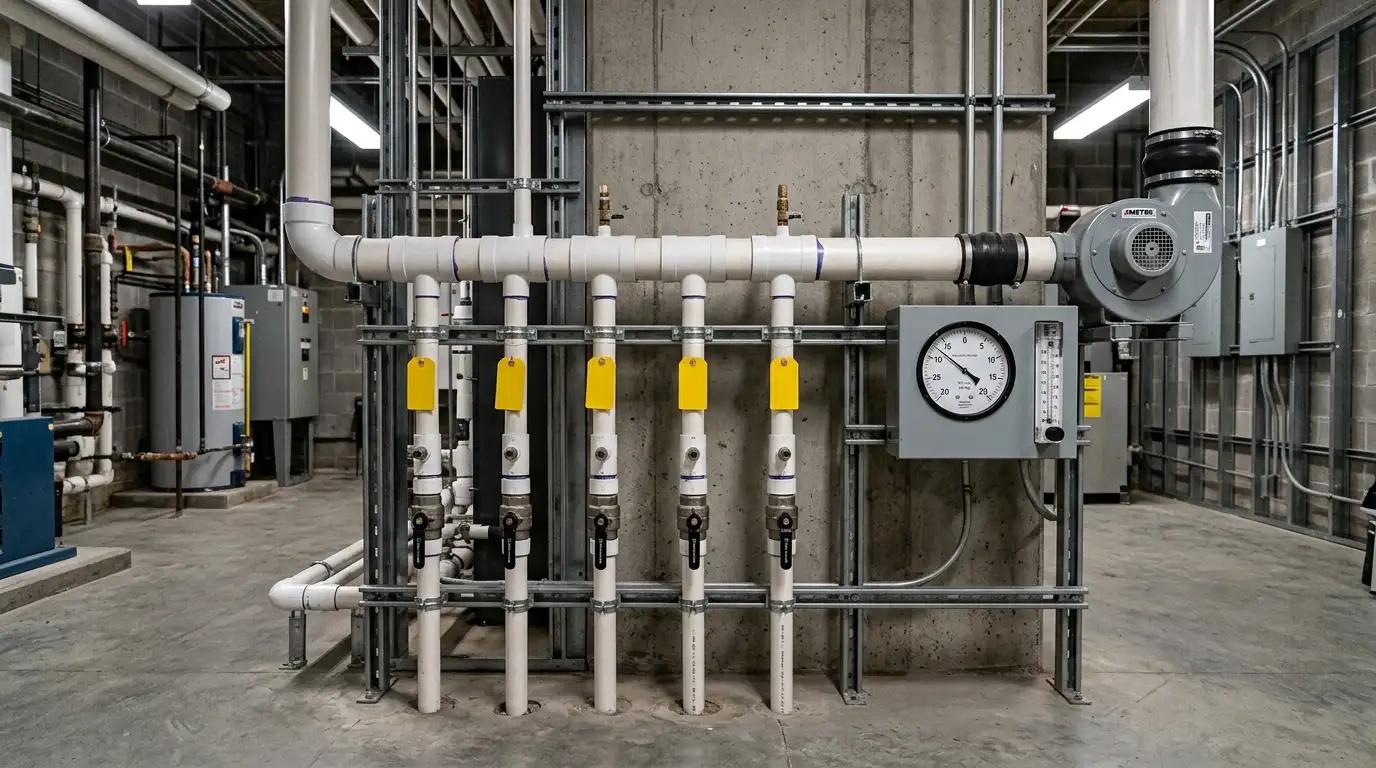
- Mitigate if required. This is contractor work, and the DNR recommends contractors certified through the National Radon Proficiency Program.
- Maintain and document. Systems carry annual inspection and record-keeping obligations that continue for as long as the system is needed.
Your obligations after a system is installed
This is the part owners underestimate, and it is where properties get caught out at sale.
- Annual inspection of the system, documented on the DNR’s vapor mitigation system inspection log form
- A written operation, monitoring and maintenance plan setting out what is checked, at what thresholds, and who is notified
- Active notification through an alarm or indicator, expected on essentially all active systems
- Telemetry with alerting, and backup power, where acute risk and residential occupancy overlap
- Continuing obligations that survive case closure and transfer to the next owner with the property
The DNR’s guidance on monitoring is specific, including alerting within hours of a system failure rather than waiting for a scheduled check. The maintenance discipline is the same one behind annual radon system inspections, with considerably more documentation attached.
Who to contact in the Milwaukee area
Three different roles, and mixing them up wastes time.
| Role | What they handle |
| DNR Remediation and Redevelopment program | Regulatory oversight. If a case exists, it has an assigned project manager. The DNR publishes staff contacts by region and county, and Milwaukee sits in the Southeast region |
| Environmental consultant | Site investigation, sampling, data interpretation against Wisconsin values, DNR submittals, and case documentation |
| Mitigation contractor | System design, installation, verification, and ongoing inspection. Certification matters here because Wisconsin does not license this work |
The DNR also runs brownfield assistance for redevelopment projects, which is worth knowing about if contamination is complicating a build rather than only an occupancy question. Start from the department’s brownfields program and its vapor intrusion resources.
FAQ
I bought the property after the contamination happened. Am I responsible?
Not necessarily, and Wisconsin has liability tools specifically for this. The state operates a voluntary party liability exemption programme under which a party investigates and cleans up a property and receives limits on future liability for that contamination. Whether it fits your situation depends on the facts, and the answer changes what you should do next. This is a question for an environmental attorney early rather than late.
How do I find out whether my building already carries continuing obligations?
The RR Sites Map includes a layer for properties where continuing obligations are in place, and the underlying database holds the detail of what those obligations are. Obligations transfer with the property, so they can exist without the current owner having been told clearly at purchase. If your parcel appears on that layer and you were unaware, that is worth resolving before it surfaces during a sale or a refinance.
My property does not appear on the map. Does that mean it is clean?
It means nothing was reported to the DNR that got mapped. That is genuinely good news and it is not a clearance. Spills that were contained and cleaned up immediately without a case being opened, releases that were never discovered, and some older closed cases may not appear. In a city with Milwaukee’s industrial history, absence from the database is weaker evidence than it looks.
Does the City of Milwaukee have separate requirements from the DNR?
Environmental cleanup and vapor intrusion are regulated at state level through the DNR, so the substantive requirements come from there rather than from the city. Municipal involvement usually shows up through building permits, mechanical and electrical approvals for the system itself, and in redevelopment through local brownfield programmes and incentives. Check permitting requirements locally before installation is scheduled.
Can I have my building tested before anyone asks me to?
Yes, and there are good reasons to. Owners considering a sale, a refinance, or a change of use sometimes want to know before a buyer’s consultant tells them. Voluntary sampling outside a regulatory case does raise questions about what happens if results are elevated, including whether anything becomes reportable. Discuss that with a consultant and an attorney before sampling rather than after, so you understand the possible outcomes in advance.
How long does the whole process take from first letter to closed file?
Longer than most owners expect, and the variation is wide. Sampling alone usually spans multiple rounds across more than one season. Where mitigation is required, design, installation and verification add further months. Where the underlying contamination remains, the system itself becomes a long-term obligation rather than something that ends. Budget in years for the regulatory arc, not weeks, and treat the mitigation system as permanent infrastructure.
Conclusion
If sampling has shown you need mitigation, what you want is a system sized for your actual slab and your actual contaminant, installed to the ANSI/AARST soil gas standards, with verification documentation a DNR project manager will accept.
Milwaukee Radon Mitigation designs and installs vapor mitigation systems for commercial and industrial properties across Milwaukee, Waukesha and Ozaukee counties. We work alongside your environmental consultant rather than replacing them, and the work is led by Brian Thompson, an AARST and NRPP certified specialist. Call (414) 455-7279, request a free quote, or see our vapor intrusion mitigation services.
If certification questions are what you are weighing, our guide to hiring certified radon mitigation in Milwaukee covers what to ask and what to verify, and most of it applies equally to vapor work.