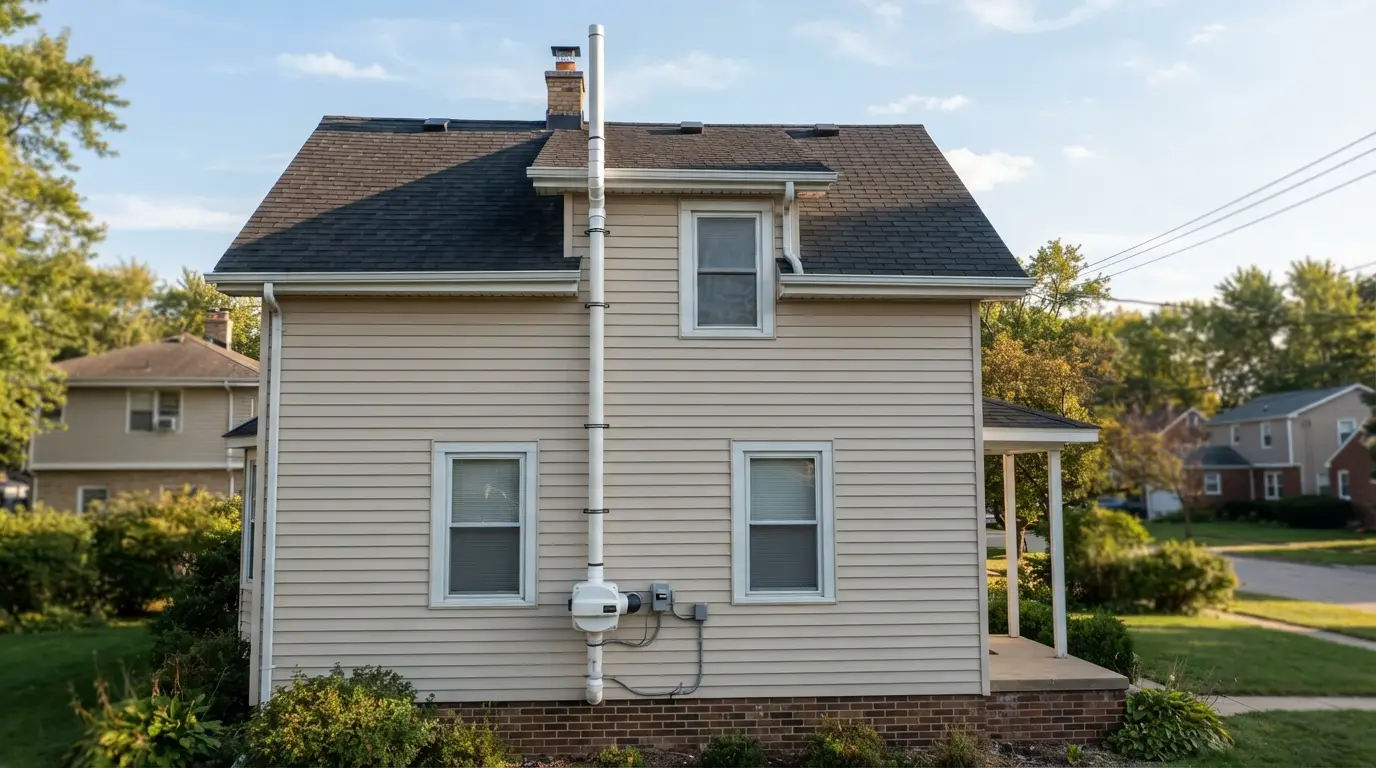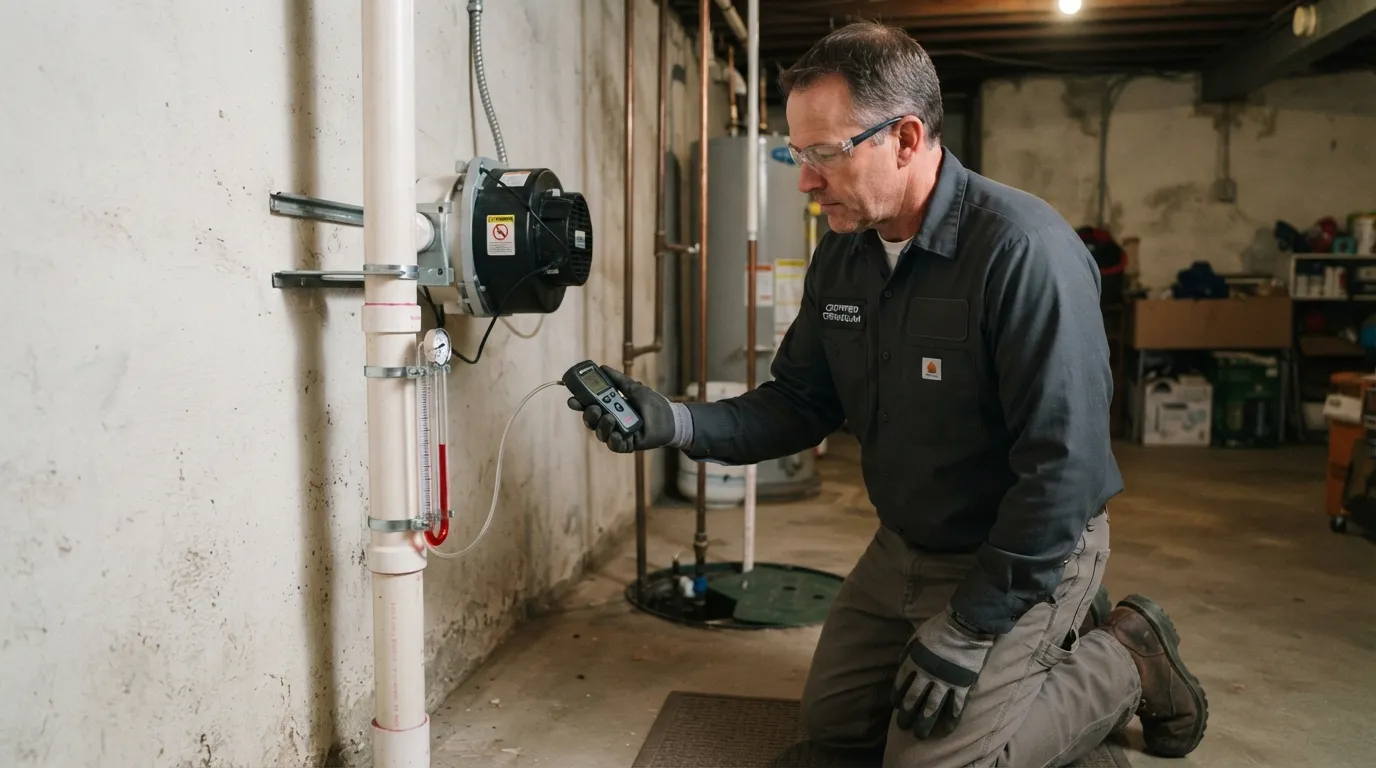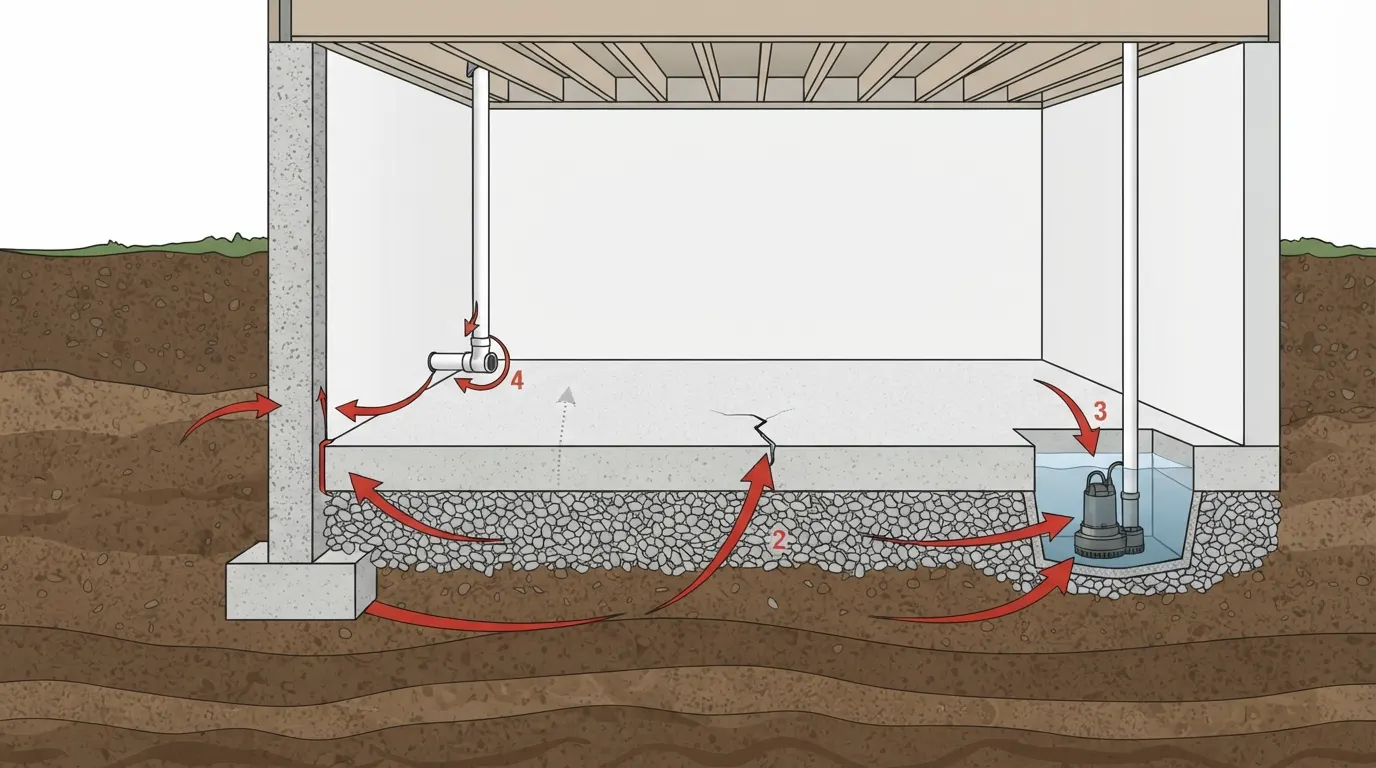

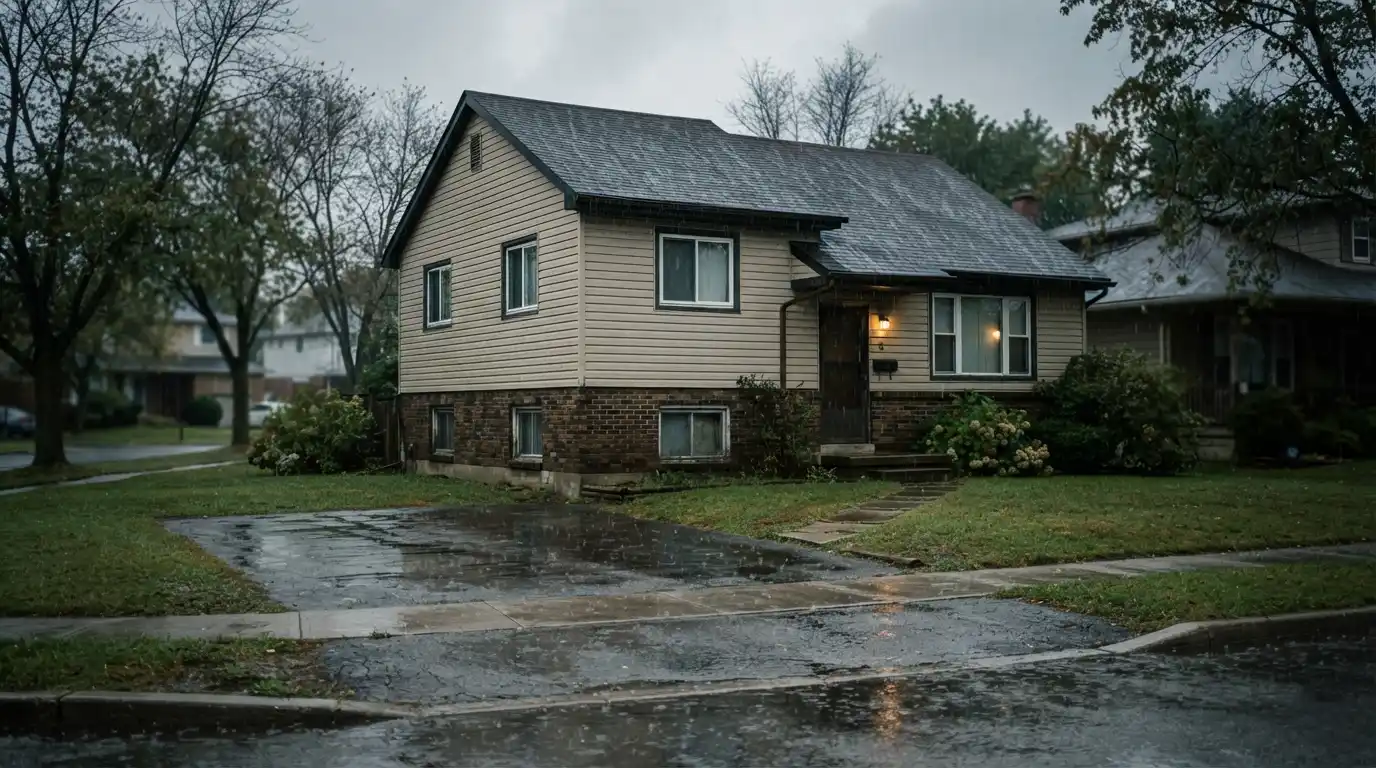
Rainfall elevates indoor radon levels because heavy precipitation saturates the soil, blocking the gas from escaping outdoors naturally. As the water-logged ground seals off the earth’s surface, the trapped radon is forced to take the “path of least resistance,” redirecting laterally and seeping straight through foundation cracks into your home.
Table of Contents
Rainfall Elevates Safe Radon Levels in Your Home
Heavy rain can raise indoor radon levels because water saturates the soil around your foundation, blocks normal soil gas movement, and pushes radon toward the easiest openings into your home. That means cracks, sump pits, crawl spaces, floor joints, utility gaps, and basement drains can become entry points after a storm. If you have noticed higher readings during wet weather, you are not imagining it. Rainfall Elevates Radon Levels because rain changes the pressure and moisture conditions under and around your home.
Radon is a naturally occurring radioactive gas that comes from the breakdown of uranium in soil and rock. You cannot see it, smell it, or taste it, which makes testing the only reliable way to know what is happening indoors. The EPA recommends taking action when radon levels are 4 pCi/L or higher, and Wisconsin health guidance also recommends closed house conditions during short term testing.
For homeowners in Whitefish Bay, West Allis, Wauwatosa, and South Milwaukee, rainfall is not just a weather event. It can become a foundation pressure event. Older basements, patched slabs, sump systems, and shifting soil conditions can all influence how radon behaves during and after rain.
What Rain Does to the Soil Around Your Home
Think of the soil around your foundation like a sponge. When the ground is dry, soil gas has more open space to move through. Some radon escapes upward into outdoor air before it ever reaches your house.
After heavy rainfall, that changes.
Water fills the open spaces between soil particles. When those spaces become saturated, radon has fewer paths to escape outdoors. The gas still has to move somewhere, and your home may provide the easier route.
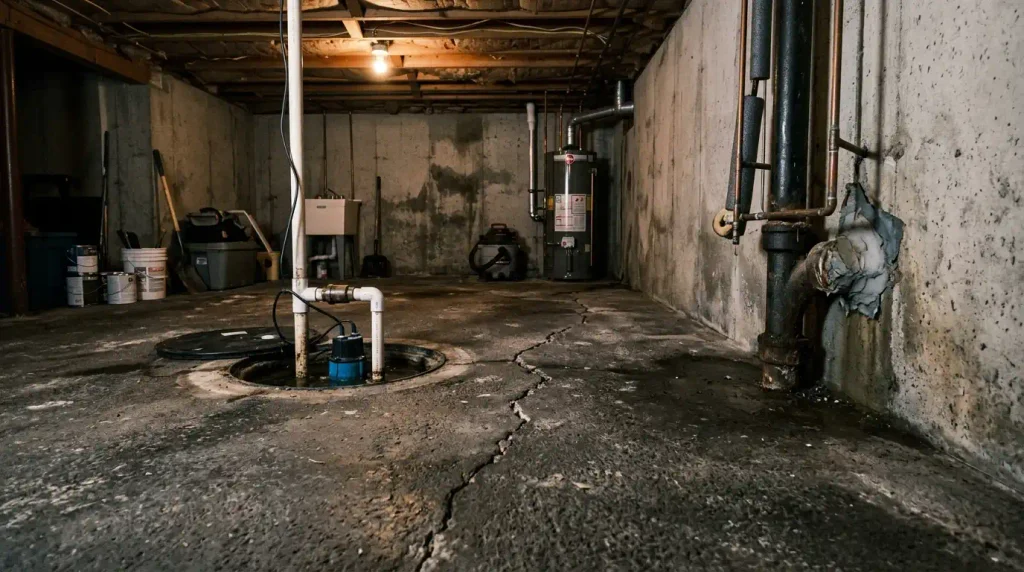
This is especially important around basement walls and slab floors. If rainwater collects near the foundation, the pressure outside the home can increase. That pressure can push soil gases through small gaps that are easy to overlook.
Common radon entry points include:
- Cracks in basement floors
- Gaps around plumbing lines
- Sump pump openings
- Crawl space soil
- Floor wall joints
- Utility penetrations
- Drain tile systems
- Unsealed basement drains
A tiny opening can matter. Radon does not need a large crack to enter. It follows pressure, airflow, and available space.
Why Radon Can Spike After Heavy Rain
Rain can affect radon in a few connected ways. The first is soil saturation. Wet soil traps gas more effectively than dry soil, especially when the rain is heavy or long lasting.
The second is pressure. When the ground becomes waterlogged, the air pressure in the soil can shift. Your home may already have lower indoor pressure because of exhaust fans, dryers, fireplaces, water heaters, or heating systems. That pressure difference can pull radon inside.
The third factor is ventilation. During storms, people usually keep windows closed. That means less fresh air enters the home, and indoor radon can build up more easily.
This is why two houses on the same street can behave differently. One home in West Allis might show a noticeable jump after a storm, while another in Wauwatosa might stay more stable. Foundation condition, soil type, HVAC behavior, drainage, and basement use all matter.
Can Rain Affect Radon Levels During Testing?
Yes, rain can affect test results, especially short term tests. A short term test captures a limited window of time. If that window includes heavy rain, strong wind, major temperature swings, or unusual pressure changes, the reading may be higher or lower than the home’s longer term average.
That does not mean the test is useless. It means the result needs context.
If your short term test shows elevated radon after rain, take it seriously. It may reveal how your home performs under pressure. If the reading is borderline, a longer test or follow up test can help confirm the average.
The phrase Rain Affect safe Radon Levels is often searched by homeowners after seeing a sudden monitor spike. The honest answer is yes, but one rainy day does not tell the full story. Radon is best understood through testing patterns, not panic.
Rain, Basement Pressure, and the Stack Effect
The stack effect is one of the main reasons radon enters homes. Warm air rises and leaves through upper parts of the house. As that air exits, the lower level can pull replacement air from below the foundation.
During cold or wet weather, this effect can become stronger. If the soil is saturated after rain, radon may be pushed toward the same openings that the home is already pulling from.
This is why basements often show higher readings than upper floors. The basement is closest to the soil and usually has more direct entry points.
Homes in South Milwaukee and Whitefish Bay may have different construction styles, ages, and drainage conditions, but the principle stays the same. If the house pulls air from the soil, radon can come with it.
Does Every Rainstorm Raise Radon?
No. Radon does not respond the same way every time it rains.
A light shower may do very little. A slow, steady rain may gradually raise soil moisture. A heavy storm after several wet days can create a bigger change. Frozen ground, snow melt, clogged gutters, poor grading, and sump activity can also influence readings.
Sometimes radon rises before or during rain because of falling barometric pressure. Sometimes it rises after rain because the soil stays saturated. Sometimes readings drop because outdoor airflow or ventilation changes.
That is why radon testing should not rely on a single hour, a single day, or a single storm.
When Is the Best Time to Test for Radon?
You can test for radon any time of year, but you should follow proper testing conditions. For a short term test, Wisconsin guidance says doors and windows should be closed for at least 12 hours before starting the test and kept closed during the test, except for normal entry and exit. Heating and air conditioning can run normally.
Avoid starting a short term test during unusually severe weather if your goal is to capture a normal baseline. If the test is already running and a storm happens, record the weather conditions. That note can help when reviewing the result.
Long term testing gives a better picture of average exposure because it captures more daily and seasonal changes. Short term testing is still useful, especially for real estate transactions, follow up checks, and quick screening.
The key is to understand what the number means.
What If Your Radon Monitor Spikes After Rain?
A spike does not always mean your home needs immediate work, but it should not be ignored. Radon fluctuates. The number can change by the hour and by the day.
Look at the average, not just the highest moment.
If your long term average stays below 4 pCi/L, keep monitoring and retest periodically. If your average is at or above 4 pCi/L, the EPA recommends taking action to reduce the level.
If your home often spikes during rain, that may point to foundation entry points, drainage issues, or pressure problems that deserve attention.
How Weather Can Change Radon Testing Results
The Effect of Weather on Radon Testing matters because radon is not a fixed number. Rain, wind, temperature, humidity, and pressure can all influence how soil gas moves.
Rain is one of the most noticeable weather factors because it changes the ground itself. Instead of radon escaping freely through open soil, saturated ground can trap and redirect it. If your basement has entry points, your home can become the easier exit path.
This is also why two tests taken in different seasons may not match. A winter test may read higher because homes are closed up and pressure differences are stronger. A summer test may read lower if windows are open more often. A rainy spring period may produce temporary increases.
Testing is still reliable when done correctly. The goal is not to find the perfect weather day. The goal is to understand your real exposure over time.
What Homeowners Can Do After Rain
After heavy rainfall, check your basement for signs of water movement. Look near the sump pit, floor cracks, wall joints, and utility openings. Moisture problems and radon problems are not the same, but they often share pathways.
- Helpful steps include:
- Keep gutters clear
- Extend downspouts away from the foundation
- Seal visible slab cracks
- Keep sump lids sealed
- Check floor drains
- Watch long term radon averages
- Retest after major home changes
- Improve basement ventilation carefully
- Call a qualified radon professional if averages stay high
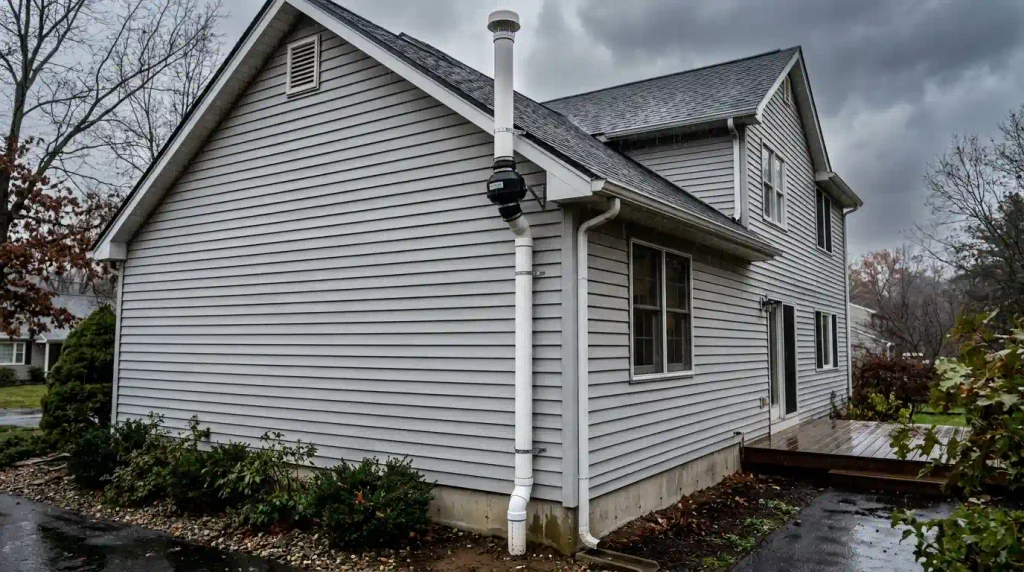
Sealing alone usually does not solve elevated radon, but it can help reduce entry points. A proper mitigation system is designed to control soil gas pressure and vent radon safely outdoors.
Why Local Testing Matters
Radon risk can vary from one home to the next. Your neighbour’s result does not predict yours. A home in Whitefish Bay may test low while the house next door tests high. The same can happen in West Allis, Wauwatosa, and South Milwaukee.
Soil conditions, foundation type, basement finish, drainage, and airflow all make a difference. The only dependable answer comes from testing your own home.
Milwaukee Radon Mitigation helps homeowners understand testing results, weather related changes, and mitigation options, and you can call 414-455-7279 if your readings stay elevated or you want help reviewing your next step.
FAQs
Why do radon levels go up when it rains?
Radon levels can rise after rain because saturated soil blocks normal gas movement and pushes radon toward foundation openings. Your basement may become the easiest path for soil gas to escape.
Should I test for radon during rainy weather?
You can test during rainy weather, but heavy storms can influence short term readings. If your test happens during unusual weather, write it down so the result has context.
Can one rainstorm make my home unsafe?
One rainstorm can cause a temporary spike, but radon risk is based on ongoing exposure. The average reading over time matters more than one short increase.
Why does my basement show higher radon after storms?
Basements are closest to the soil and often have cracks, sump pits, drains, or utility gaps. After rain, soil pressure can push radon toward those openings.
Do sump pumps affect radon levels?
Sump pits can be radon entry points if they are not sealed properly. When rain increases groundwater movement, the sump area may become more active.
Conclusion
Rain can raise radon levels because it changes the soil around your home. Saturated ground traps radon, pressure shifts move soil gas, and closed house conditions can allow indoor levels to rise.
The smart move is not to panic after one rainy reading. Watch the average, test correctly, and pay attention to repeated patterns. If your readings stay high, especially after wet weather, your home may need mitigation to keep radon under control.