
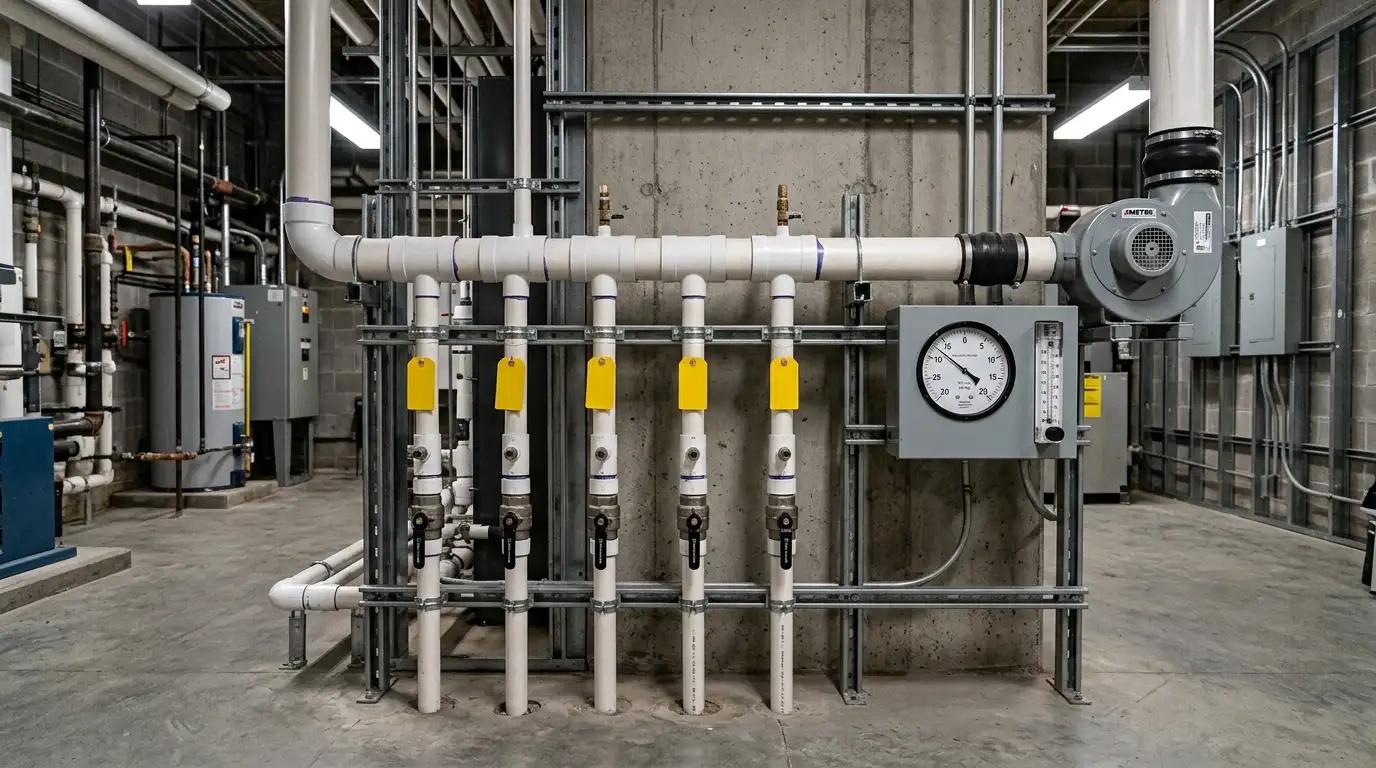
A Vapor Intrusion Mitigation System Cost is priced per building, not per square foot. Two buildings of identical size on the same street can differ substantially, because what drives the cost is how many suction points the slab needs, how hard the building is to work in, and whether the concrete has already been poured.
Here is what actually moves that figure, so a quote makes sense when you receive one.
Table of Contents
Online Vapor Intrusion Mitigation System Cost ranges are close to useless
Search for this and you will find per-square-foot figures. They vary by a factor of several dozen between sources, and most trace back to industry guidance published nearly two decades ago in the dollars of that time.
The spread is not sloppiness. It reflects genuine variation. A straightforward system in a new warehouse and a difficult retrofit in an occupied building with restricted access, hazardous-area electrical requirements, and a long discharge route are both correctly described as vapor mitigation, and they are not the same job. Any single number covering both is wrong for one of them.
What a per-square-foot figure is good for is a rough order of magnitude on a first pass at a budget. It is not a quote and should not be treated as one.
What actually drives the cost
| Driver | Effect | Why |
| New construction or retrofit | The largest single lever | Piping and membrane placed before a pour cost a fraction of coring an occupied slab |
| Number of suction points | Direct and significant | Set by slab permeability and footprint, not by floor area alone. Tight soils need more points, closer together |
| Building access | Can dominate everything else | Occupied space, after-hours work, tenant coordination, and finish restoration all add labor |
| Contaminant and concentration | Moderate | Affects material selection, monitoring requirements, and sometimes discharge treatment |
| Electrical requirements | Occasionally large | Hazardous-area or explosion-proof requirements change the electrical scope entirely |
| Monitoring specified | Moderate and ongoing | A pressure gauge costs little. Telemetry with alerting and backup power is a different item |
| Discharge routing | Variable | Distance to a compliant discharge point above the roofline, and whether structural penetrations are needed |
| Documentation and verification | Small but never zero | Regulated sites require post-installation verification and a report a project manager will accept |
Notice how few of these scale with floor area. That is the core reason per-square-foot pricing misleads.
Why bigger buildings cost less per square foot
Unit costs fall as buildings get larger. The fixed elements, design, mobilization, diagnostics, permits, and reporting, are spread across more area, and a large open slab is usually easier to work than a small subdivided one.
This is why a warehouse and a small retail unit can produce very different per-square-foot numbers while both being priced fairly. It also means a per-square-foot figure quoted for one building size tells you very little about another.
New construction versus retrofit
If the building has not been poured yet, this is the cheapest it will ever be.
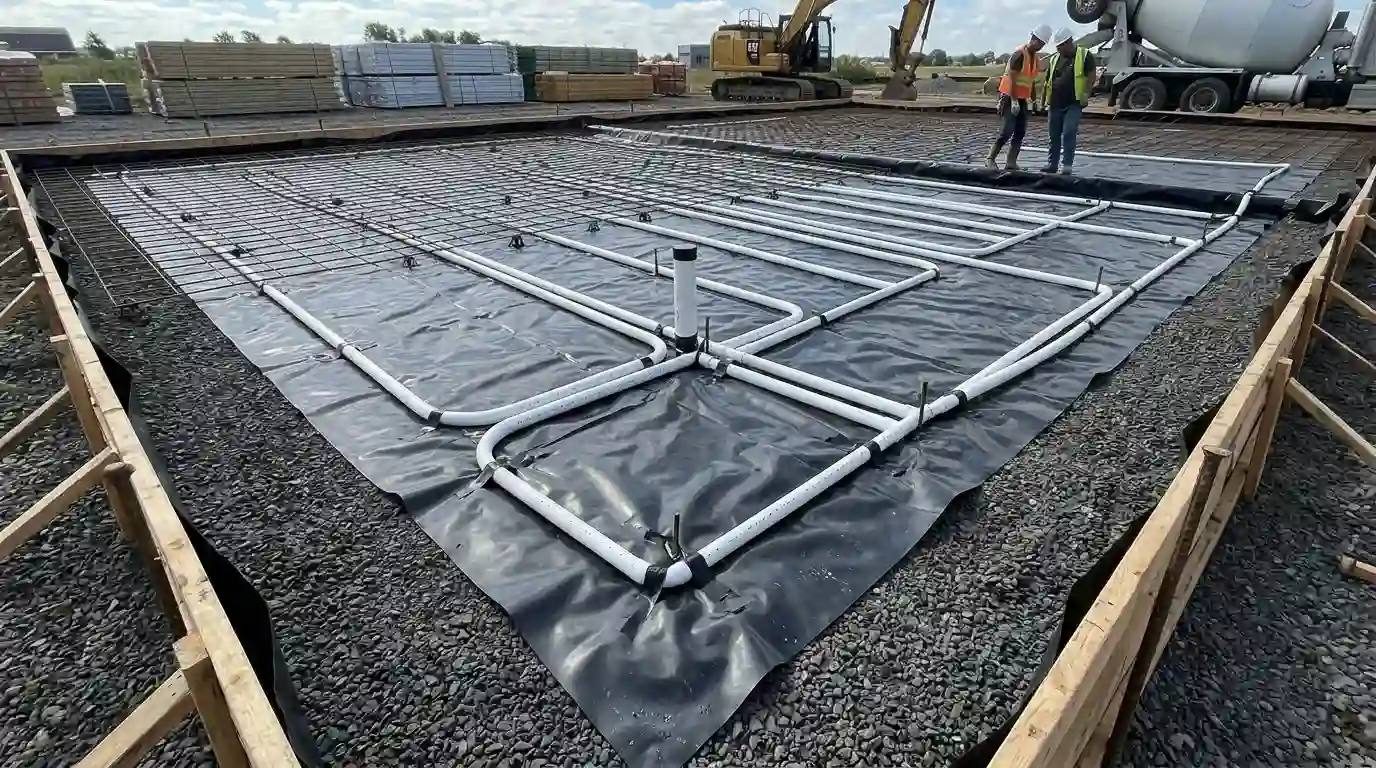
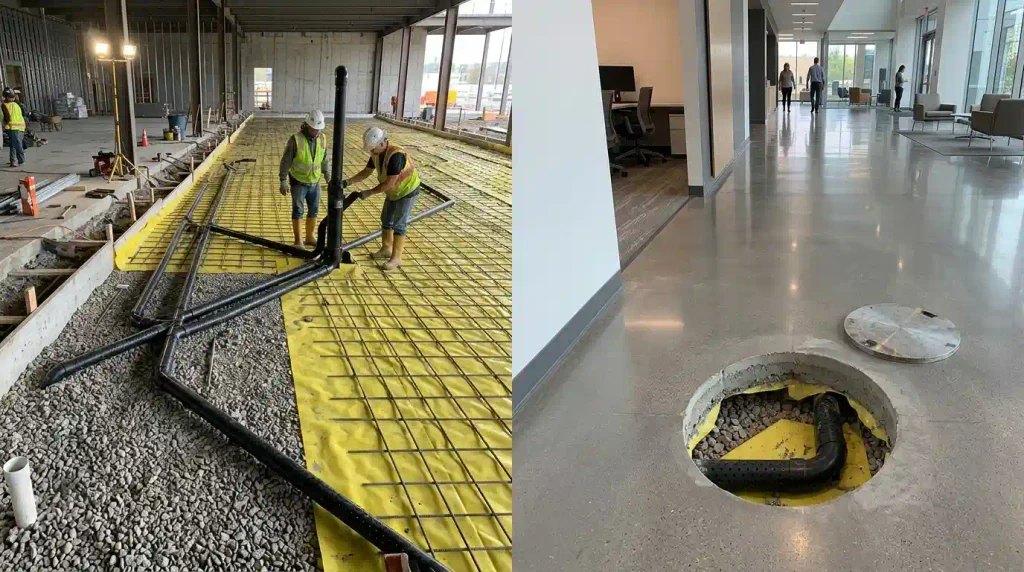
During construction, vent piping and membrane are laid into the sub-base while the trades already have open access. There is no coring, no dust control, no working around tenants, and no restoration of finished surfaces. The same protection retrofitted into an occupied building later involves all of those.
Where a site is known to be contaminated and a build is planned, designing soil gas control into the slab is close to always the better economic decision, even where the data does not yet prove a system will be required. Leaving a passive system that can be converted to active later is a common middle path.
MRH’s new construction service covers that work, and our article on barriers versus depressurization explains what goes into the slab and why.
What a quote should include
Comparing quotes only works if they cover the same scope. A checklist:
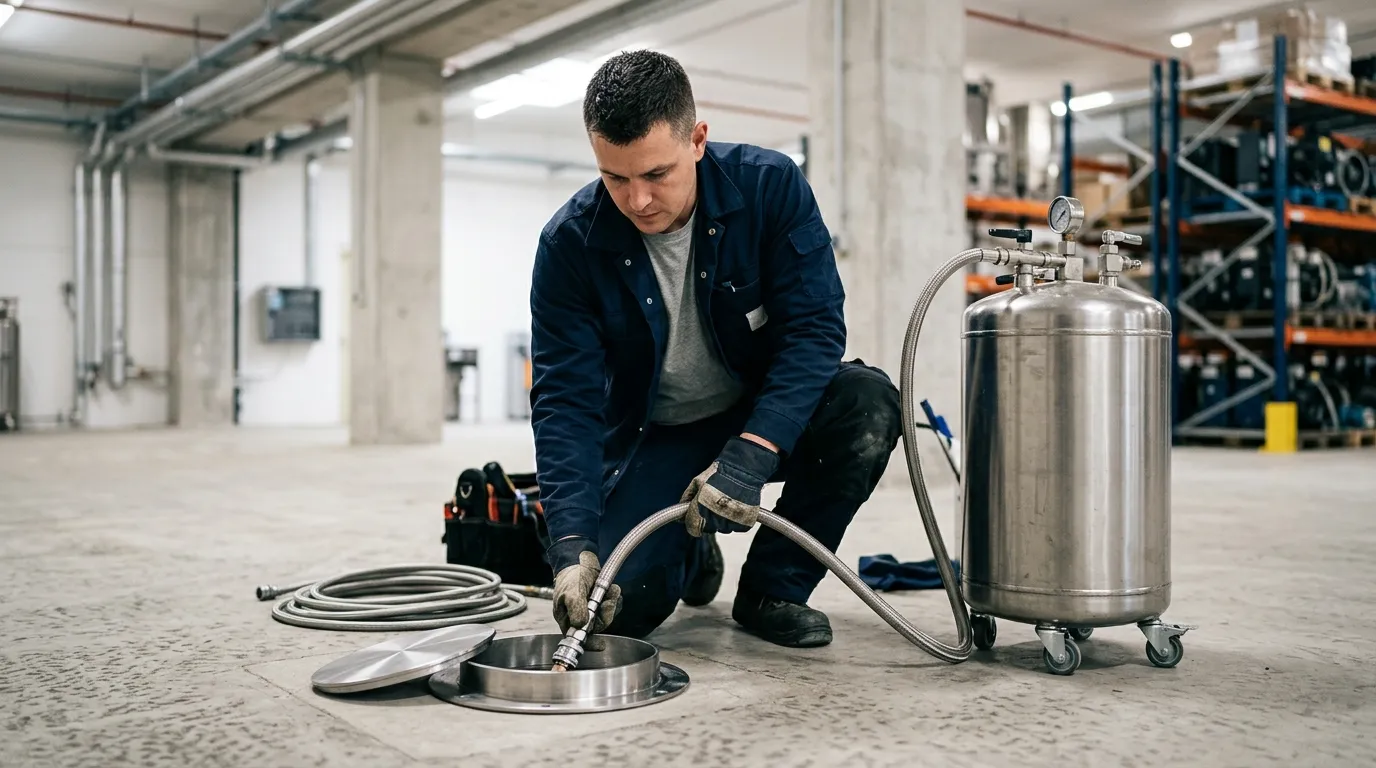
- Diagnostic testing, meaning pressure field measurement to determine how many suction points the slab actually needs
- System design, including drawings where the regulator or building owner requires them
- Materials and installation, with the fan specified by model rather than described generically
- Sealing of cracks, joints, sumps, and penetrations
- Electrical work and any dedicated circuit
- Discharge routing and roof or wall penetration, including flashing and restoration
- Monitoring equipment, whether a gauge, an alarm, or telemetry
- Post-installation verification and the documentation package
- Permits and any regulatory submittals
- Restoration of finished surfaces
A quote materially cheaper than another is often cheaper because something on that list is missing. Diagnostics and verification are the two most commonly omitted, and both are the items a regulator will later expect to see.
What are the ongoing costs?
A vapor system is a long-term obligation, and the purchase price is not the whole figure. Four recurring items:
- Electricity. The fan runs continuously. Larger commercial fans draw more than residential radon fans, and the annual figure is real but modest relative to the installation.
- Annual inspection. Wisconsin expects documented annual inspection of vapor mitigation systems, recorded on a DNR inspection log form.
- Monitoring and alerting. Where telemetry is installed there is usually a service or connectivity cost attached.
- Eventual fan replacement. Fans are mechanical and are replaced periodically over the life of a system. Planning for replacement is part of owning one.
The maintenance discipline is the same one behind annual radon system inspections, with more documentation attached.
Who pays for it?
Not always the building owner, and this is worth establishing early because it changes the entire conversation.
Where vapor intrusion stems from a release someone else is responsible for, the cost of investigating and mitigating affected buildings often sits with that responsible party rather than with you. Where the release originated on your property, or where no responsible party can be identified, it usually falls to the owner.
In transactions the cost is frequently negotiated rather than simply borne, through price adjustment, escrow, or an obligation written into the agreement. Before accepting a cost as yours, it is worth establishing whose it actually is. That is a question for an environmental attorney, not a contractor.
How to compare quotes fairly
- Check the scope list first, not the total. Line up what each quote includes against the checklist above before comparing figures.
- Ask how the suction point count was determined. A number derived from diagnostic testing is worth more than one derived from floor area.
- Confirm the standards referenced. Systems should be designed and installed to the ANSI/AARST soil gas standards.
- Ask what verification is included. Post-installation pressure field measurement and, where required, confirmation sampling.
- Check credentials and commercial experience. Wisconsin does not license this work, so certification and comparable project history are what you have to go on.
Wisconsin’s position on contractor qualifications is set out on the DNR’s vapor intrusion resources page.

FAQ
Can you quote from a floor plan without visiting the building?
A budget figure, sometimes. A firm quote, no. A floor plan shows area and layout but not slab condition, sub-slab permeability, access constraints, electrical availability, or discharge routing, and those are what actually set the price. A plan-based figure is useful for early budgeting and should be understood as provisional.
Why does a vapor system cost more than a radon system in the same building?
Same mechanism, more scope. Vapor systems carry additional verification requirements, usually more extensive monitoring, chemical-compatible materials in some cases, more demanding coverage across the footprint, and a documentation package a regulator will review. The fan and pipe look similar. The engineering and paperwork around them are not.
Is a bigger fan much more expensive to run?
Running cost scales with power draw, so a larger commercial fan does cost more in electricity than a small residential unit. It remains a small figure relative to installation. The more useful question is whether the fan is correctly sized, since an oversized fan wastes energy continuously while an undersized one fails to hold the vacuum field it was installed to hold.
Can the work be phased across budget years?
Sometimes, and it depends on the regulatory position. Where there is no acute exposure concern, phasing by building zone can be negotiated. Where TCE is involved or indoor air exceeds action levels, the timeline is driven by exposure rather than by budget cycles, and interim measures may be required while a full system is funded.
Does insurance or any grant program cover vapor mitigation?
It varies considerably. Some environmental insurance policies respond, and Wisconsin operates programs relevant to particular release types, including dry cleaner contamination. Brownfield redevelopment funding sometimes covers vapor controls as part of a wider project. None of this is automatic and eligibility is specific, so it is worth asking your consultant and attorney early rather than assuming the cost is entirely yours.
What makes a quoted price go up after work starts?
Usually one of three things. Diagnostic testing reveals the slab needs more suction points than estimated. Something unexpected turns up under the floor, such as a buried footing or an unrecorded utility. Or the regulator asks for additional verification or monitoring not in the original scope. A quote that includes diagnostics before pricing is less exposed to the first of those.
Getting a number for your building
Any figure that arrives without someone understanding your slab, your sampling data, and your access constraints is a guess. A real quote follows a site visit and, where the building is already built, diagnostic testing that establishes how the sub-slab actually behaves.
Milwaukee Radon Mitigation quotes vapor mitigation for commercial and industrial buildings across Milwaukee, Waukesha, and Ozaukee counties. See our vapor intrusion mitigation services, request a free quote, or call (414) 455-7279.