
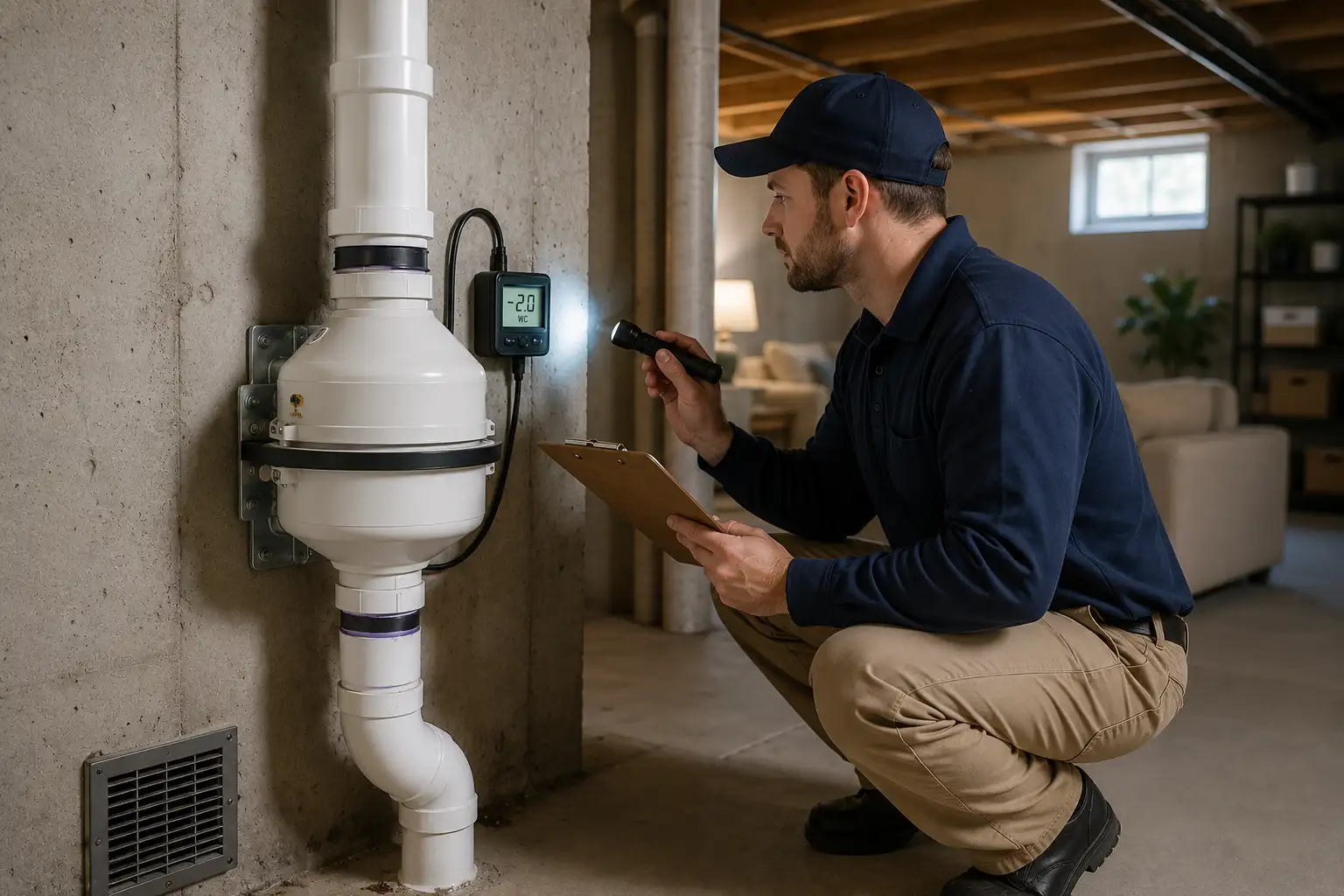
Annual radon system inspections are critical to ensure your mitigation equipment safely vents this radioactive, cancer-causing gas outside your home. Because mechanical components like fans wear out and soil shifting can alter gas pathways, yearly check-ups guarantee the air your family breathes remains safe.
Radon is a colorless, odorless, radioactive gas produced by the natural breakdown of uranium in soil and rock. It seeps into homes through foundation cracks, sump pits, and gaps around pipes. The EPA and the Surgeon General identify it as the second-leading cause of lung cancer in the United States, and the leading cause among non-smokers. A properly functioning radon mitigation system is your primary defense but a system is only effective if it’s actually working.
What an Annual Radon System Inspection Actually Checks
A qualified inspector evaluates every component of your sub-slab depressurization system, not just the fan.
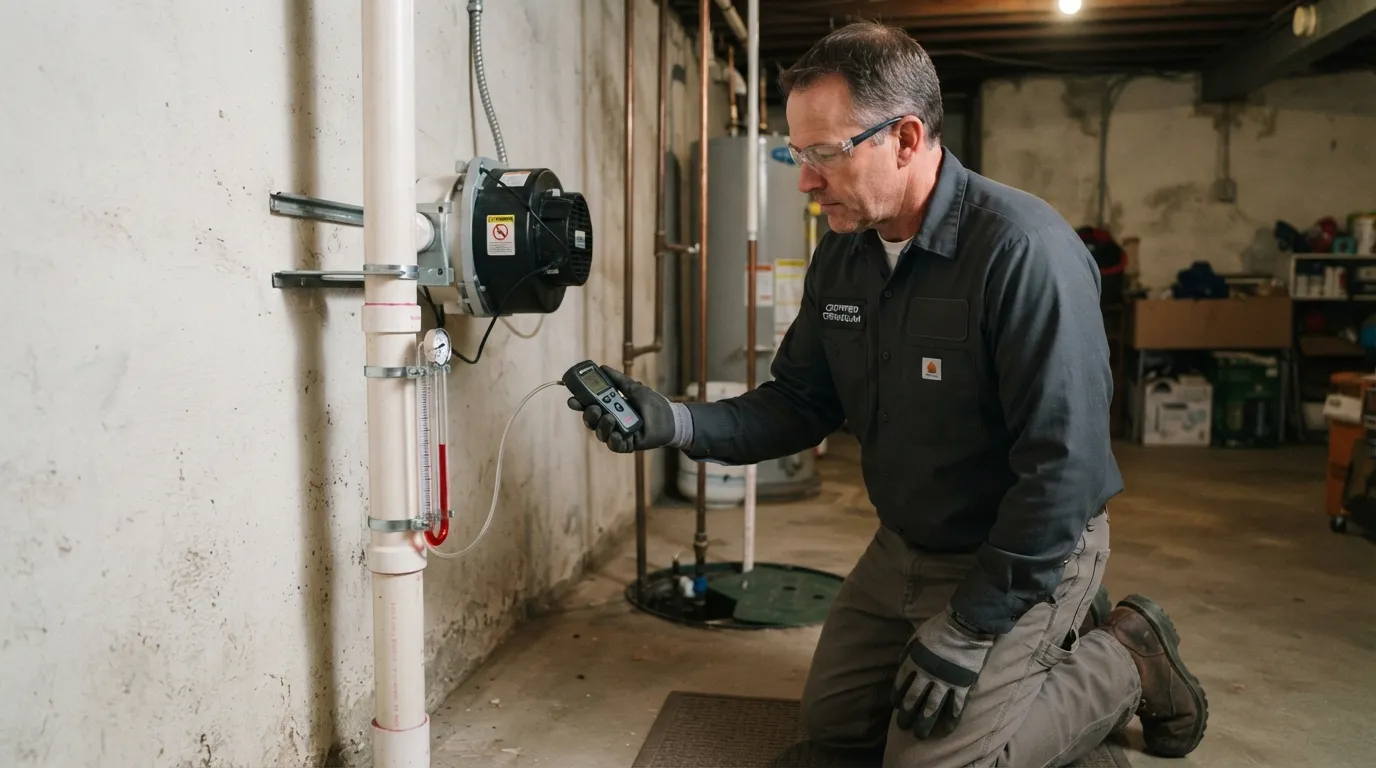
- Radon fan operation — Confirms the fan is running and pulling the correct vacuum pressure.
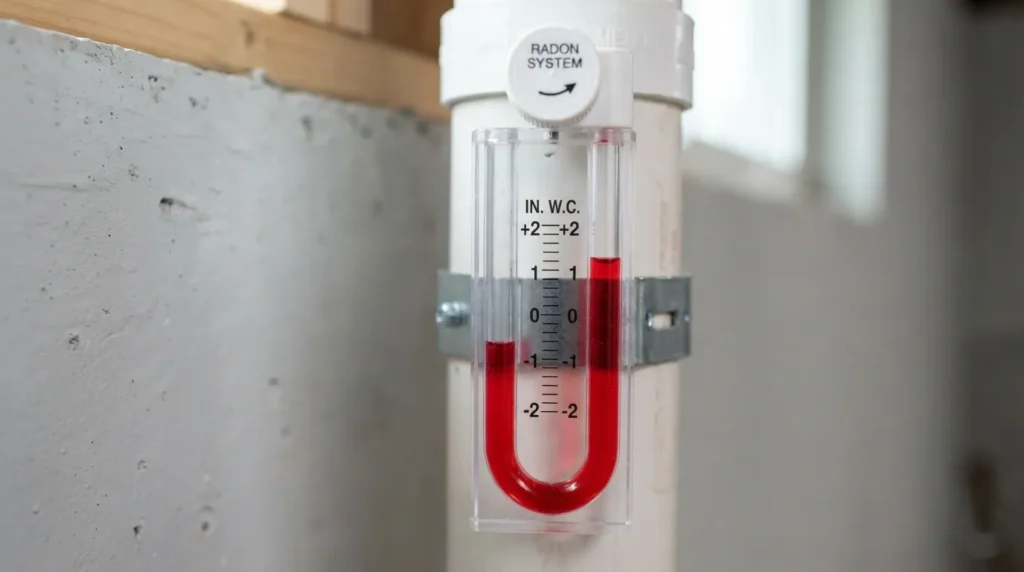
- U-tube manometer reading — This gauge on the vent pipe shows system pressure at a glance; a flat or reversed reading signals fan failure.
- Pipe integrity — Checks for cracks, disconnections, or damage from renovation work, pests, or weather.
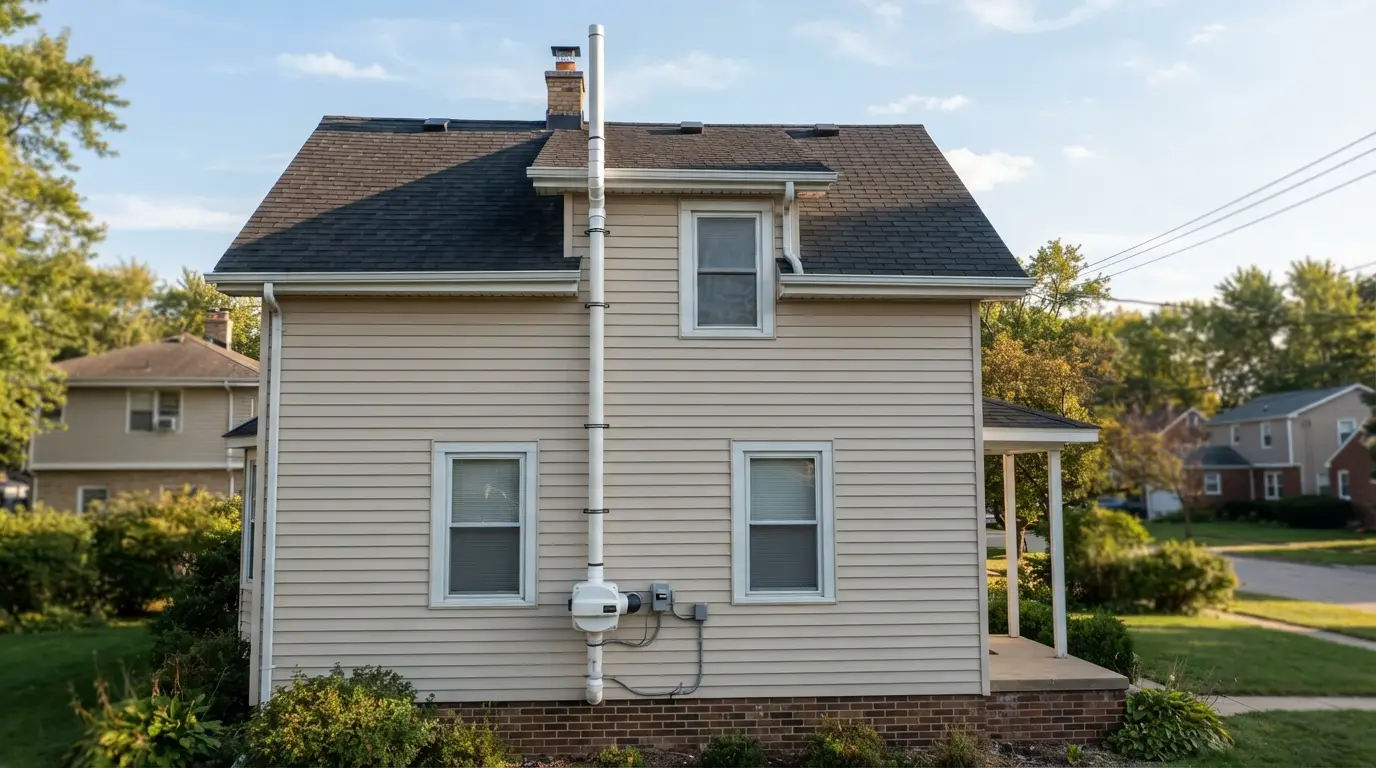
- Vent termination point — Verifies the exhaust still discharges above the roofline, away from windows and re-entry points.
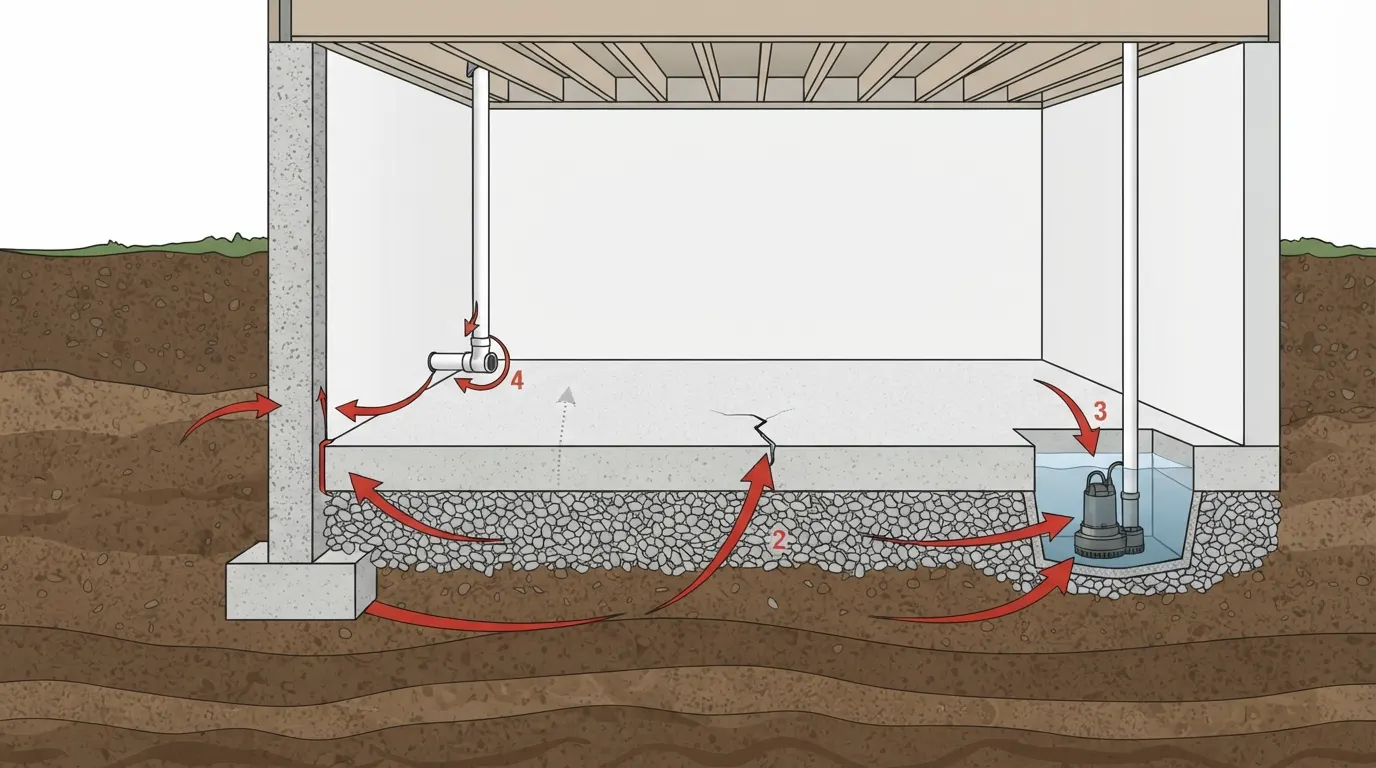
- Sealed penetrations — Confirms sump lids, floor cracks, and slab penetrations remain airtight.
- Electrical connection — Confirms the fan hasn’t been unplugged or lost power from a breaker trip.
Homeowners often assume a silent system is a working system. In reality, a failed fan is often silent that’s the problem.
| Inspection / Action | Recommended Interval | Key Focus |
|---|---|---|
| Visual Checklist | Monthly / Quarterly | Checking the manometer fluid levels to ensure the fan is pulling properly. |
| Professional Inspection | Every 1–2 Years | Fan diagnostics, electrical connections, pipe integrity, and overall system optimization. |
| System Retesting | Every 2 Years | Measuring actual radon gas levels to verify long-term effectiveness. |
Why Systems Fail Between Inspections
Radon mitigation systems are mechanical and subject to normal wear. Fans typically last 5 to 10 years before bearing wear reduces airflow or causes total failure.
Common failure points include:
- Fan motor burnout from age or continuous operation.
- Accidental disconnection during basement remodeling, insulation work, or landscaping.
- Cracked PVC piping from settling, freeze-thaw cycles, or accidental impact.
- Loss of seal around sump pump lids or slab penetrations.
- Power interruption from a tripped breaker or unplugged cord.
Any one of these can allow radon gas to re-accumulate to pre-mitigation levels within days.
Regular Radon Inspections And Maintenance
1. Verifying System Effectiveness
Even if a mitigation system is installed, radon levels can fluctuate. An annual check confirms that your sub-slab depressurization system is actively reducing indoor radon concentrations below the recommended action level of 4.0 pCi/L.
2. Preventing Unseen Mechanical Failure
Radon mitigation systems rely on exhaust fans that run constantly. Over time, bearings wear out, electrical connections degrade, or the system can become blocked. Annual inspections check these components and the system’s manometer (pressure gauge) to ensure proper suction and operation.
3. Mitigating Hidden Structural Shifts
Homes settle, and the ground around the foundation shifts, which can open new cracks in your foundation or alter the way soil gases move. Yearly evaluations ensure that your home’s barrier remains sealed and the pressure field beneath the slab is still working correctly.
4. Avoiding Severe Health Risks
Radon exposure is the number one cause of lung cancer in non-smokers. Because the gas is entirely colorless, odorless, and tasteless, you cannot detect it without specialized equipment. Regular testing is the only way to safeguard your household from this silent, long-term threat.
5. Maintaining Property Value and Sale Readiness
Should you decide to sell your home, buyers will frequently request up-to-date radon reports and properly maintained mitigation equipment. Keeping annual inspection records shows that you have proactively maintained a healthy indoor environment.
What Happens If You Skip Inspections
Radon exposure is cumulative. The EPA estimates radon causes about 21,000 lung cancer deaths annually in the U.S. Risk increases the longer a home sits above the 4.0 pCi/L action level, and it compounds significantly for smokers.
A neglected mitigation system doesn’t just stop protecting your home it can create a false sense of security. Homeowners who assume “we already fixed radon” are often the least likely to retest, which is exactly the scenario that allows silent re-exposure.
Who Should Perform the Inspection
Radon mitigation and inspection work should be handled by a certified radon professional, not a general handyman. Certification through the National Radon Proficiency Program (NRPP) or the National Radon Safety Board (NRSB) means the technician follows ANSI/AARST installation and inspection standards the industry benchmark referenced by the EPA and most state radon programs, including Wisconsin’s Department of Health Services radon program.
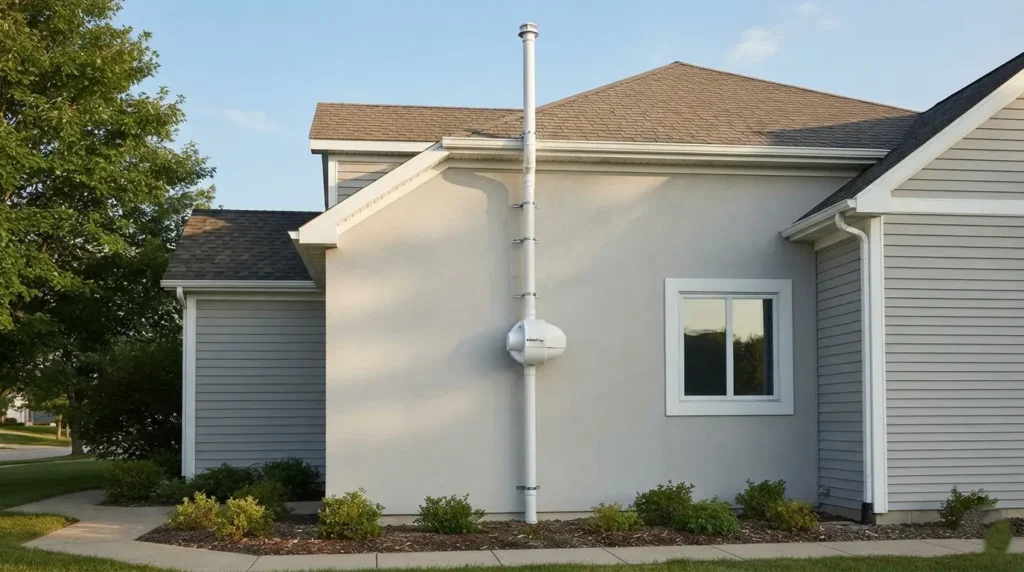
A certified inspector can also identify whether your radon fan is undersized for your home’s current soil conditions or square footage something a visual check alone won’t catch.
Radon Inspection for Wisconsin Homeowners
Wisconsin sits in EPA Radon Zone 1, meaning the predicted average indoor radon level exceeds 4 pCi/L statewide. Local geology particularly the region’s soil and bedrock composition makes consistent monitoring essential for homeowners in Saint Francis, Oak Creek, New Berlin, and Mequon, WI.
Milwaukee Radon Mitigation performs certified annual radon system inspections and testing throughout these communities, checking fan performance, pressure readings, and pipe integrity to confirm your existing radon mitigation system is still doing its job.
Frequently Asked Questions
How often should a radon mitigation system be inspected?
Once a year, at minimum. Manufacturers and ANSI/AARST guidelines recommend an annual check of the fan, manometer, and piping, along with a radon test every two years
How do I know if my radon fan has failed?
Check the U-tube manometer on the vent pipe. If the liquid columns are level (no pressure difference), the fan likely isn’t running. Listen for the fan’s normal hum near the vent pipe in the attic or exterior wall.
Can I inspect my own radon system?
You can visually check the manometer and confirm the fan is powered, but a full inspection including airflow and pressure diagnostics should be done by an NRPP or NRSB certified technician.
What is the EPA action level for radon?
4.0 pCi/L (picocuries per liter). The EPA recommends mitigation at or above this level and considers reducing radon below 2 pCi/L when feasible.
How much does a radon system inspection cost?
Costs vary by region and system complexity, but annual inspections are significantly less expensive than a new mitigation system installation or the health costs of unmanaged exposure.
Conclusion
An annual radon system inspection is a small investment that keeps your mitigation system doing the one job it was installed for: keeping radon gas out of your living space. Systems fail quietly, and radon itself gives no warning smell, taste, or visible sign.
Milwaukee Radon Mitigation provides certified annual inspections, testing, and repair services for homeowners in Saint Francis, Oak Creek, New Berlin, Mequon, and the greater Milwaukee area by Schedule your annual radon system inspection today (414) 455-7279