
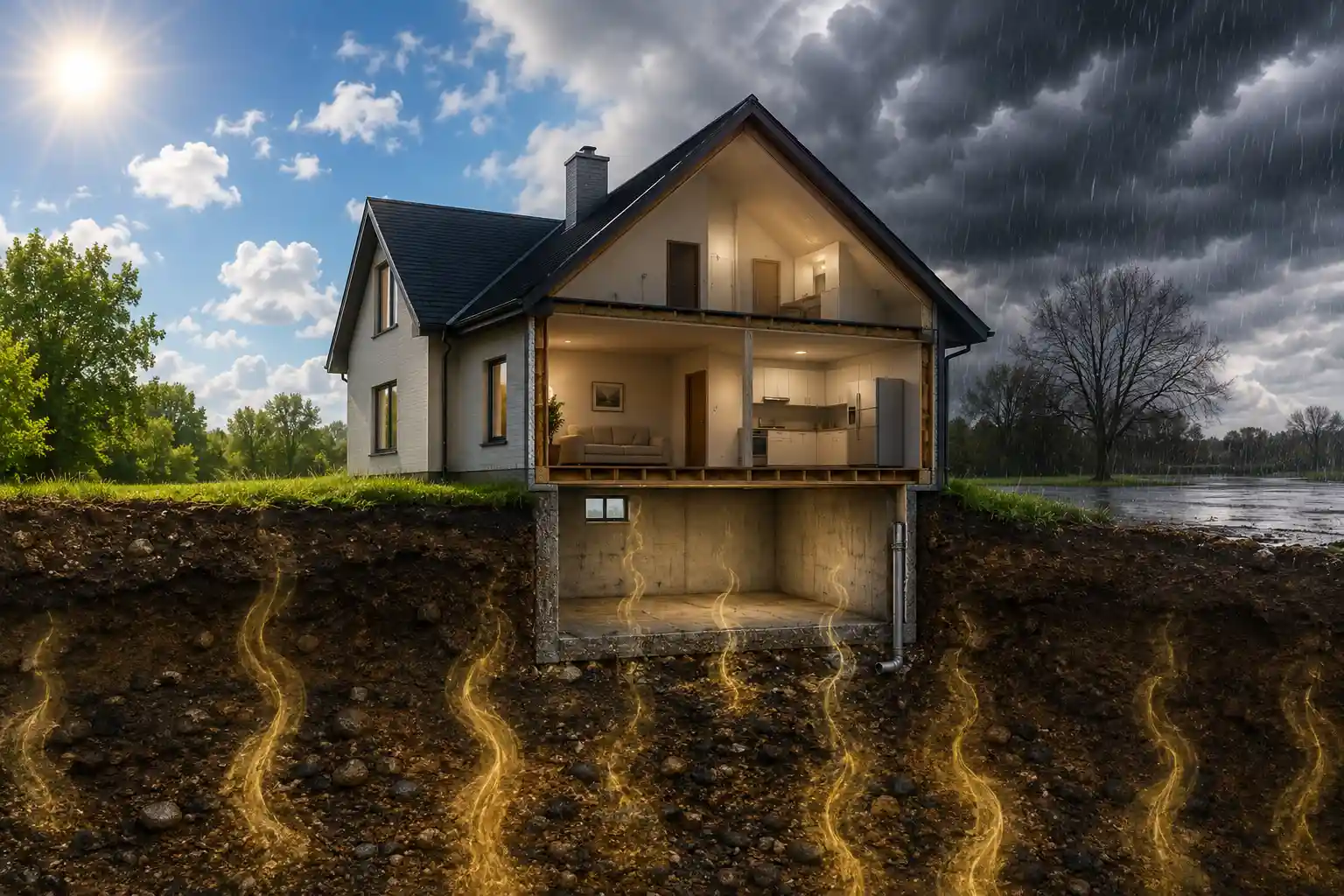
Weather conditions significantly impact short-term radon testing. Falling barometric pressure, strong winds, and heavy rain create temporary vacuums or block soil pathways, causing indoor radon levels to spike or drop abnormally. Protocols suggest avoiding short-term tests (under 4 days) during severe weather events.
Table of Contents
The Effect of Weather on Radon Testing
- Barometric Pressure (Storms): When a low-pressure weather front moves in, outdoor air pressure drops. This creates a vacuum effect, sucking more radon gas out of the ground and into your house.
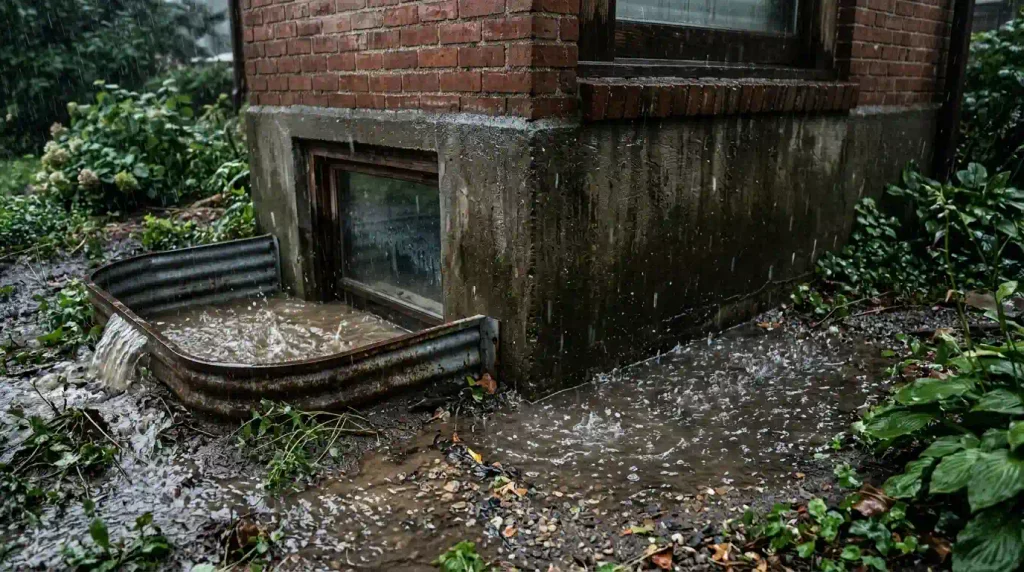
- Rain and Snow: Heavy rainfall or melting snow saturates the soil, preventing radon gas from escaping naturally into the atmosphere. The gas is forced to travel laterally and enter your basement or crawl space.
- Wind: High winds can create a negative-pressure zone around your home (or on specific sides of it), which literally vacuums soil gases and radon indoors through unsealed cracks.
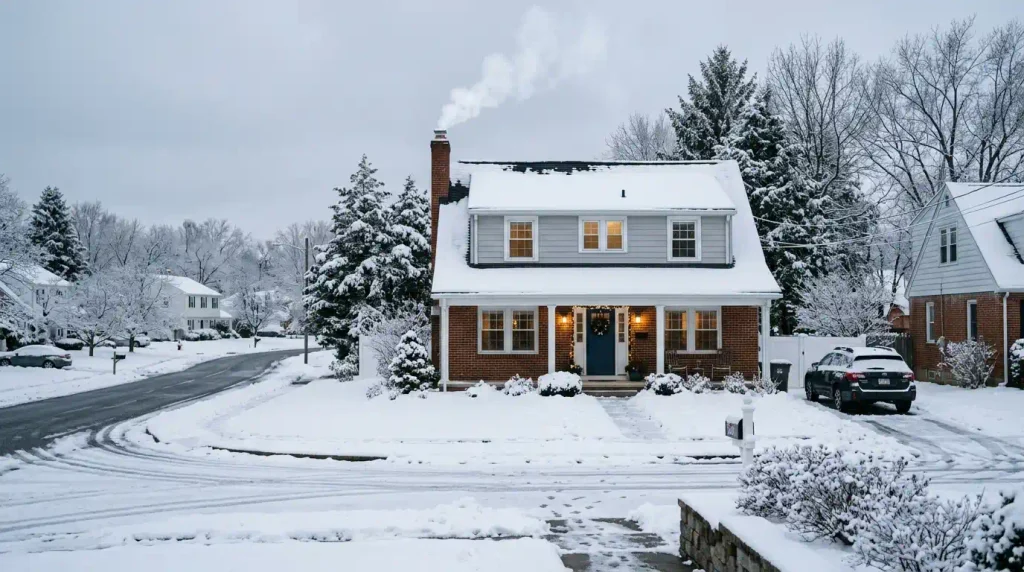
- Temperature & Seasonality: In cold weather, warm indoor air rises and escapes through the roof, creating a suction effect that draws radon up from the soil (the “stack effect”). This is why winter often shows historically higher, more consistent radon readings
Why Weather Matters During Radon Testing
Weather changes affect the pressure difference between your home’s interior and the soil beneath it. This pressure difference can either increase or reduce the amount of radon entering your home.
Several environmental factors influence radon movement, including:
- Outdoor temperature
- Atmospheric pressure
- Wind speed
- Heavy rainfall
- Snow cover
- Seasonal heating and cooling habits
These conditions can temporarily increase or decrease indoor radon levels, especially during short term radon testing.
How to Get Accurate Results
Because these variables cause unnatural, short-term spikes, professional protocols require specific testing parameters to account for the elements:
- Go Long-Term: Short-term tests (2-7 days) are vulnerable to these rapid weather swings. To get a true, reliable average of your home’s exposure, consider a long-term test that spans 91 days to a year.
- Closed-House Conditions: You must keep all windows and exterior doors closed (except for normal entry and exit) for 12 hours prior to and during the testing period.
- Avoid Severe Weather: The ANSI/AARST Radon Standards strictly recommend avoiding short-term radon testing during unusual, severe weather events (e.g., violent storms, high winds, heavy snow).
Does Rain Increase Radon Levels?
Heavy rain can temporarily change soil conditions around your home.
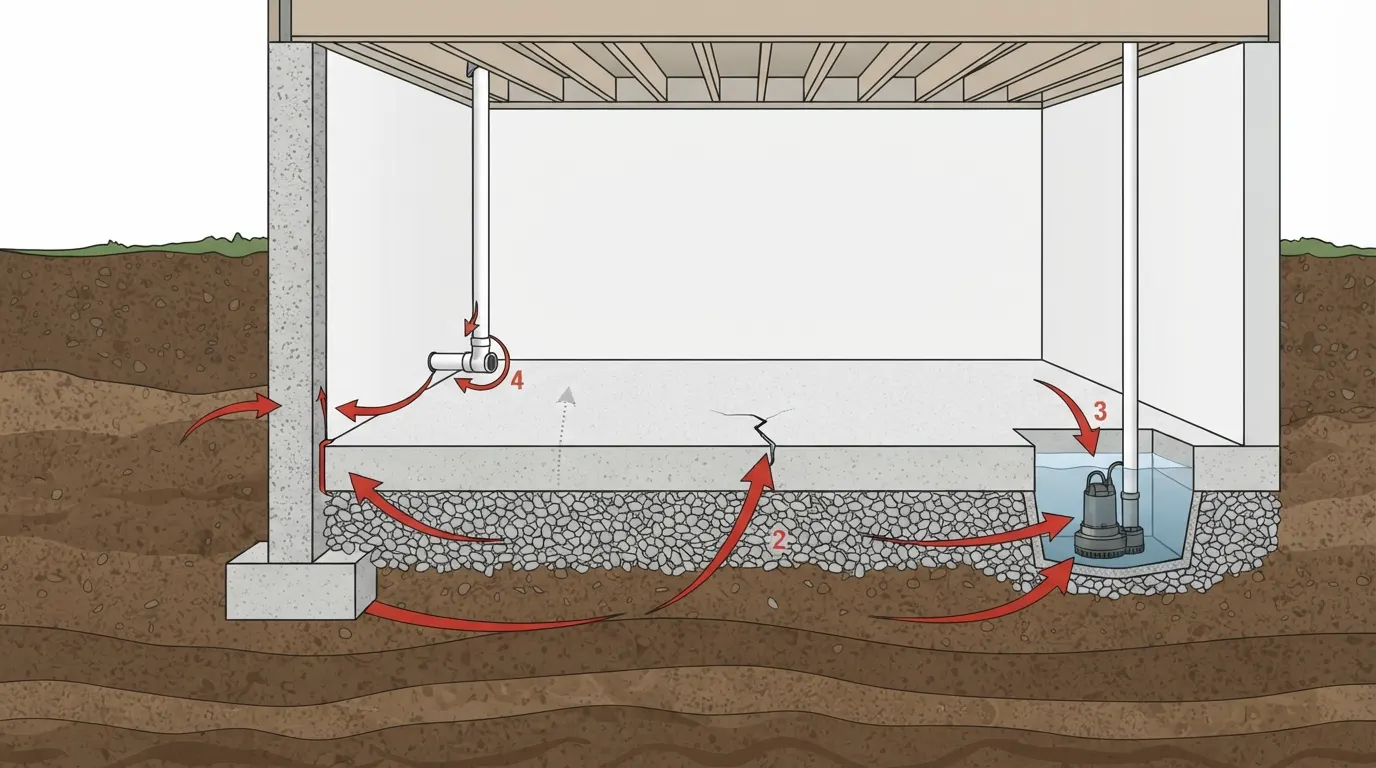
Water fills small spaces in the soil, reducing the natural movement of underground gases. Since radon cannot escape easily through wet soil, it may instead follow the path of least resistance through cracks, sump pits, utility openings, or foundation joints into the home.
However, the impact varies depending on:
- Soil type
- Foundation condition
- Drainage around the property
- Duration of rainfall
A single rainy day does not automatically produce dangerous radon levels, but prolonged wet conditions may influence short term measurements.
Wind Can Change Indoor Pressure
Strong winds create pressure differences around the outside of a home.
Depending on wind direction and building design, these pressure changes can increase the suction pulling soil gases indoors. Homes located in open neighborhoods or elevated areas sometimes experience greater fluctuations during windy weather.
This is another reason why certified testing procedures are designed to account for changing environmental conditions.
Does Summer Produce Lower Radon Levels?
Many homeowners assume summer means lower radon readings because doors and windows stay open more often.
While increased ventilation may temporarily dilute indoor radon concentrations, it does not solve the underlying problem if radon continues entering the home.
Air conditioning can also create indoor pressure differences similar to heating systems, meaning radon can still accumulate under certain conditions.
Testing during summer remains valuable, particularly when performed using long term monitoring.
Why Closed House Conditions Are Required
Short term radon mitigation and testing follows strict guidelines.
Before testing begins, homes should remain under closed house conditions for at least twelve hours and continue throughout the testing period.
This generally means:
- Keeping windows closed
- Limiting exterior door use
- Avoiding whole house fans
- Not operating equipment that changes indoor airflow unnecessarily
Following these recommendations reduces outside influences and helps produce reliable measurements.
Foundation Conditions Matter More Than the Forecast
Although weather influences radon movement, the condition of your home’s foundation often has a greater long term impact.
Common entry points include:
- Foundation cracks
- Floor wall joints
- Expansion joints
- Utility penetrations
- Crawl spaces
- Sump pits
Even during stable weather, these openings allow radon gas to enter if they remain unsealed.
Choosing the Right Testing Equipment
Modern Radon Testing Devices are designed to deliver accurate results even when weather changes occur.
Professional continuous radon monitors record environmental conditions alongside radon levels, allowing specialists to identify unusual fluctuations during the testing period.
Homeowners using do it yourself test kits should carefully follow manufacturer instructions and avoid interrupting the testing process.
Can Weather Affect Radon Water Testing?
Most people focus on airborne radon, but Radon Water Testing also plays an important role for homes supplied by private wells.
Unlike indoor air testing, water testing is generally less affected by daily weather patterns. Instead, groundwater sources, geological conditions, and well characteristics have a greater influence on radon concentrations.
If your home relies on well water, testing both indoor air and water provides a more complete assessment of potential exposure.
When Should You Schedule a Radon Test?
There is no perfect season because radon exists throughout the year.
Instead, schedule testing when:
- Buying a home
- Selling a property
- Finishing a basement
- Installing new windows
- Completing major renovations
- Every two years as part of routine home maintenance
- After installing a mitigation system
Regular testing remains the best way to monitor changing conditions over time.
Radon Testing in Southeastern Wisconsin
Homes throughout southeastern Wisconsin experience changing weather patterns that make routine radon testing especially valuable.
Whether you own a home in Saint Francis, Oak Creek, New Berlin, or Mequon, local climate conditions shift throughout the year. Cold winters, spring rainfall, humid summers, and changing air pressure all reinforce the importance of following proper testing procedures instead of relying on assumptions.
Milwaukee Radon Mitigation provides professional testing and mitigation solutions designed to help homeowners receive dependable results regardless of seasonal conditions. For questions or to schedule an appointment, call 414-455-7279.
Frequently Asked Questions
Does weather make radon testing inaccurate?
Weather can influence short term radon levels, but properly conducted testing still provides valuable and reliable information. Following closed house conditions and professional testing standards helps minimize weather related variations.
Should I avoid testing during rainy weather?
No. Rain may affect radon movement temporarily, but testing should continue as scheduled unless instructed otherwise by a qualified professional. Consistent testing procedures remain more important than waiting for perfect weather.
Is winter the best time to test for radon?
Winter often produces higher indoor radon concentrations because homes stay closed and heating systems create pressure differences. However, testing during any season is better than not testing at all.
Can wind change radon levels inside my home?
Yes. Strong winds can alter air pressure around your home and influence how soil gases enter through foundation openings. These changes are one reason professional testing follows standardized guidelines.
How often should I test my home for radon?
Most experts recommend testing every two years and after major renovations, foundation repairs, or installing a mitigation system. Regular testing ensures your home’s radon levels remain within safe limits.
Conclusion
Weather certainly plays a role in radon testing, but it should never discourage homeowners from testing their property. Temperature, rainfall, wind, and seasonal changes may influence short term readings, yet professional testing methods are specifically designed to account for these variations.
The most important step is testing consistently, following recommended guidelines, and responding appropriately if elevated radon levels are found. By understanding how weather affects radon movement, homeowners can make informed decisions that contribute to a healthier and safer indoor environment.