

Vapor intrusion is dangerous because it delivers industrial solvents into the air people breathe indoors, usually with no smell, no visible sign, and no obvious symptom. The chemicals involved are among the more thoroughly studied carcinogens in the regulatory system, and the concentrations that matter are far below anything a person could detect.
If your building is being sampled, the honest answer to how worried you should be is that it depends on which chemical is present and at what level. Those two facts change the answer completely, and this article explains why.
Table of Contents
Why is vapor intrusion dangerous? Two exposure clocks, not one
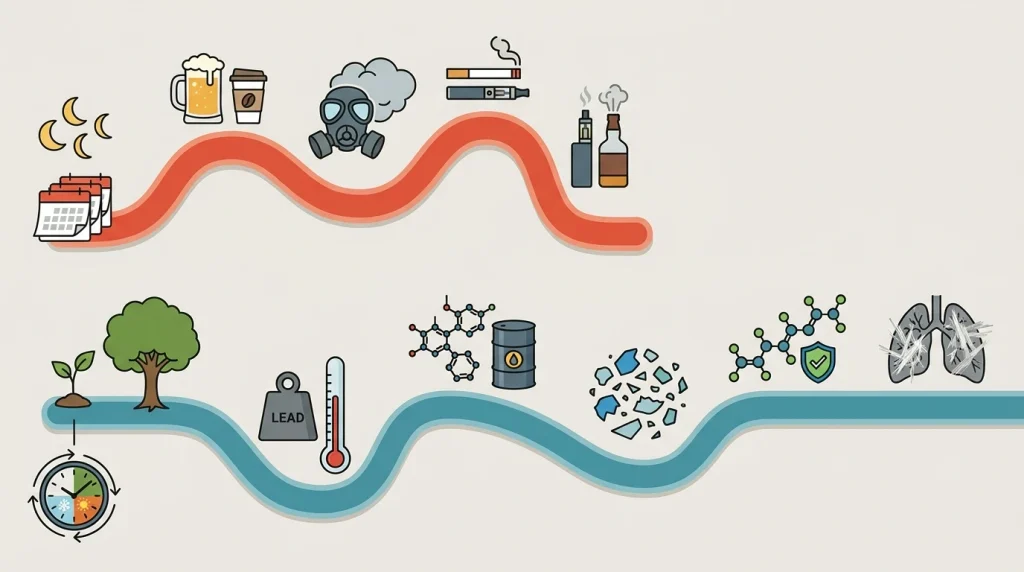
Almost every confusing conversation about this topic comes from mixing up two different kinds of risk.
- The long clock, called chronic risk. Years of low-level exposure to a carcinogen raises the lifetime chance of certain cancers. This is what most screening levels are built around, and it is why the numbers look so small.
- The short clock, called acute risk. A smaller number of compounds can cause harm over weeks or even days at the right concentration. In Wisconsin this belongs almost entirely to one chemical, and it changes the whole timeline of a response.
A result that is over the chronic screening level is a serious finding that gets scheduled and fixed. A result that is over the acute action level is a finding that gets addressed now. Same building, same pathway, completely different urgency.
TCE is the compound that drives urgency in Wisconsin
Trichloroethylene, almost always written TCE, was the standard degreasing solvent across machine shops, plating operations, and metal finishing for decades. It is a human-made chemical that does not occur naturally, and it is the compound Wisconsin regulators treat most aggressively.
EPA classifies TCE as carcinogenic to humans, with the strongest evidence linking it to kidney cancer and further evidence pointing to liver cancer and non-Hodgkin lymphoma. It also causes damage to the central nervous system and the immune system.
The reason for the urgency is separate from cancer. The Wisconsin Department of Health Services states that TCE exposure can harm a developing fetus, including raising the risk of heart defects, that this can happen at low levels, and that the damage can occur early in pregnancy, sometimes before a person knows they are pregnant.
DHS advises anyone who is pregnant or planning to become pregnant to avoid exposure. You can read the department’s own material on vapor intrusion and health and its dedicated TCE page.
That single fact is why the response timeline changes. If a developmental effect can occur before a pregnancy is even known about, waiting a quarter for the next scheduled sampling round is not an acceptable plan.
What this means in practice: Wisconsin DNR guidance calls for expedited assessment, investigation, and mitigation when TCE is the contaminant of concern, and state rules allow interim actions such as installing a vapor mitigation system to interrupt exposure before the full investigation is finished. A TCE detection above the action level is not a next-quarter item.
Wisconsin has also gone further than the federal standard on paper. In 2019 DHS recommended lowering the state groundwater enforcement standard for TCE from 5 micrograms per liter to 0.5, based on updated cancer science.
The Natural Resources Board did not adopt the rule change in 2022, so the enforcement standard did not move. DHS still recommends that people take action to reduce exposure at the lower figure. That gap between what the health agency recommends and what the rule requires is worth knowing about if you are trying to interpret a result that sits between the two.
PCE, the dry cleaner solvent, and what it turns into
Tetrachloroethylene, written PCE and often called perc, is the solvent behind most dry cleaner contamination. EPA describes it as a neurotoxicant and considers it likely to cause cancer in humans by all routes of exposure.
PCE carries a complication that TCE does not. As it slowly breaks down underground, it turns into other compounds, and TCE is one of them. Further breakdown produces vinyl chloride, which is a known human carcinogen in its own right. So a release that started as PCE forty years ago can present today as a mixture, and a sampling plan built only around the original chemical can miss what the plume has become.
This matters in Milwaukee specifically because small neighborhood dry cleaners were common for decades and their releases were rarely discovered quickly. Wisconsin runs a dedicated response fund for dry cleaner contamination for exactly that reason.
Benzene and petroleum vapors
Where the source is a fuel release rather than a solvent, benzene is usually the compound of concern. It is a known human carcinogen with a well-documented link to leukemia, and it is the reason petroleum sites get evaluated at all rather than being dismissed as a nuisance odor.
Petroleum vapors do carry one advantage. Bacteria in the soil break them down in the presence of oxygen, often before they reach a building, which is why fuel releases can sometimes be screened out on separation distance alone. Solvent releases get no such help.
Our article on what causes vapor intrusion covers that difference in detail, including why building size affects it.
At very high concentrations, petroleum vapors and landfill methane also present a fire and explosion hazard rather than only a health one. This is rare in a vapor intrusion context and usually indicates free product close to the building, but it is the reason readings at some sites get treated as a safety emergency.
What does exposure actually feel like?
Usually like nothing. That is the core of the problem.
Wisconsin DHS notes that the most common vapor intrusion cases involve odorless solvents from commercial and industrial properties, and that spills often go undiscovered for years. The concentrations that trigger a regulatory response are far below the level at which a person would notice anything.
Where short-term exposure to higher levels does produce symptoms, DHS lists drowsiness, eye and respiratory irritation, and slowed reflexes. Headaches and dizziness are also commonly reported. Every one of those is easily attributed to a long day, a cold, or a stuffy office, which is why symptoms are a terrible detection method.
- Symptoms are non-specific and overlap with dozens of ordinary explanations
- Individual reactions vary based on health, prior exposures, and genetics
- Most affected buildings produce no symptoms at all in most occupants
- The absence of symptoms tells you nothing about whether the pathway is open
Radon has the same problem for the same reason, which is why testing rather than observation is the standard in both fields. Our explainer on how radon affects your health makes the same point about an invisible exposure with a long latency period.
Who is most at risk in an affected building?
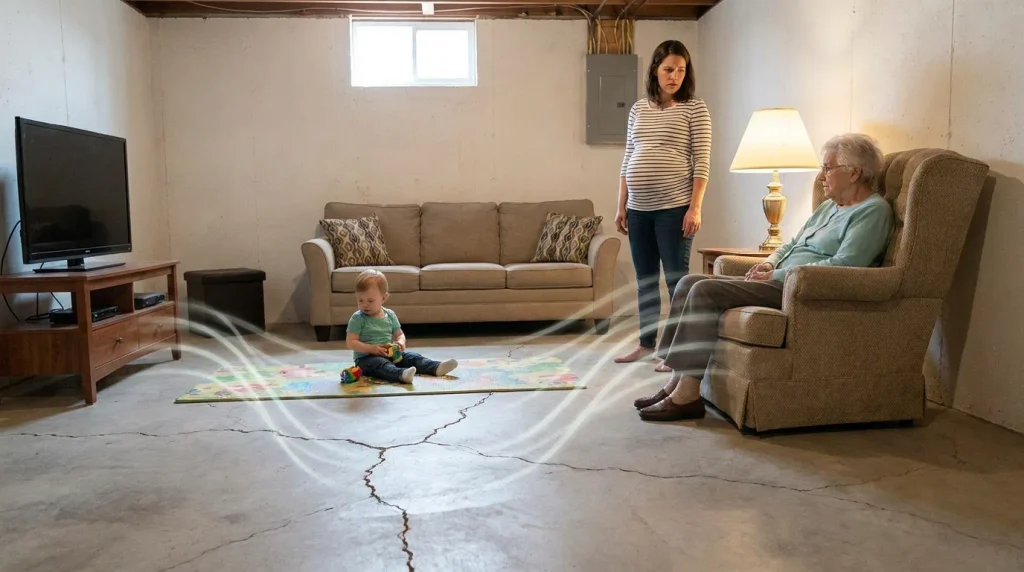
Risk is not distributed evenly across occupants. Exposure assumptions in a risk assessment account for who is in the building, how long they are there, and how vulnerable they are.
| Group | Why they carry more risk |
| Pregnant people and those planning pregnancy | The fetal cardiac effect associated with TCE occurs at low levels and early in pregnancy, which is why DHS advises avoiding exposure rather than managing it |
| Infants and young children | Higher breathing rate relative to body size, more time spent at floor level, and a longer remaining lifetime over which a cancer risk accumulates |
| Full-time occupants of the lowest level | Concentrations are typically highest where the building contacts the soil, and exposure scales with hours spent there |
| Residents in mixed-use buildings | A residential exposure assumption is roughly three times longer per day than a commercial one, so the same air concentration produces a much higher calculated dose |
| People with existing respiratory or immune conditions | Reduced reserve to tolerate an additional irritant or immune stressor |
The pattern mirrors radon closely. Our piece on the dangers of radon exposure for children covers why the same air concentration is not the same risk for every occupant.
If you are worried about a specific personal exposure, that is a conversation for a physician or your county health department rather than a contractor. They can look at your actual circumstances, which no article can do.
Does banning these chemicals solve the problem?
No, and this is the point most coverage misses entirely.
EPA finalized rules in December 2024 restricting TCE and PCE under the Toxic Substances Control Act, aimed at phasing out most manufacturing and commercial use. Implementation has been slowed considerably by litigation and by EPA’s own reconsideration of the rules, and the compliance picture is still moving.
None of it touches vapor intrusion. Those rules govern the future use of the chemicals. They do nothing about the solvent that entered the ground in 1968 and is still sitting in a plume under a city block. Chlorinated solvents break down slowly and can persist underground for decades. The contamination driving vapor intrusion today was created under rules that no longer exist, and stopping new use does not clean up old releases.
FAQ
Should I see a doctor if my building tested positive?
If you are concerned about your own health, yes, and bring the sampling results with you. A physician can weigh your actual exposure time and personal history in a way that a screening level cannot.
Be aware that routine blood or urine testing for these compounds has limited value, since most clear the body quickly and a normal result does not rule out past exposure. Your county health department and the Wisconsin Department of Health Services can also help interpret site-specific results.
Is vapor intrusion still dangerous at levels below the screening value?
Screening levels are set conservatively, with safety margins built in, so a result below the value is generally considered acceptable rather than borderline. What matters more is whether the result is stable.
A single sample is a snapshot, and levels shift with season, weather, and building operation, so a low winter result carries more weight than a low summer one.
Do workplace exposure limits apply instead of residential ones in a commercial building?
Vapor intrusion screening uses its own values, not OSHA workplace limits, and the vapor values are far lower. OSHA limits assume a healthy adult working a defined shift with monitoring and protective equipment available.
Vapor intrusion values assume ordinary occupancy with no awareness or protection. Commercial buildings do get a different exposure assumption than homes, based on hours present, but they are still evaluated against health-based screening values rather than industrial hygiene limits.
Will an air purifier or opening windows reduce the risk?
Ventilation genuinely dilutes indoor concentrations while it is running, and this is sometimes used as a short-term measure. It is not a solution.
It does nothing about the pressure difference pulling vapor in, it stops working the moment the windows close, and in a Wisconsin winter it is not practical.
Most consumer air purifiers use filters designed for particles rather than gases and have little effect on VOCs at all.
Do occupants need to leave while a mitigation system is installed?
Usually not. Most installations happen around normal operations, with the disruptive work such as coring the slab scheduled outside occupied hours.
Where concentrations are high enough to warrant an immediate response, temporary measures may be put in place first while the permanent system is designed. Any decision to relocate occupants comes from the regulatory agency and the health authority, not the installing contractor.
Conclusion
The pathway is the part you can control. You cannot un-release a solvent from fifty years ago, but you can stop the vapor from entering the building, and that is what mitigation does.
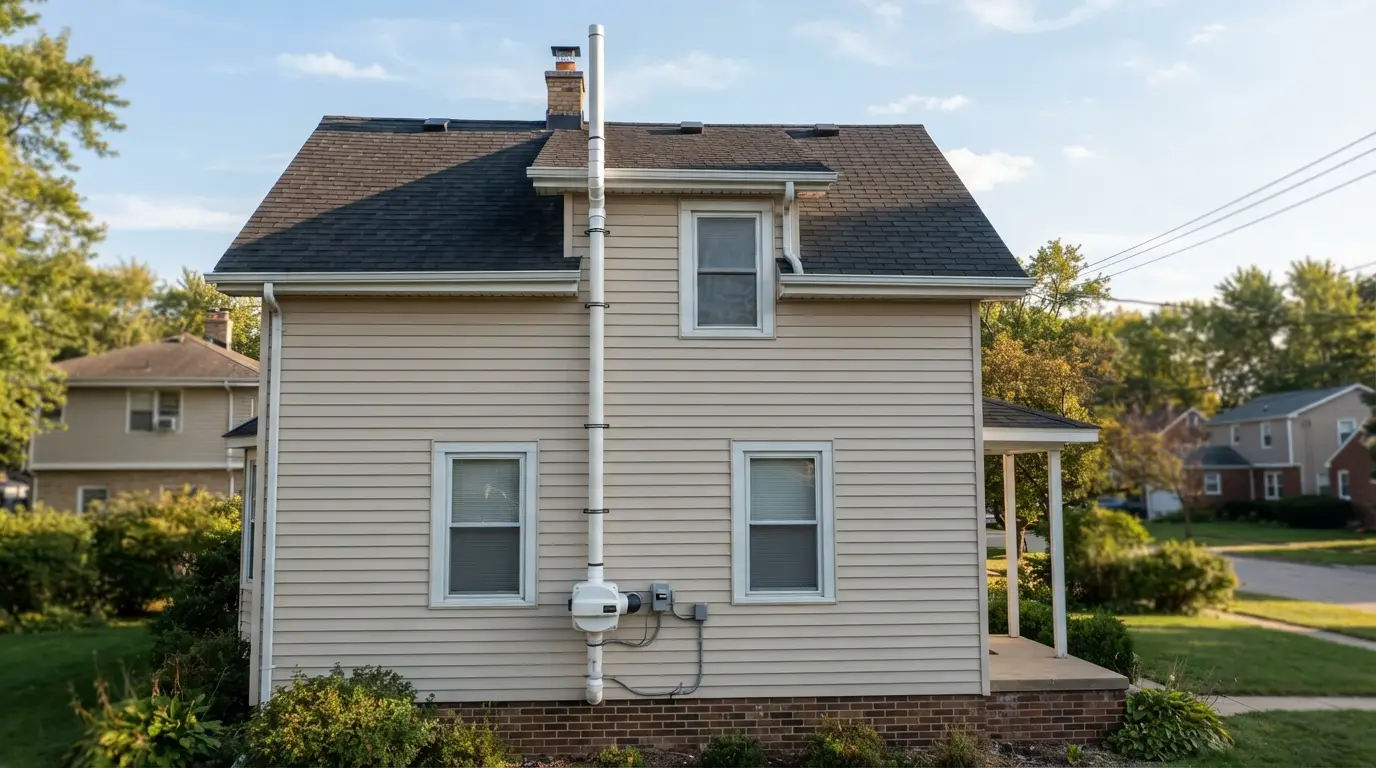
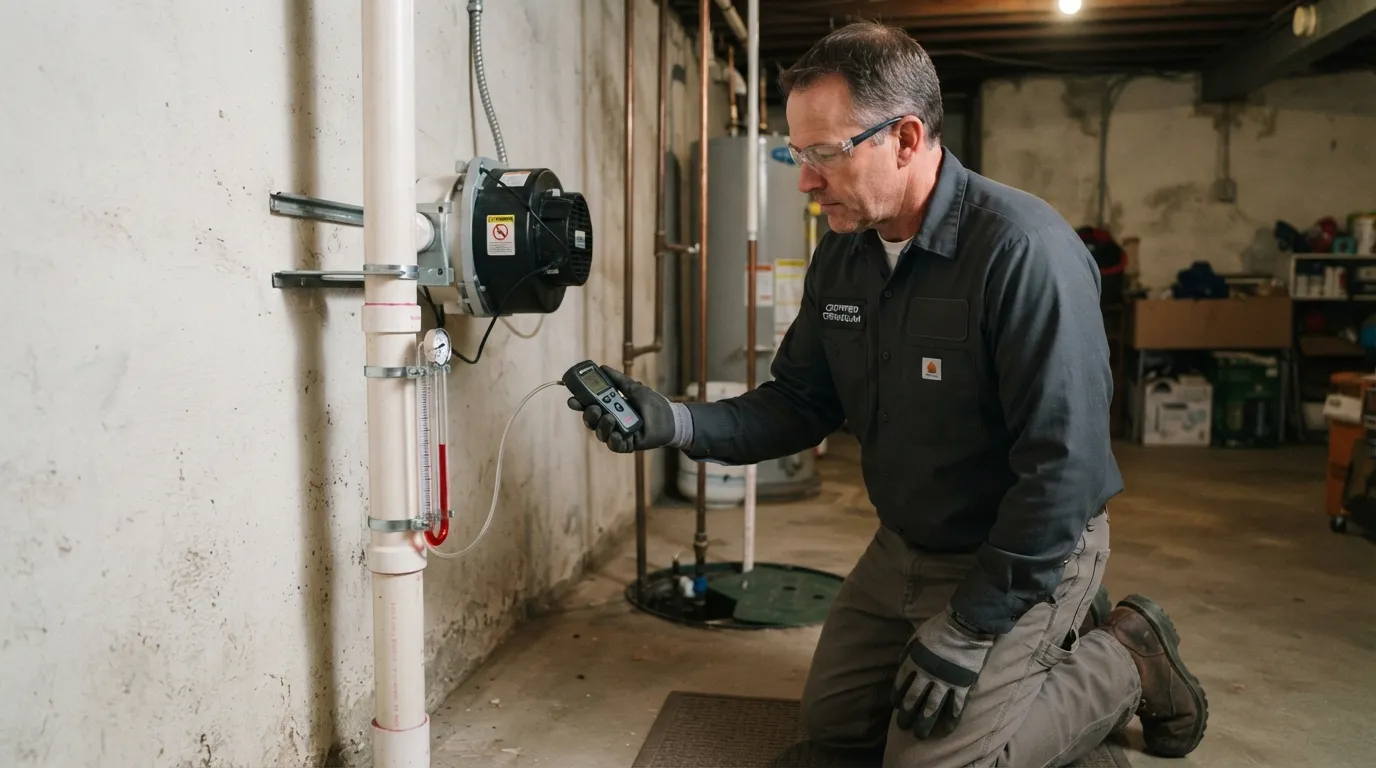
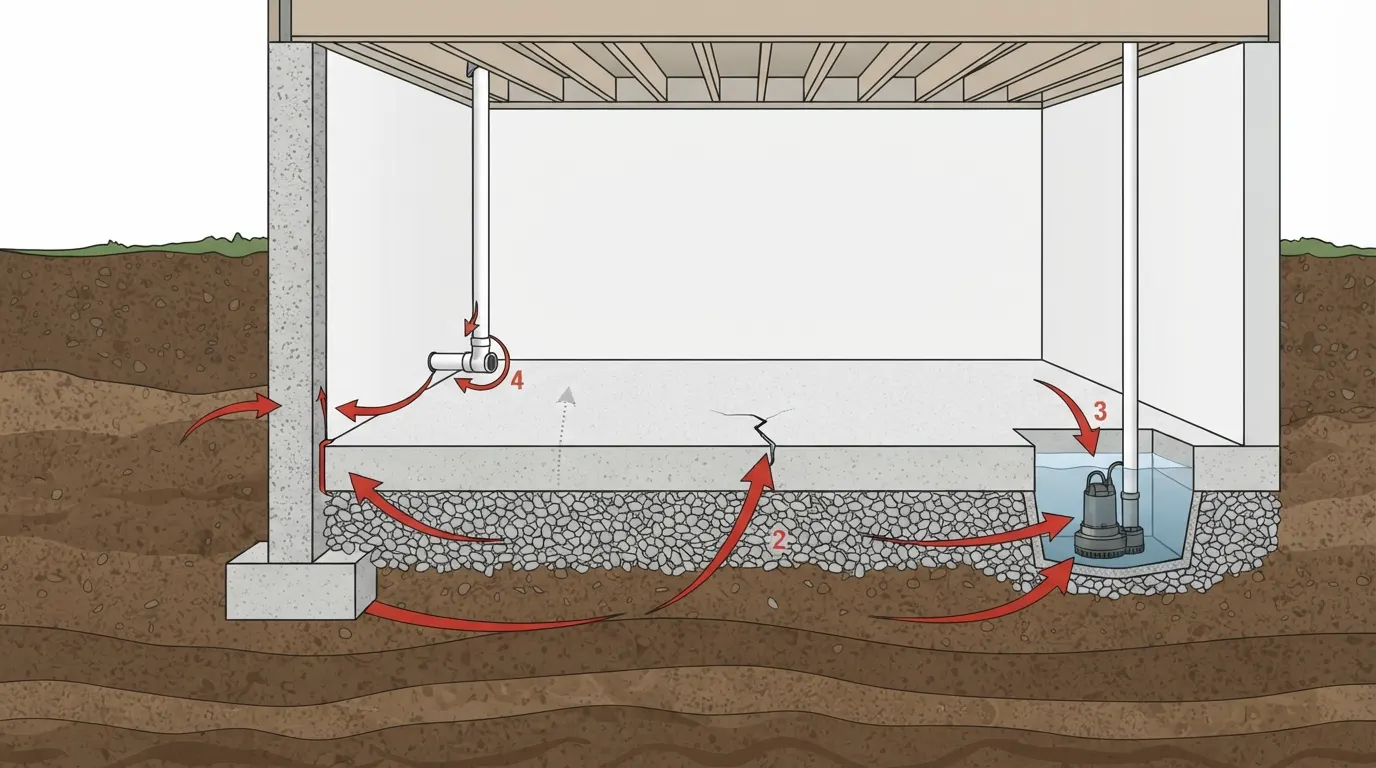
An active sub-slab depressurization system holds a slight vacuum beneath the floor so soil gas is drawn into piping and vented above the roof rather than into occupied space. Where TCE is involved and the risk is acute, Wisconsin rules allow that system to be installed as an interim action before the wider investigation concludes, precisely so exposure stops while the paperwork continues.
Two things need to happen in order. First, sampling data, because guessing at concentrations is not a plan. Second, a system sized for the actual building rather than a house-scale template.
Milwaukee Radon Mitigation designs and installs vapor intrusion mitigation systems for commercial and industrial properties across Milwaukee and Waukesha counties. To talk through a specific building, see our vapor intrusion mitigation services, request a free quote, or call (414) 455-7279.