
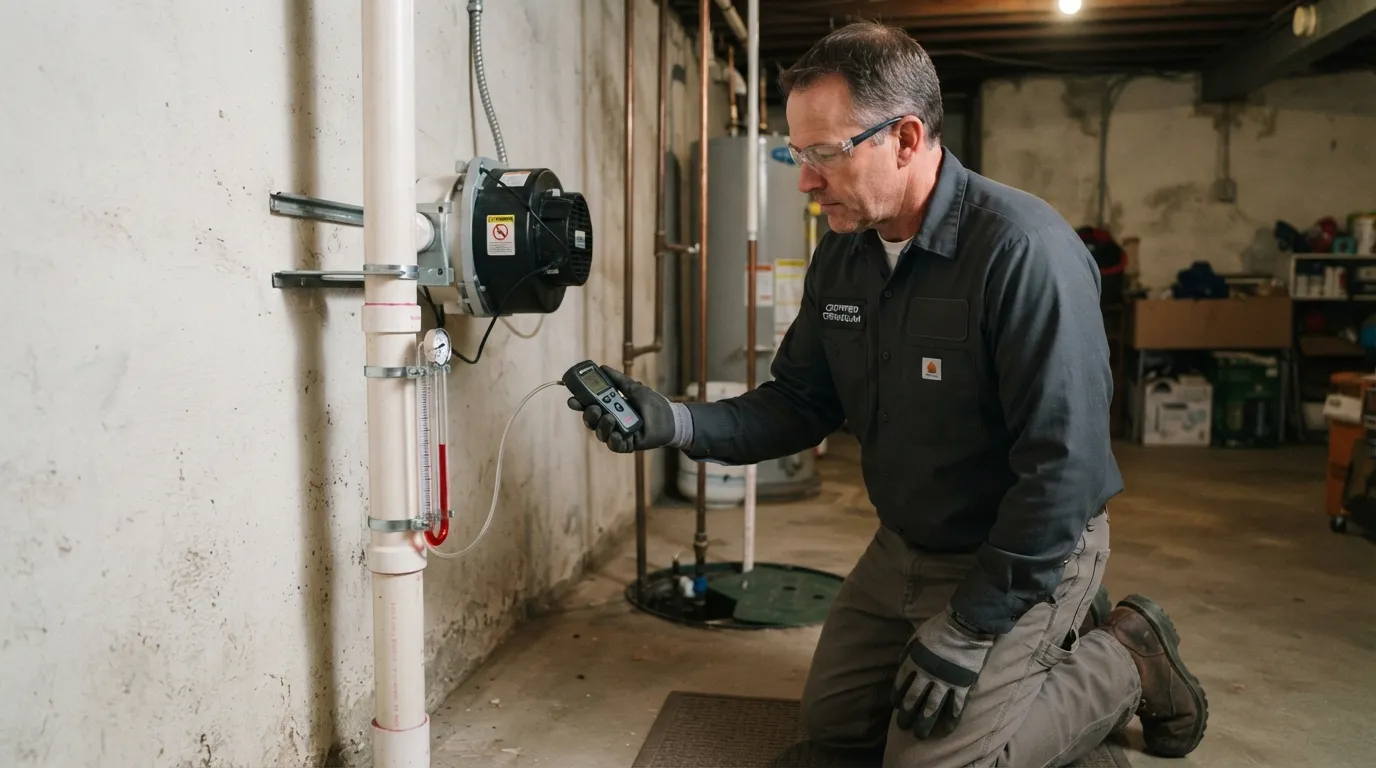
Is radon mitigation required? For a typical Wisconsin home, no. No state law makes a homeowner install a radon mitigation system. But the EPA strongly recommends fixing your home if a confirmed test shows 4 pCi/L or higher, and says to consider it between 2 and 4 pCi/L. A few settings do make it mandatory, including licensed child care centers and HUD-financed multifamily buildings.
That gap between “not required” and “recommended” is where most homeowners get stuck. Maybe a home inspection flagged your number, or a test kit from the hardware store surprised you.
This guide sorts it out for Milwaukee-area homes. You’ll see what Wisconsin law actually says, which radon level triggers mitigation, and when a system makes sense even though nobody is forcing you.
Table of Contents
Radon Levels and What to Do at Each One
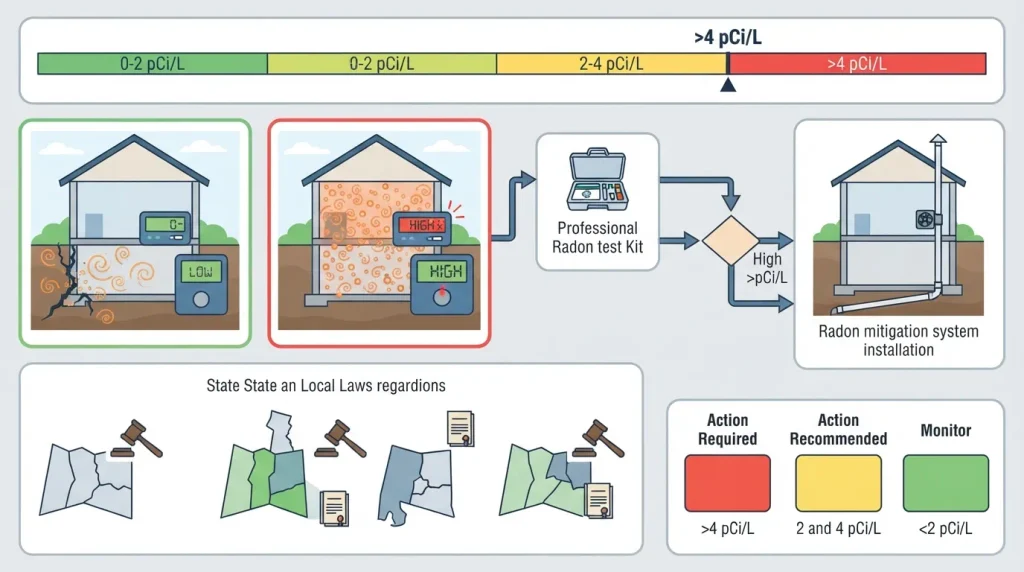
The EPA doesn’t set a legal limit for homes. It sets an action level, which is guidance rather than a rule. Here’s how that guidance breaks down, based on the EPA’s radon publications and CDC advice on reducing radon.
| Confirmed radon level | EPA guidance | What it means for you |
| 4.0 pCi/L or higher | Fix the home | Plan a mitigation system with a certified contractor. |
| 2.0 to 3.9 pCi/L | Consider fixing | Not urgent, but worth it if you spend a lot of time on the lowest level, someone smokes, or you plan to finish the basement. |
| Below 2.0 pCi/L | No action recommended | Retest every couple of years and after any remodeling. |
pCi/L stands for picocuries per liter. It measures how much radioactivity is in a liter of air. The EPA also states there is no known safe level of radon exposure, so lower is always better.
Is Radon Mitigation Required by Law in Wisconsin?
No. Wisconsin has no law that requires homeowners to test for radon or install a mitigation system in a single-family home.
The Wisconsin Department of Health Services says radon testing isn’t required by law or regulated in the state, though it recommends testing during every home sale.
What the law does require during a home sale
The legal piece of a Wisconsin sale is disclosure, not mitigation. Under Wis. Stat. ch. 709, sellers of properties with up to four units fill out a real estate condition report on known hazards. The state radon program lists radon among the hazards that report covers.
So if the seller has a test result, the buyer should see it. What happens next is negotiable. DHS points out that the buyer ultimately decides what level of radon risk is acceptable.
A buyer can ask for a system, a price credit, or the right to cancel, depending on the offer terms. If you’re looking at a home that already has one installed, read our guide on buying a house with a radon mitigation system.
Where radon mitigation is required in Wisconsin
A few situations turn the EPA’s recommendation into a hard requirement:
- Licensed child care centers. State rules require licensed family and group child care centers to test and to install a mitigation system if levels exceed 4 pCi/L. Centers must also notify parents.
- HUD-assisted projects. Under HUD’s departmentwide radon policy, mitigation is required when a building or unit tests at 4.0 pCi/L or higher. FHA multifamily loans carry their own, stricter radon rules.
- Your purchase contract. If your offer includes a radon contingency, the contract terms decide who installs a system and when.
Is radon mitigation required by code for new homes?
Not in Wisconsin today. The Uniform Dwelling Code sets building rules for new one- and two-family homes statewide, and municipalities can’t adopt a stricter or looser code. That means a city like Milwaukee can’t add its own radon rule for new houses.
Lawmakers have tried to change that. A 2019 Assembly bill, AB 828, proposed requiring radon-resistant construction in new homes and commercial buildings. Wisconsin’s state radon plan still lists code requirements for passive radon control as a goal, not current law.
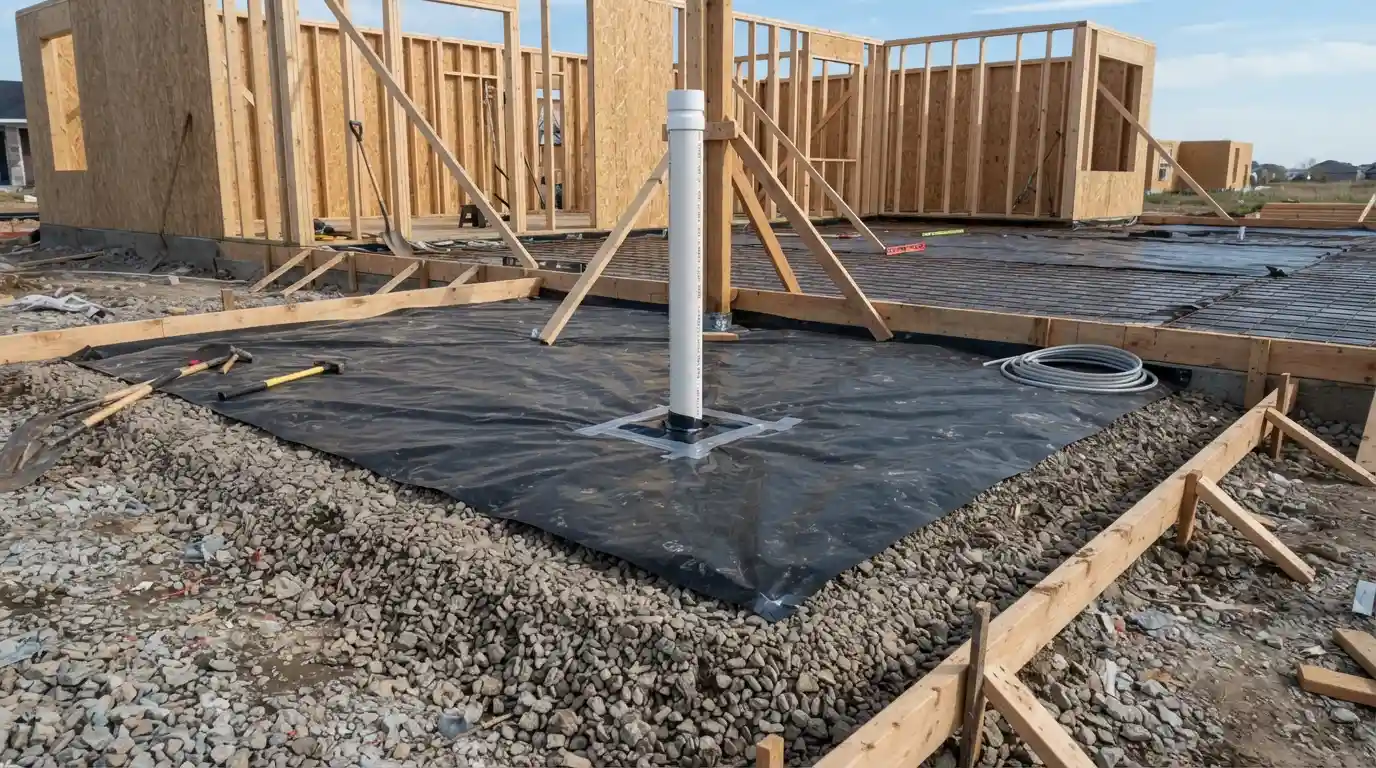
Builders can still include it by choice, and it costs less to do during construction than after. Learn more about radon-resistant new construction.
Do radon contractors need a license?
No state license exists. DHS confirms Wisconsin doesn’t require radon contractors to be state licensed or nationally certified. That puts the credential check on you, so ask for an NRPP or NRSB certification number before you sign.
What Radon Level Requires Mitigation?
A confirmed level of 4 pCi/L or higher. That’s the EPA action level, and at that point the agency strongly recommends fixing your home. Between 2 and 4 pCi/L, it recommends that you consider fixing.
The key word is confirmed. One short-term reading can swing with weather, season, and how closed up the house was. The EPA’s Citizen’s Guide to Radon lays out a simple path:
- Take a short-term test on the lowest lived-in level of the home.
- If the result is 4 pCi/L or higher, run a follow-up test. A long-term test gives the best year-round picture. A second short-term test is faster.
- Fix the home if the long-term result is 4 pCi/L or higher. If you used two short-term tests, consider fixing when their average is 4 pCi/L or higher.
Not sure how to read your report? Our guide to understanding radon measurement explains the numbers.
Should you mitigate between 2 and 4 pCi/L?
There’s no rule in this range. It’s a judgment call, and these factors push it toward mitigating:
- Your result sits closer to 4 than to 2.
- Someone in the home smokes. Wisconsin DHS notes that smoking raises lung cancer risk in a high-radon home by 10 times.
- You spend long hours on the lowest level, such as a basement office, bedroom, or play area.
- You plan to finish the basement, which makes it simpler to plan the pipe route before walls go up.
- You expect to sell and would rather hand buyers a low number.
One more thing to keep in mind: DHS reports that basement radon typically averages about double the main-floor level. A modest upstairs reading can understate what’s happening below.
When Do You Need a Radon Mitigation System?
You need one when a confirmed test says so, or when your home’s situation makes a borderline result worth fixing. These are the most common triggers:
- A confirmed result of 4 pCi/L or higher, at any time of year.
- A home sale where the buyer’s test comes back high.
- A passive radon system from new construction that still tests above 4 pCi/L. The EPA says to activate it by adding a vent fan.
- A retest after remodeling or basement finishing that shows levels went up. CDC recommends retesting after any remodeling.
- A 2 to 4 pCi/L result combined with the risk factors listed above.
Radon causes harm through long-term exposure, so one high reading is not an emergency. But once a confirmed test says 4 or higher, there’s no good reason to keep putting it off.
Is Radon Mitigation Really Necessary?
If your home tests high, yes. Radon is the second leading cause of lung cancer in the U.S. and the leading cause among nonsmokers, according to Wisconsin DHS. The agency estimates about 21,000 U.S. deaths each year from radon-related lung cancer.
It’s not a rare problem here, either. DHS reports that about 1 out of 10 Wisconsin homes has high radon.
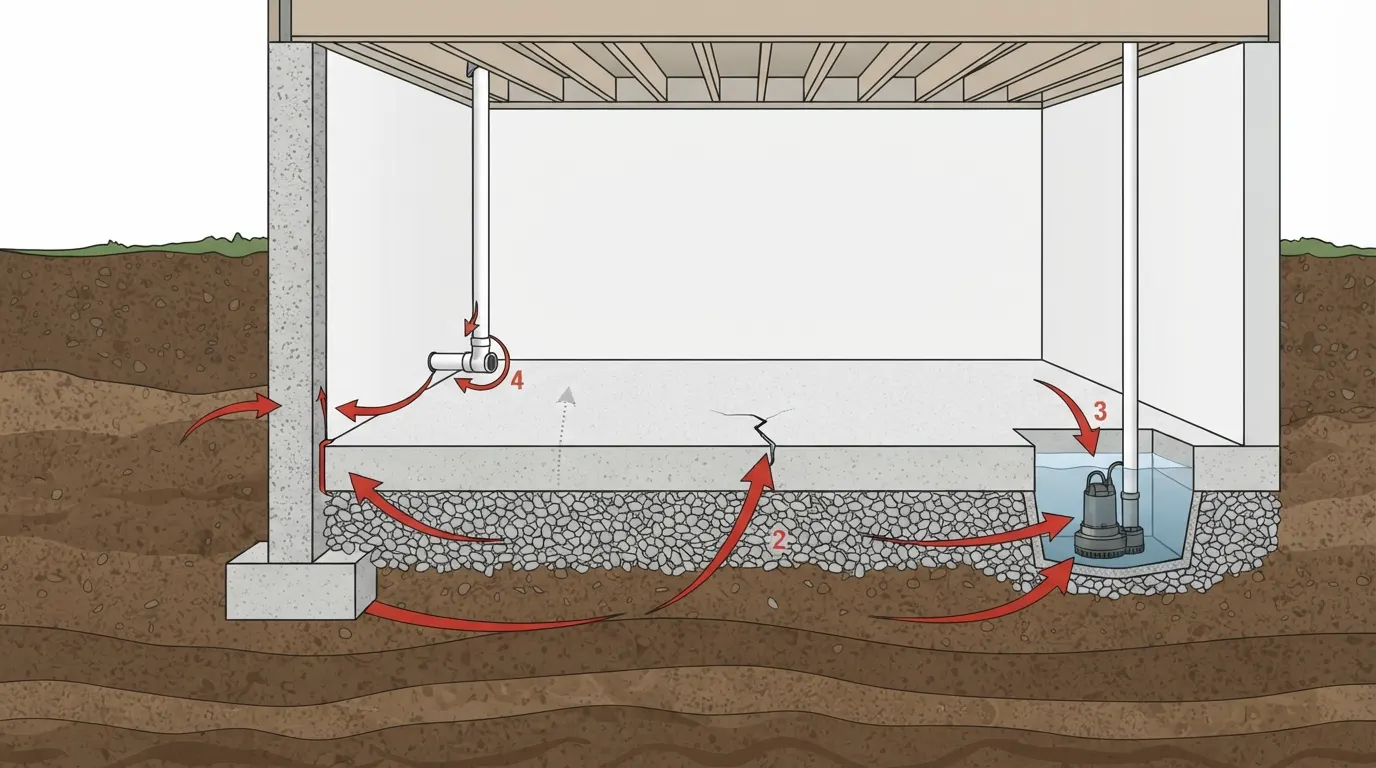
The good news is that mitigation works. The EPA says some radon reduction systems cut indoor levels by up to 99%. A properly designed radon mitigation system pulls soil gas from under the foundation and vents it outside with a fan. For real-world results, see whether radon mitigation systems really work.
Do You Need Radon Mitigation If You Have No Basement?
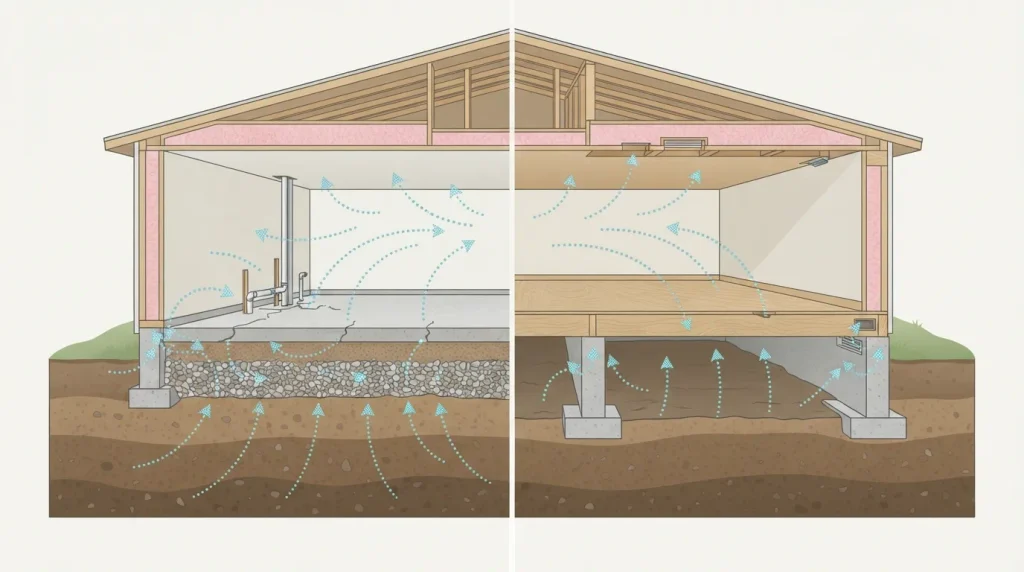
Yes, if your test comes back high. The EPA is clear that homes with or without basements can have a radon problem, along with new homes, old homes, and drafty ones.
Slab-on-grade homes and homes over crawl spaces still sit on soil that releases radon. What changes is the system design, not the need for one. Compare the options in our guide to types of radon mitigation systems.
Test the lowest lived-in level, whatever it is. In a slab home, that’s usually the main floor.
When You Don’t Need Radon Mitigation
If confirmed results come in below 2 pCi/L, the EPA doesn’t recommend a system. That’s a good outcome, and no contractor should pressure you into one at that level.
Keep testing, though, since radon levels change over time. CDC suggests retesting every two years. And if you’ve never tested at all, start with our guide on whether you should get a radon test.
Next Steps for Milwaukee, Waukesha, and Ozaukee County Homes
If your confirmed result is 4 pCi/L or higher, or you’re leaning toward fixing a 2 to 4 reading, the next step is a site visit from a certified mitigator. They’ll look at your foundation, sump pit, and layout before recommending a design.
Because Wisconsin doesn’t license radon work, credentials matter. Our checklist for hiring a certified radon mitigation contractor covers what to ask.
Frequently Asked Questions
Can a Wisconsin seller refuse to install a radon mitigation system?
Yes. Wisconsin doesn’t require sellers to fix high radon. They must disclose known results, and after that buyers and sellers are free to negotiate. Common outcomes are a system installed before closing, a price credit, or the buyer canceling under a radon contingency.
Does an FHA loan require radon mitigation?
Not for a typical single-family FHA loan. HUD’s guidance says FHA single-family lenders must give borrowers a home inspection notice rather than meet a radon standard. Stricter radon rules apply to FHA multifamily and HUD-assisted projects.
Do Wisconsin landlords have to mitigate radon?
No state law requires it for private rental homes today. The state’s radon plan lists testing and mitigation requirements for rental housing as a goal for the future. HUD-assisted properties are the exception.
Can I lower radon without installing a mitigation system?
Only a little, and not for long. Sealing cracks and opening windows can help, but CDC says natural ventilation is only a temporary strategy and shouldn’t be treated as mitigation. Always retest after making changes.
Can I install a radon mitigation system myself?
Wisconsin doesn’t license radon work, so no state rule stops you. Whether a DIY system actually lowers your level is a different question. Read our breakdown of DIY radon mitigation before you buy parts.
What should my radon level be after mitigation?
At minimum, below 4 pCi/L on a post-mitigation test, and lower is better since there’s no known safe level. The EPA notes that even very high levels can be brought down to acceptable levels. Ask your contractor what result they design for.
Conclusion
So, is radon mitigation required? For most Wisconsin homeowners, the law doesn’t force it. Your test result is the real trigger. A confirmed 4 pCi/L or higher means fix it, 2 to 4 means weigh your situation, and below 2 means keep testing.
Licensed child care centers and HUD-assisted buildings are the main exceptions where mitigation is mandatory. For everyone else, it’s a health decision you get to make with good data.
Milwaukee Radon Mitigation serves homeowners across Milwaukee, Waukesha, and Ozaukee counties. If your test came back high, explore our radon mitigation services or request a free quote.