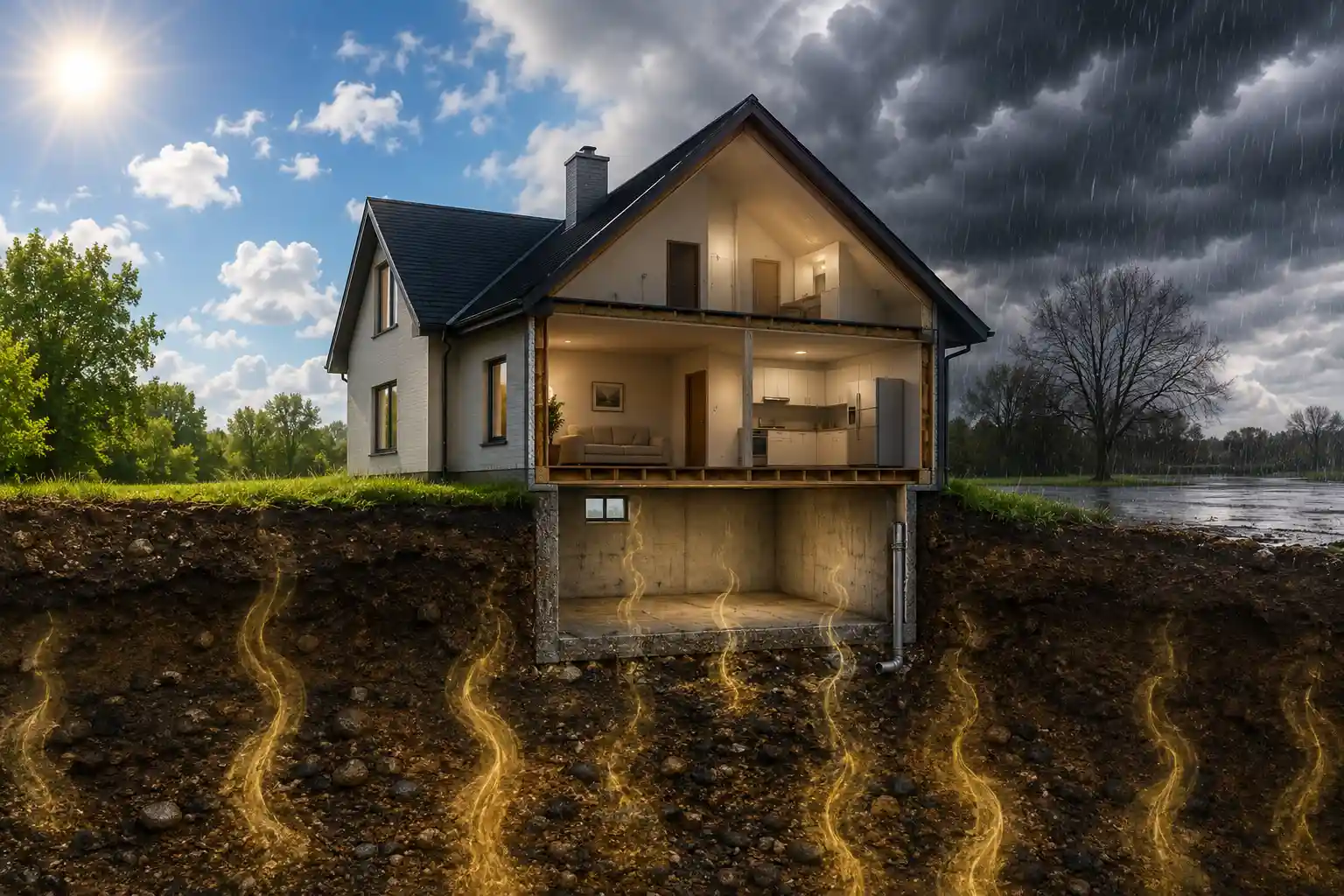

High radon levels in Wisconsin homes (roughly 1 in 10) are primarily caused by the natural decay of uranium in the state’s soil and bedrock, compounded by porous sand/gravel, glacial deposits, and the “stack effect” during cold winters.
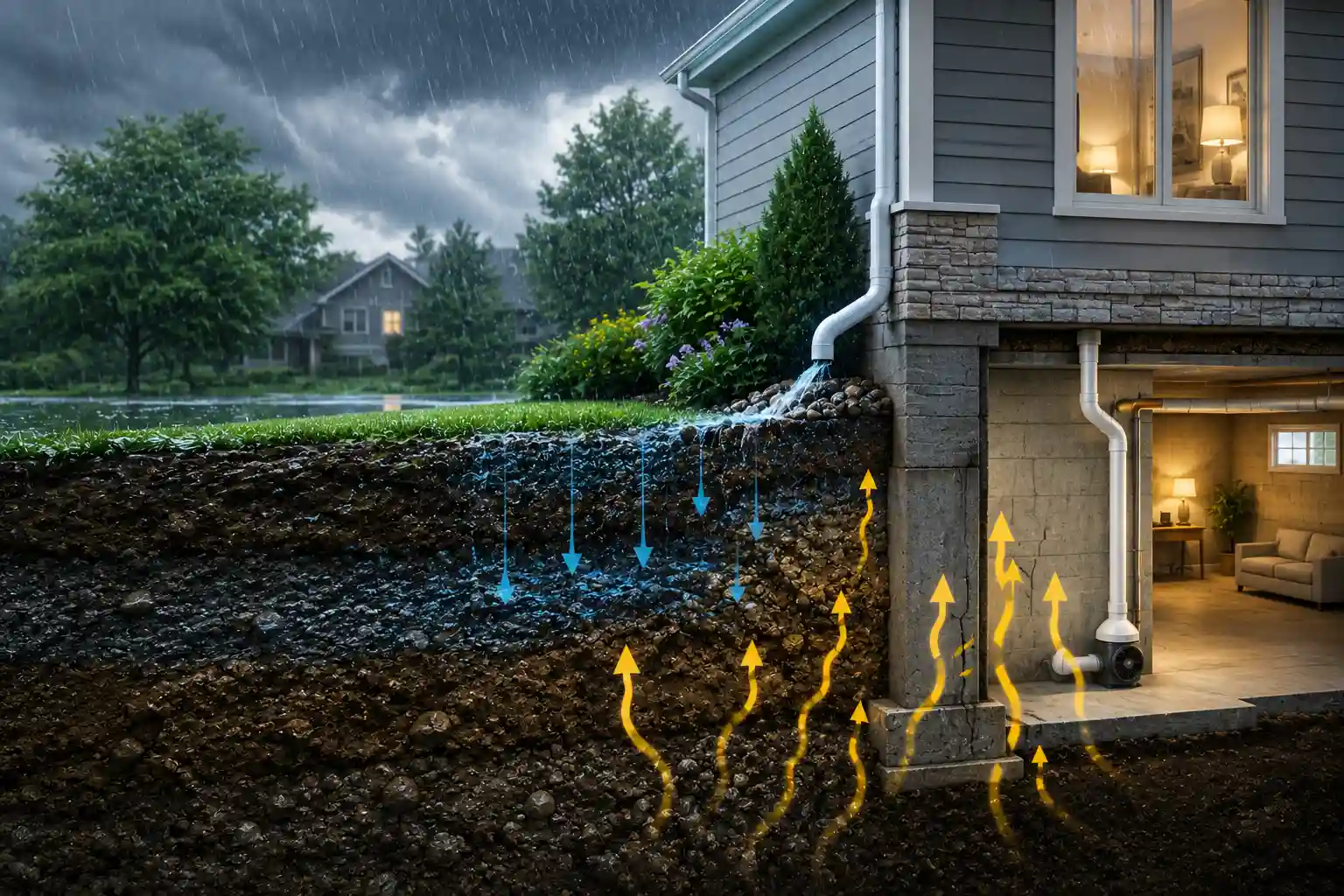
Radon gas rises through the soil and enters homes through cracks in basements or foundations, often getting trapped due to sealed-up, energy-efficient building practices in winter.
Table of Contents
Key Factors Driving High Wisconsin Radon Levels:
Radon concentration in homes can vary depending on several environmental and structural factors. These include the soil composition beneath the house, the way the home is built, and even the ventilation of the space. Let’s take a closer look at the primary reasons why radon can accumulate at high levels in homes:
- Geological Composition: Wisconsin’s bedrock and soil, particularly in areas with high sand and gravel content, allow radon to move easily up from the ground. The region’s geological history, including glaciers, left behind materials that naturally emit high amounts of radon as uranium breaks down.
- Soil Permeability: Looser, porous soils allow radon gas to escape from deep in the earth and move easily into the air pockets around building foundations.
- The “Stack Effect” and Weather: During Wisconsin’s cold winters, homes are sealed tight to conserve heat. Heated air rises and escapes, creating a vacuum in the basement that draws more soil gas and thus radon inside.
- Entry Points: Radon seeps through small cracks, construction joints, and gaps in foundations or basements.
- Regional Specifics: While common state-wide, radon risk is significantly higher in certain regions, such as northwest Wisconsin and Jackson County, where over one-third of homes have tested above the action level.
Radon is a naturally occurring gas that can accumulate in homes, leading to potentially harmful concentrations. High levels of radon in homes can happen due to factors such as the geological composition of the area, the construction of the building, and even weather patterns.
If you live in areas like Whitefish Bay, West Allis, Wauwatosa, or Shorewood, radon may be more prevalent than you think. It’s crucial to understand why radon concentration in your home can be high, and how you can protect your health with radon testing services and professional radon mitigation.
How Can Radon Be Tested?
Testing for radon is the first crucial step in determining whether your home has elevated radon levels, and it’s essential for protecting your family’s health.
Radon is an invisible and odorless gas, so without testing, you would have no way of knowing if it’s present at dangerous levels in your home. There are several ways to conduct radon testing, and the most accurate and reliable results come from using professional radon testing services.
Radon testing typically involves placing detectors in the lowest living areas of your home, such as the basement or ground floor, where radon tends to accumulate.
The test measures the concentration of radon in the air over a certain period, providing insight into whether the levels are within safe limits or if mitigation is required. The duration of the test can vary depending on the approach used:
- Short-Term Testing: A short-term test is typically conducted over a period of 2 to 7 days. This method provides quick results, but it may not fully capture fluctuations in radon levels that can occur over time.
- Long-Term Testing: For a more comprehensive assessment, a long-term test is conducted over a period of 90 days or more. This method offers a more accurate picture of radon exposure, as radon levels can vary due to seasonal changes, weather, and ventilation.
The process of testing for radon can be complex, and proper placement of detectors is crucial for obtaining reliable results. A professional radon testing company like Milwaukee Radon Mitigation has the experience and expertise to ensure that the test is done correctly.
They will place detectors in the optimal locations in your home, ensuring accurate and consistent measurements. Their professional approach eliminates potential errors, such as improper placement or mishandling of testing equipment, and ensures that the results you receive are trustworthy.
Additionally, certified professionals can help interpret the results and recommend the necessary next steps if elevated radon levels are detected.
By choosing a reliable radon testing company, you can have peace of mind knowing that your home’s air quality is thoroughly assessed and that you’re taking the right steps to protect your family from harmful radon exposure.
Radon Mitigation: How Can You Lower Radon Levels?
If your home has high radon concentrations, it’s important to address the issue promptly. Radon testing can help you identify whether your home requires radon mitigation. Fortunately, radon mitigation solutions are available to lower radon levels to safe, acceptable concentrations.
Professional radon mitigation services typically include:
- Active Soil Depressurization
This is the most common method of reducing radon. A vent pipe is installed beneath the foundation of the house, drawing radon out and venting it safely outside. - Sealing Cracks and Openings
In some cases, cracks and gaps in the foundation or walls may be sealed to reduce radon infiltration. - Improved Ventilation
Improving ventilation in the home can help reduce radon levels by increasing airflow, thus preventing the build-up of gases.
Why Choose Milwaukee Radon Mitigation?
Choosing the right radon testing company is critical to ensuring accurate results and effective mitigation. Milwaukee Radon Mitigation stands out as a trusted leader in the industry, offering expert radon testing and professional mitigation services across the greater Milwaukee area, including neighborhoods such as Whitefish Bay, West Allis, Wauwatosa, and Shorewood.
With years of experience, their team understands the unique challenges posed by radon in homes and is equipped with the latest technology to assess radon levels accurately. From initial testing to comprehensive mitigation solutions, Milwaukee Radon Mitigation offers tailored services that prioritize your safety.
Their expertise extends to a range of services designed to meet the needs of both homeowners and businesses, ensuring that your property is protected against the harmful effects of radon exposure. Whether it’s a simple inspection or an extensive mitigation plan, Milwaukee Radon Mitigation has built a reputation for providing reliable, efficient, and affordable solutions.
Additionally, the company’s commitment to customer service ensures clear communication throughout the process, so you’re always informed and confident in the steps being taken to secure your home’s air quality. When it comes to protecting your family’s health, choosing a reputable radon testing company like Milwaukee Radon Mitigation is the key to peace of mind and long-term safety.
FAQs
What is radon and why is it dangerous?
Radon is a colourless, odourless, radioactive gas that naturally occurs from the decay of uranium in soil, rock, and water. When it accumulates in homes, it can pose serious health risks, including lung cancer, particularly if exposure occurs over a long period.
Can I handle radon testing and mitigation myself?
While radon testing kits are available for DIY use, professional testing is recommended for more accurate results and thorough analysis. Radon mitigation, especially in homes with high levels of radon, is best handled by certified professionals who can install the necessary systems to reduce radon safely and effectively.
How long does radon mitigation take?
Radon mitigation typically takes a day or two, depending on the complexity of the home’s structure and the severity of the radon levels. The process involves installing systems to lower radon concentrations and may also include sealing cracks or gaps in the foundation.
How can radon levels be reduced in my home?
Radon levels can be reduced through a process known as radon mitigation. Common methods include active soil depressurization (installing a vent pipe beneath the home to release radon), sealing cracks and gaps in the foundation, and improving ventilation in your home to allow radon to escape.
How do I know if my home has high radon levels?
The only way to know if your home has high radon levels is through testing. Radon testing involves placing detectors in the lowest levels of your home (basement or ground floor) for a period of time to measure radon concentrations. Professional radon testing services provide accurate results.
Conclusion
Radon is an invisible, odourless gas that can pose serious health risks if allowed to accumulate in high concentrations. Homes in areas like Whitefish Bay, West Allis, Wauwatosa, and Shorewood are at risk, especially those with poor ventilation or certain geological features. Understanding the causes of high radon concentration is the first step toward ensuring your home is safe. Testing and professional radon mitigation services can help reduce risks and protect your family. Don’t wait until it’s too late.
Schedule radon testing and professional mitigation services today by calling 414-455-7279.