
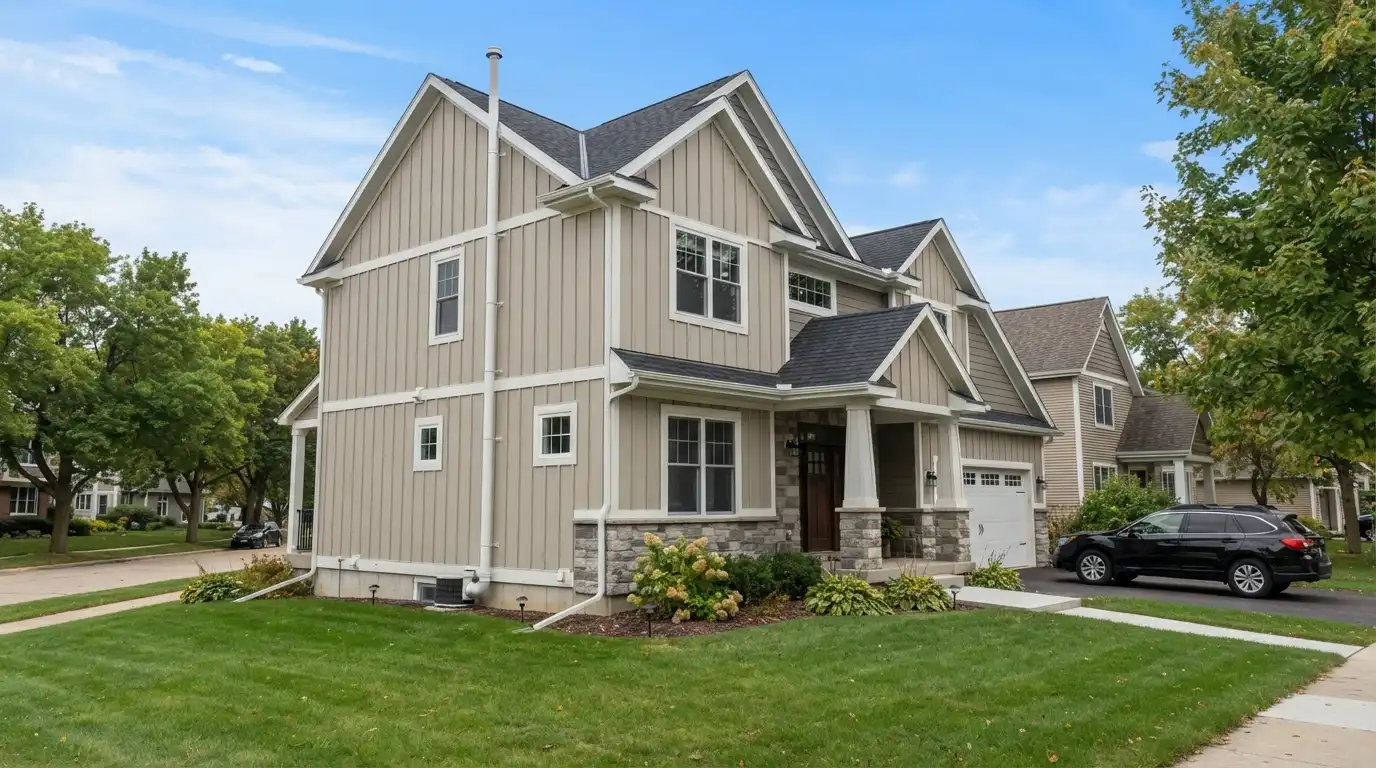
Yes, homes can have high levels of Radon in New Construction
Radon is a natural, radioactive gas. It comes from the breakdown of uranium in the soil and rocks beneath a house. Because building a new house does not change the ground underneath it, the source of the gas remains
Table of Contents
Does Radon Affect New Construction Homes?
Yes, radon affects new construction homes just as much as older properties because the gas comes from the natural soil and rock beneath the building.
Why New Homes Face Radon Risks
- Air Pressure: Airtight new homes can create indoor negative pressure that pulls soil gases up into the living spaces.
- Geological Source: Radon forms from uranium breaking down in the ground, meaning the age of the house does not change what is underneath it.
- Energy-Efficient Design: Modern new homes use tight seals and thick insulation to save energy, which can accidentally trap radon gas inside by limiting natural airflow.
- Foundation Openings: Concrete slabs and basement floors can still develop tiny cracks or gaps around pipes and joints where gas seeps through.
Why Radon in New Construction Happens
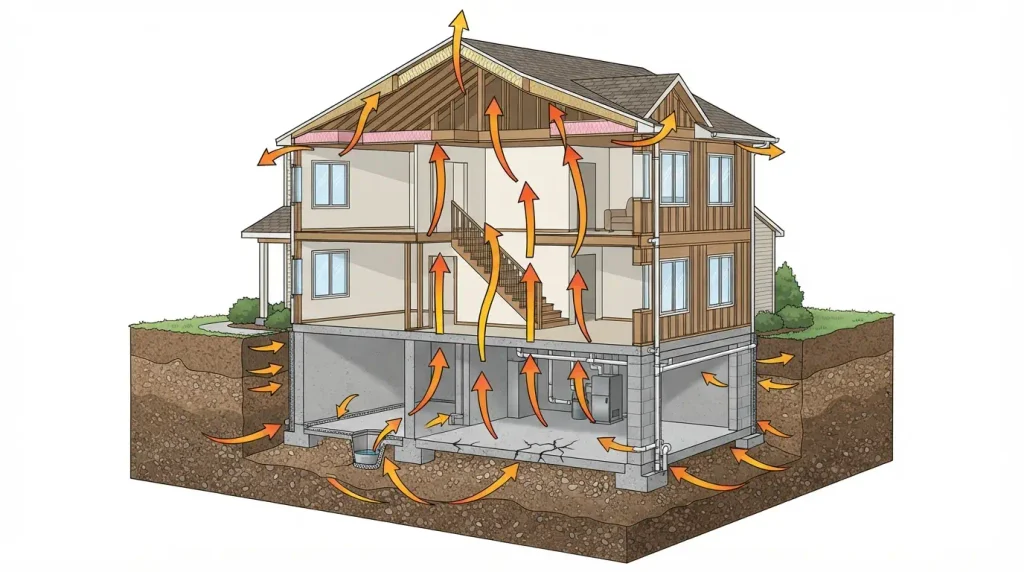
Radon is a radioactive gas that forms when uranium in soil and rock breaks down. It has no color or smell. A new foundation doesn’t change the ground beneath it. Your new house sits on the same source as the older homes down the street.
Pressure is what pulls it inside. Most homes sit at slightly lower air pressure than the soil around them. The EPA calls this a vacuum effect. Warm air rising through the house and exhaust fans pushing air out both add to that pull.
Soil gas then enters through any opening it can find:
- The joint where the basement floor meets the foundation walls
- Gaps around plumbing, sump pits, and utility lines
- Shrinkage and control cracks in new concrete
- Crawl spaces and any exposed soil
Fresh concrete cracks slightly as it cures, and a finished house has dozens of pipe and wire penetrations. That isn’t a construction defect. It’s simply how houses are built. For more on how the gas moves, see where radon comes from.
Is Radon Worse in Newer Homes?
It can be. There’s no rule that a newer home will test higher, but several modern building traits can raise radon when no controls are built in.
The biggest one is airtightness. Tighter homes save energy by limiting air leaks, which also means less outdoor air diluting any soil gas that gets in. Larger basements and more below-grade living space can add to the effect.
The strongest data so far comes from Canada. A 2019 study in Scientific Reports tested 11,727 homes across the Canadian Prairies and linked more recent construction year with higher radon. The same research group’s earlier Calgary study found radon 31.5% higher in homes built since 1992 than in older ones.
That region has different geology than southeastern Wisconsin, so those numbers don’t predict any single Milwaukee-area home. They do show why “it’s new, so it’s fine” isn’t a safe assumption.
Does Wisconsin Require Radon-Resistant Construction?
Radon-resistant features aren’t a statewide requirement for new Wisconsin homes. Assembly Bill 828, which would have required them in new one- and two-family dwellings, failed to pass in 2020.
So whether your new home has radon protection depends on the builder, not the code. Some builders include it as standard. Others add it only when a buyer asks. Plenty of homes are built without it at all.
The Wisconsin Department of Health Services still encourages it. Its radon-resistant construction guidance cites studies from across the country and in Wisconsin. In properly built and sealed new homes, passive vent stacks typically cut indoor radon by about half.
Building it in also pays off. DHS also points to a December 2025 EPA cost-benefit analysis. For new homes built with radon-reducing features, it found a return of up to $53 for every dollar spent.
What Radon-Resistant New Construction Includes
Builders install radon-resistant new construction (RRNC) features before the slab is poured and the basement is finished. According to the EPA’s buyer guide, a radon-resistant home has these basic parts:
- Gas-permeable layer: usually 4 inches of clean gravel under the slab, so soil gas can move freely underneath
- Plastic sheeting: laid over the gravel, or over a crawl space floor with the seams sealed
- Sealing and caulking: closes below-grade openings in the foundation floor and walls
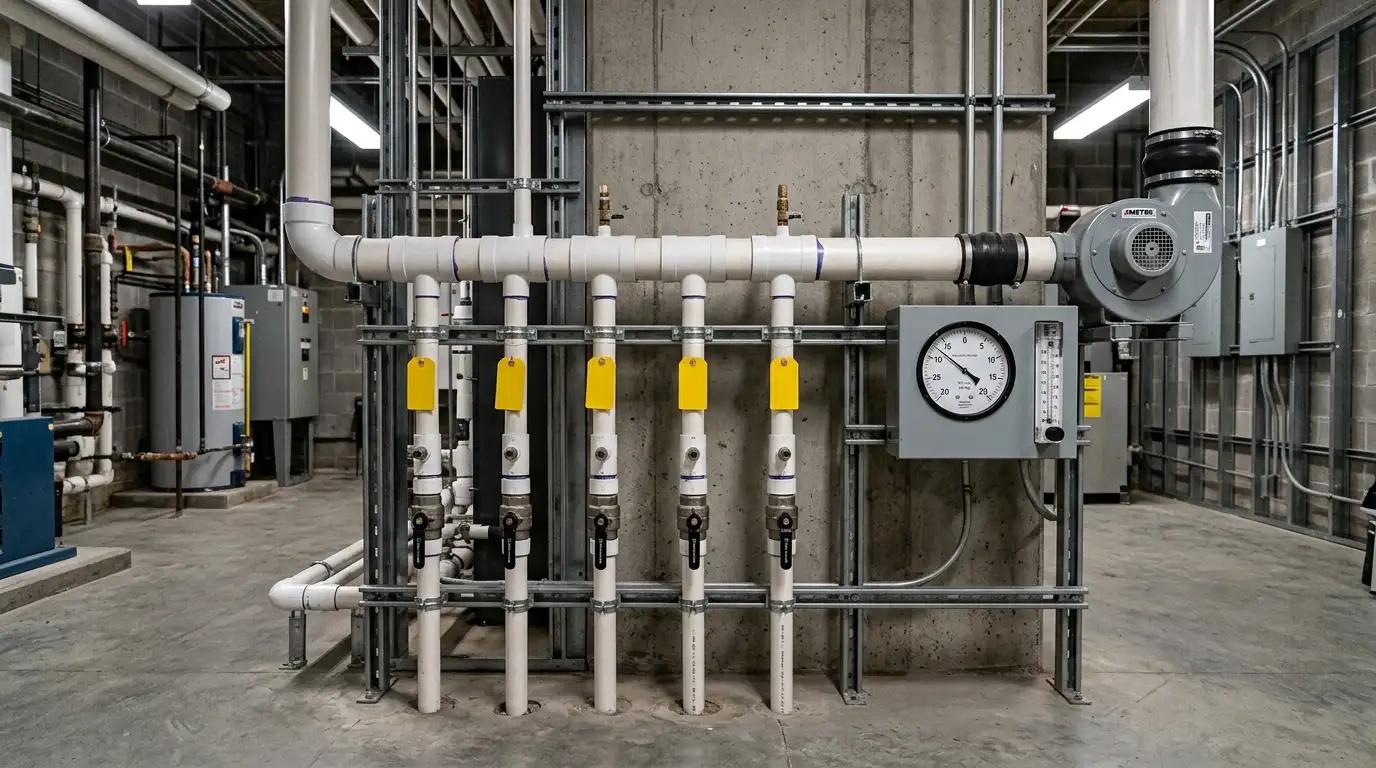
- Vent pipe: a 3- or 4-inch gas-tight pipe running from the gravel layer up through the house and out the roof
- Junction boxes: one in the attic to power a future fan, and one in the living space for a fan alarm
Without a fan, this is called a passive system. It relies on natural airflow up the pipe. EPA suggests builders follow a recognized approach, such as IRC Appendix F, ASTM E1465, or ANSI/AARST RRNC 2.0. For a closer look at how the parts work together, read how RRNC systems work.
A Passive System Doesn’t Guarantee Low Radon
Cutting radon in half helps, but half of a high number can still be high. Wisconsin DHS says radon can stay elevated even with these features in place, though it’s less likely. That’s why a test is needed once the home is finished.
If a test comes back at 4 pCi/L or higher, the fix is usually simple. A certified mitigator adds a fan to the existing vent pipe, which turns the passive system into an active one. DHS notes the fan belongs in the attic space left for it, never in conditioned living space such as the basement.
We work with builders and homeowners on both passive rough-ins and fan activation through our radon-resistant new construction services. To weigh the two setups, compare passive vs. active radon-resistant construction, or see how effective radon-resistant construction is in real homes.
Radon Testing for New Construction: When and How
Timing matters most. Test after the home is finished and the heating and cooling system runs normally. The EPA advises new home buyers to ask whether the home has already been tested, and to fix it at 4 pCi/L or higher.
A reading taken mid-construction, with open walls or no working HVAC, won’t reflect how the house behaves once you live in it.
Use the same rules EPA sets for any real estate radon test:
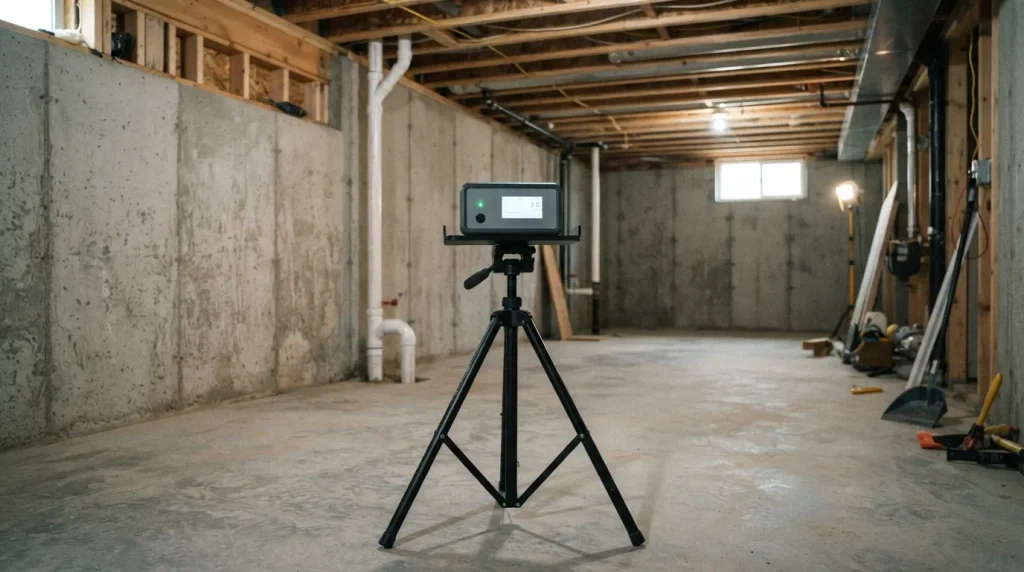
- Test in the lowest level you could use regularly, finished or unfinished
- Keep windows and outside doors closed for at least 12 hours before a short test and for the whole test
- Let the test run for at least 48 hours
- Place the device at least 20 inches off the floor, away from drafts, exterior walls, kitchens, bathrooms, and laundry rooms
- Run heating and cooling as you normally would
Short-term tests give a quick answer. Long-term tests, which run more than 90 days, better reflect your year-round average. EPA also suggests considering a fix between 2 and 4 pCi/L, since no radon level is risk-free.
Compare kit and monitor options in our guide to radon testing devices, or schedule professional radon testing with calibrated continuous monitors.
Questions to Ask Your Builder Before Closing
EPA recommends asking whether radon-resistant features were used and whether the home has been tested. Get the answers in writing:
- Were radon-resistant features installed, and to which standard?
- Where does the vent pipe run, and is it labeled as a radon system?
- Is there an attic junction box ready for a future fan?
- Were floor-wall joints sealed before any basement walls were framed or finished?
- Has the home been tested? If so, by whom and in which room?
- If a post-occupancy test reads 4 pCi/L or higher, who pays to activate the system?
That last question is easy to skip and costly to skip. The EPA guide suggests purchase contracts spell out who runs the test, when it happens, and who pays for any mitigation. Ask your agent or attorney how to word it.
What to Do If Your New Home Tests High
High radon in a new home is usually one of the easier cases to fix, especially when a passive pipe is already in place. Work through it in order:
- Confirm the number. A short-term result close to 4 pCi/L carries more uncertainty, so a follow-up test helps before you decide.
- Hire a certified mitigator. Wisconsin doesn’t license radon contractors, so check for national certification through the NRPP or NRSB.
- Activate or install a system. With a passive pipe, that usually means adding a fan and an alarm. Without one, a full radon mitigation system is designed for the foundation.
- Retest afterward. EPA recommends an independent follow-up test to confirm the level came down.
An active system isn’t a flaw on a new home. If you’re weighing one that already has a system, see whether to buy a house with a radon mitigation system.
FAQ
Is radon common in new construction homes?
No national figure separates new homes from older ones. Across all U.S. homes, the EPA estimates nearly 1 in 15 has an elevated radon level. Neighbors’ results don’t predict yours, since homes next to each other can test very differently.
Can I trust the builder’s radon test?
Maybe, but check the details first. Ask who ran it, where the device sat, how long it ran, and whether closed-house conditions were kept. EPA also flags a possible conflict of interest when the same company tests and installs the fix, so an independent test adds confidence.
Does a new home without a basement need a radon test?
Yes. EPA says radon can affect homes with or without basements, including slab-on-grade and crawl space homes. EPA recommends testing all homes below the third floor, which includes most new townhomes and ground-level condos.
Can I add a fan to a passive radon system myself?
It isn’t a good DIY job. The fan must sit outside conditioned space and needs an alarm. Wisconsin DHS warns that a poor install can actually raise indoor radon. Read more on whether DIY radon mitigation works.
Will a radon system make a new home harder to sell?
EPA says home sales haven’t been blocked where radon problems were fixed, and it calls the added protection a selling point. Keep your test results and system details to share with future buyers.
Does a new home on a private well need a radon water test?
Test the air first. If air results are elevated and the home uses a private well, EPA recommends testing the water too. Radon released from shower and tap water adds to indoor air. See our guide to testing well water for radon.
How often should I retest a new home?
Retest after any major change, such as finishing the basement, and test before the project starts too. EPA also advises retesting sometime in the future even without changes. If you have an active system, retest after installation to confirm it works.
Conclusion
A brand new home comes with plenty of fair assumptions, but low radon shouldn’t be one of them. Radon comes from the soil, not the age of the house. And because Wisconsin doesn’t require radon-resistant features statewide, protection varies from one builder to the next.
New construction is also the easiest time to get ahead of it. A passive system built in during construction lowers the odds of a problem. One test after move-in tells you where you actually stand, and if that number is high, adding a fan to an existing pipe is a straightforward fix.
Ask your builder the right questions before closing, then test once you’re living in the home. That small step turns an unknown into a number you can act on.
Milwaukee Radon Mitigation helps builders and homeowners across Milwaukee, Waukesha, and Ozaukee counties plan passive radon systems and activate them when a test calls for it. Every project is led by AARST and NRPP certified specialist Brian Thompson.