
Can radon go through a concrete slab? Yes, and it usually doesn’t have to push through solid concrete to do it. Most radon rides in on soil air that your house pulls through cracks, the seam where the floor meets the wall, sump pits, and gaps around pipes. A smaller amount seeps slowly through the concrete itself.
The EPA explains that air pressure inside most homes is lower than the pressure in the soil around the foundation, so the house acts like a vacuum on the ground beneath it. Concrete slows radon down. It doesn’t seal it out.
That’s true for a slab-on-grade ranch, a home with a full basement, and everything in between. A basement floor is a concrete slab too. Here’s how radon gets past it and what actually keeps it out.
Table of Contents
How Radon Gets Through a Concrete Slab
Radon forms as uranium breaks down in soil and rock (our guide on where radon comes from covers that part). Once it’s under your floor, it has two ways in, and they aren’t equal.
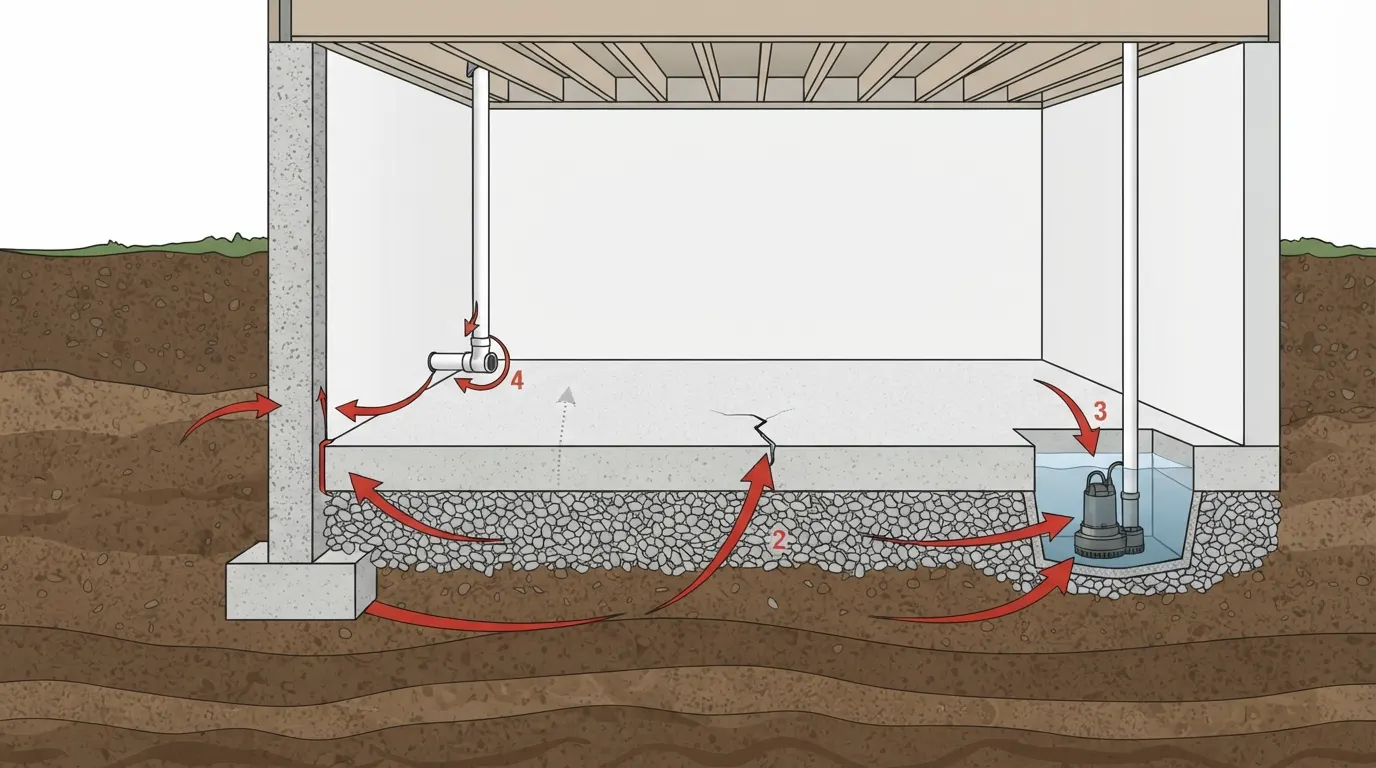
Route 1: Soil air pulled through openings
This is the big one. The CDC’s Agency for Toxic Substances and Disease Registry names pressure-driven air flow as the most important way radon enters a home. Any gap that lets air move from the soil into your house lets radon move with it.
EPA’s Citizen’s Guide lists the common entry points:
- Cracks in solid concrete floors
- Construction joints, including the seam where the slab meets the foundation wall
- Cracks in foundation walls
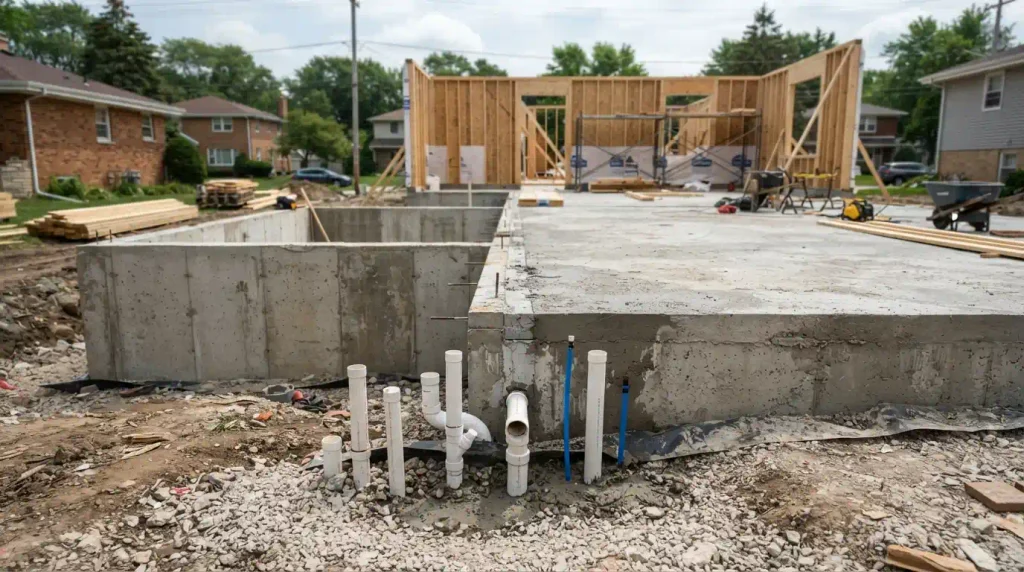
- Gaps around service pipes, such as water, sewer, and drain lines
- Cavities inside walls, like the open cores of hollow block foundations
In Milwaukee-area basements, open sump pits and floor drains belong on that list too. They’re direct openings to the soil, and they’re often the first places we check.
Route 2: Diffusion through solid concrete
Concrete looks solid, but it’s full of tiny pores. Radon can drift through them on its own, moving from where there’s a lot of it (the soil) toward where there’s less (your basement). That slow drift is called diffusion.
It’s real, but a sound slab slows it a lot. Research from Lawrence Berkeley National Laboratory estimated that an intact concrete slab should cut radon diffusing up from bare soil by a factor of 25 to 50. That’s why radon pros look at the openings first, not the concrete surface.
| Pressure-driven flow | Diffusion | |
| What moves the radon | Lower air pressure indoors pulls soil air into the house | Radon drifts from high concentration to low |
| Where it gets in | Cracks, joints, sump pits, drains, pipe gaps | Through the pores of the concrete itself |
| How much it matters | ATSDR calls it the most important entry route | Real, but an intact slab slows it sharply |
| What controls it | Reversing the pressure under the slab | Some coatings slow it; others do nothing |
Why Your House Pulls Radon Up Through the Floor
It surprises a lot of people that radon is a heavy gas, one you might expect to stay in the ground (here’s more on why radon is heavier than air). It doesn’t float into your home. Your home draws it in.
ATSDR points to a few everyday causes of that suction: kitchen and bathroom exhaust fans, clothes dryers, and warm air rising from furnaces, fireplaces, and stoves. Each one pushes or pulls air out of the house, and replacement air has to come from somewhere, including the soil under your slab.
Picture a two-story house in January as a chimney. Warm air leaks out near the top, and air gets drawn in down low. That’s one reason Wisconsin’s Department of Health Services notes that indoor radon levels tend to climb during the colder months, when homes are heated and closed up.
Can Concrete Slab Homes Have Radon Problems?
Yes. EPA says any home can have high radon levels, including new and old homes and homes with or without basements.
A slab-on-grade house has less below-ground surface than a basement, but the slab still sits directly on soil. It’s also crossed by plumbing, drain, and utility lines, and every one of those penetrations is a possible gap.
Plenty of homes mix foundation types, too. EPA notes it’s common to have a basement under part of a house and a slab or crawl space under the rest, and those homes may need a combination of reduction methods. Additions and converted garages often fall into this group.
In Wisconsin, about 1 in 10 homes has elevated radon, according to DHS. Foundation type won’t tell you which homes those are.
Does Painting a Basement Floor Reduce Radon?
Not in a way you can count on. Paint, epoxy, and penetrating sealers may slow some radon moving through the concrete surface, but they don’t deal with how most radon gets in.
EPA does not recommend sealing alone because, by itself, it hasn’t been shown to lower radon significantly or consistently. Wisconsin DHS agrees and adds that sealing small cracks isn’t likely to make a difference.
Coatings aren’t all alike, either. In a federally funded study of 12 test slabs, an asphalt coating cut radon diffusion about sixfold while an acrylic surface sealant had no effect. The same study found air-driven radon flow was significant through cracks and disturbed areas, which a coat on top of the floor doesn’t reach.
Some sealer brands claim diffusion is the main way radon enters a home. Federal health guidance points the other way, which is why EPA doesn’t treat any coating as a stand-alone fix. Here’s what a painted floor still leaves open:
- The joint where the slab meets the foundation wall, which paint rarely bridges for long
- Sump pits, floor drains, and openings around pipes
- Hollow block walls, which can carry soil gas up inside the wall above the painted floor
- New cracks, since EPA notes that normal settling opens new entry routes and reopens old ones
- The pressure difference itself, which keeps pulling soil air toward any gap it can find
Sealing does earn its place as part of a mitigation system. EPA says it makes other radon reduction methods more effective and cuts the loss of heated or cooled air. If you caulk openings yourself, DHS recommends polyurethane caulk over silicone because it grips concrete better. For a fuller look at the limits of home fixes, see our article on whether DIY radon mitigation works.
What Actually Keeps Radon From Coming Through the Slab
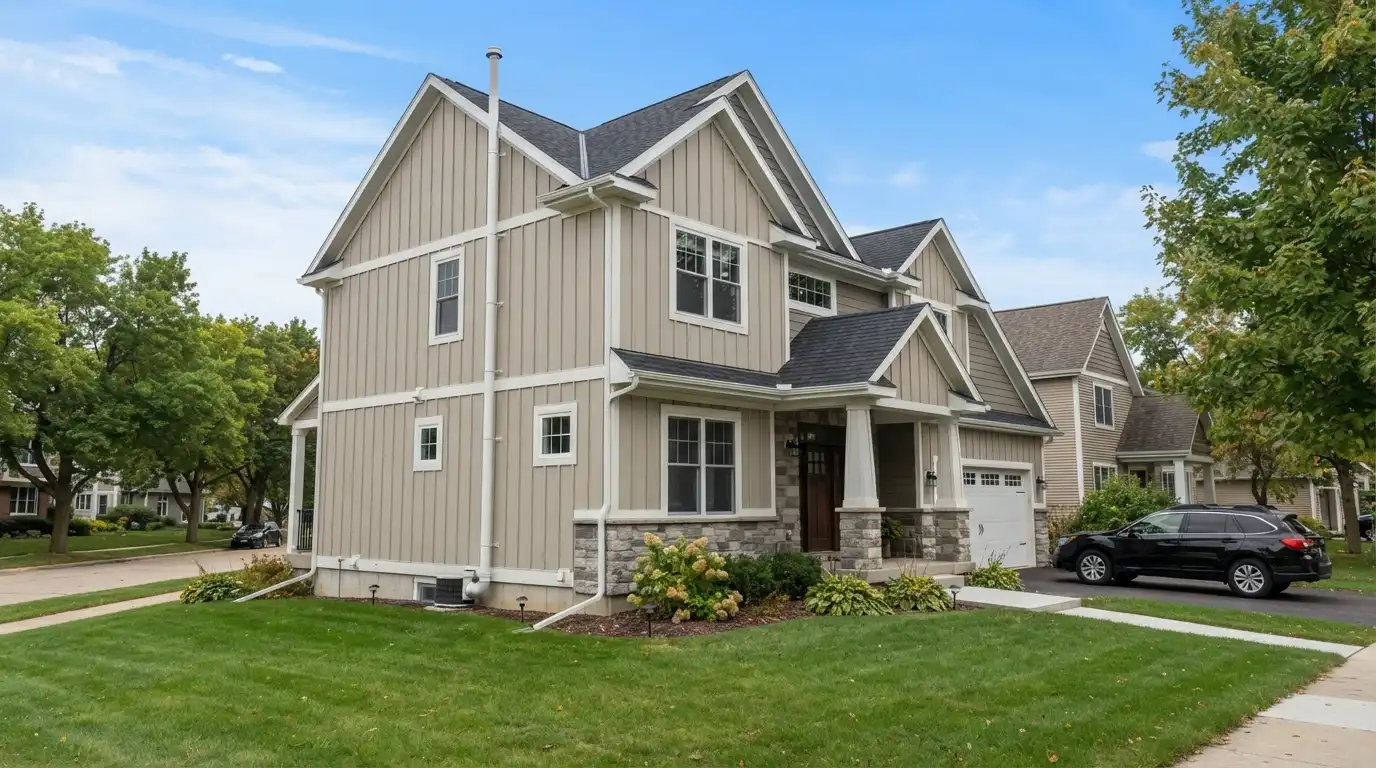
The fix targets the pressure, not the concrete. Active sub-slab depressurization (also called subslab suction) runs a pipe through the floor into the gravel or soil underneath. A fan on that pipe pulls soil gas out and vents it above the roof.
That flips the direction of air flow. Instead of your house pulling radon up through the cracks, the system keeps the space under the slab at lower pressure than your living space. EPA calls subslab suction the most common and usually the most reliable method, with typical reductions of 50 to 99 percent.
Results depend on what’s under your floor. EPA notes the method works best when air moves easily through the material below the slab, and often a single suction point is enough. To check before installing, a contractor may run a soil communication test: a vacuum on one small hole in the slab and chemical smoke at another, to see how far the suction reaches.
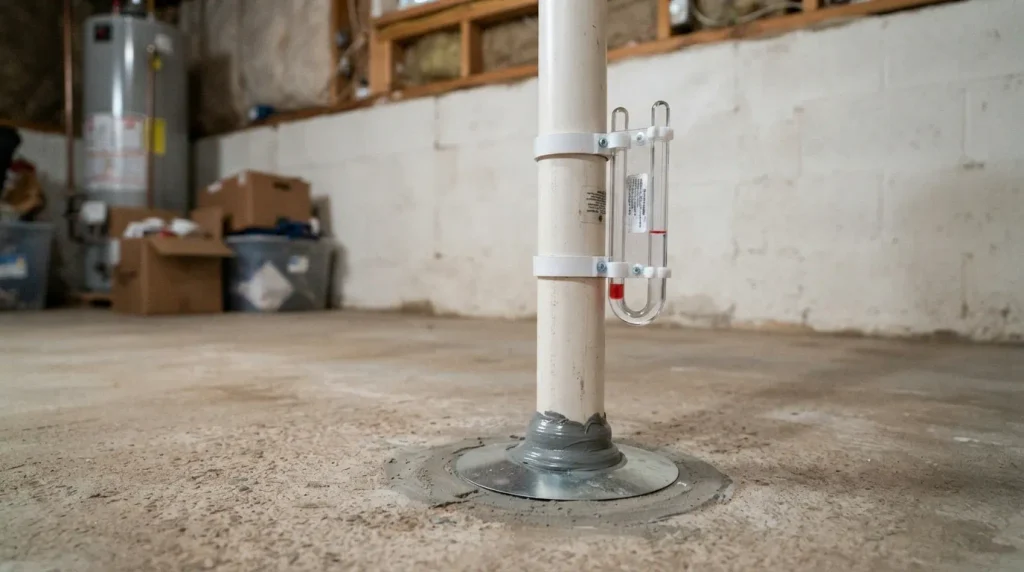
Sub-slab depressurization isn’t the only option, and homes with crawl spaces or hollow block walls may need something different. Our overview of types of radon mitigation systems compares them. At Milwaukee Radon Mitigation, our radon mitigation service starts with the foundation you actually have, including homes with a basement under one section and a slab under another.
Test Before You Seal, Paint, or Worry
A crack in your floor doesn’t tell you your radon level, and a smooth slab doesn’t clear you. Testing is the only way to know. A few pointers from EPA and Wisconsin DHS:
- Start in the lowest level of the home. EPA notes radon is often highest there, so a basement or ground floor is the place to begin.
- For a short-term test, keep windows and doors closed for at least 12 hours before starting. You can come and go as normal, per DHS testing guidance.
- Retest every two to five years, and again after work that affects the foundation, heating and cooling, or weatherization, like new windows.
- If your result is 4 pCi/L or higher, EPA recommends fixing your home.
If you’d rather have it done for you, our Radon Resistant New Construction uses calibrated continuous monitors.
FAQ
Does a vapor barrier under a new slab stop radon?
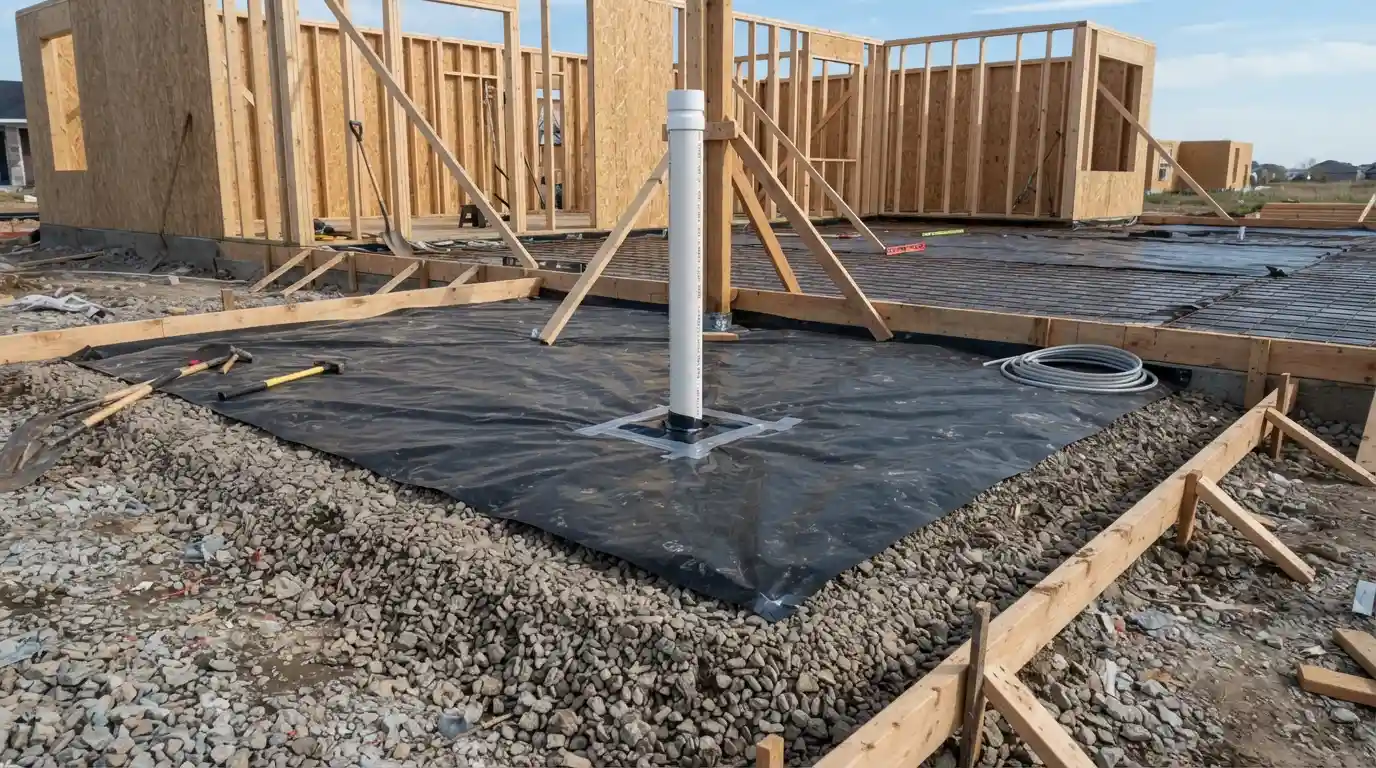
It helps, but it isn’t a guarantee. Heavy plastic sheeting over a gravel layer is one of EPA’s standard radon-resistant construction features, along with sealing, a vent pipe, and an attic junction box for a future fan. EPA still says every new home should be tested after move-in, and it rates passive subslab suction at 30 to 70 percent reduction, below an active system. Our radon-resistant new construction service covers how these systems go in.
Does newer concrete keep radon out better than old concrete?
Not necessarily. In the federally funded slab study cited above, radon diffusion through the test slabs rose steadily as the concrete dried, roughly tripling over two years. Older slabs have also had more time to settle and crack. Age isn’t a reliable guide either way.
Is a crack in my basement floor a sign of high radon?
No. A visible crack doesn’t tell you the level. Radon depends on the soil under the house, the pressure inside it, and openings you can’t see, like the gap hidden under a finished wall. DHS notes that radon levels can vary greatly between buildings close together, so a test is the only real answer.
Can the concrete itself give off radon?
It can, but it’s rarely the problem. EPA says building materials such as granite and certain concrete products give off radon in a small number of homes, though they rarely cause radon problems by themselves. Soil gas is the main source.
Do concrete block walls let in more radon than a poured floor?
They can. The same slab study measured diffusion about 42 times higher through solid masonry block than through poured concrete. Hollow block cores can also carry soil gas up inside the wall. For basements with hollow block walls, EPA lists block-wall suction, often paired with subslab suction.
Should I seal floor cracks before a mitigation contractor comes out?
Ask first. EPA describes contractors puffing chemical smoke into holes, drains, sumps, and cracks to see where air is moving, because those air paths point to likely radon routes. Sealing everything ahead of time can hide that information. A qualified installer seals the key openings as part of the job.
Conclusion
Concrete slows radon. It doesn’t stop it. Most radon gets through the openings in and around a slab, pulled in by lower air pressure inside your home, while a smaller share seeps through the concrete itself. That’s why paint and sealers fall short on their own, and why sub-slab depressurization, which reverses that pressure, is the method EPA leans on.
Milwaukee Radon Mitigation serves homeowners across Milwaukee, Waukesha, and Ozaukee counties. If you’ve tested high, or you want to know what’s happening under your slab, request a free radon mitigation quote from Brian Thompson and our AARST and NRPP certified team.