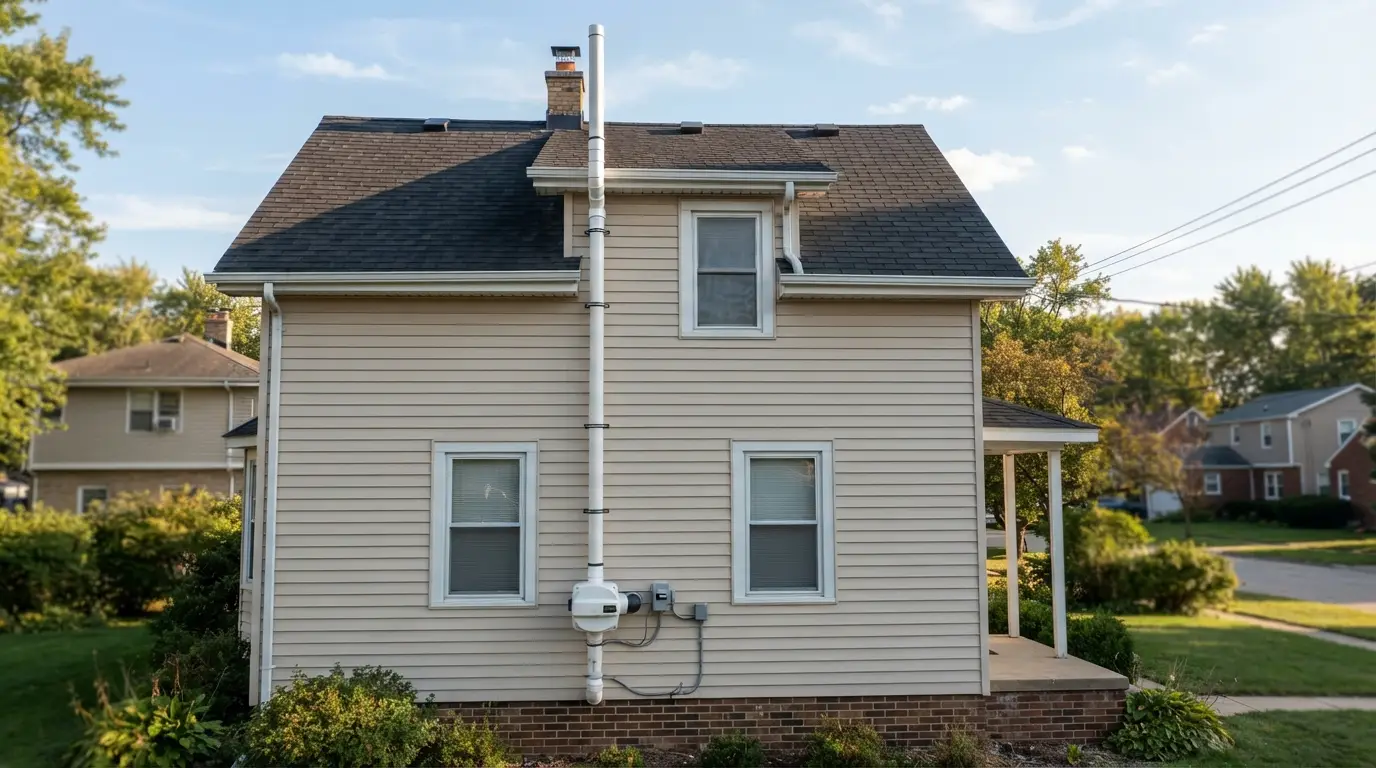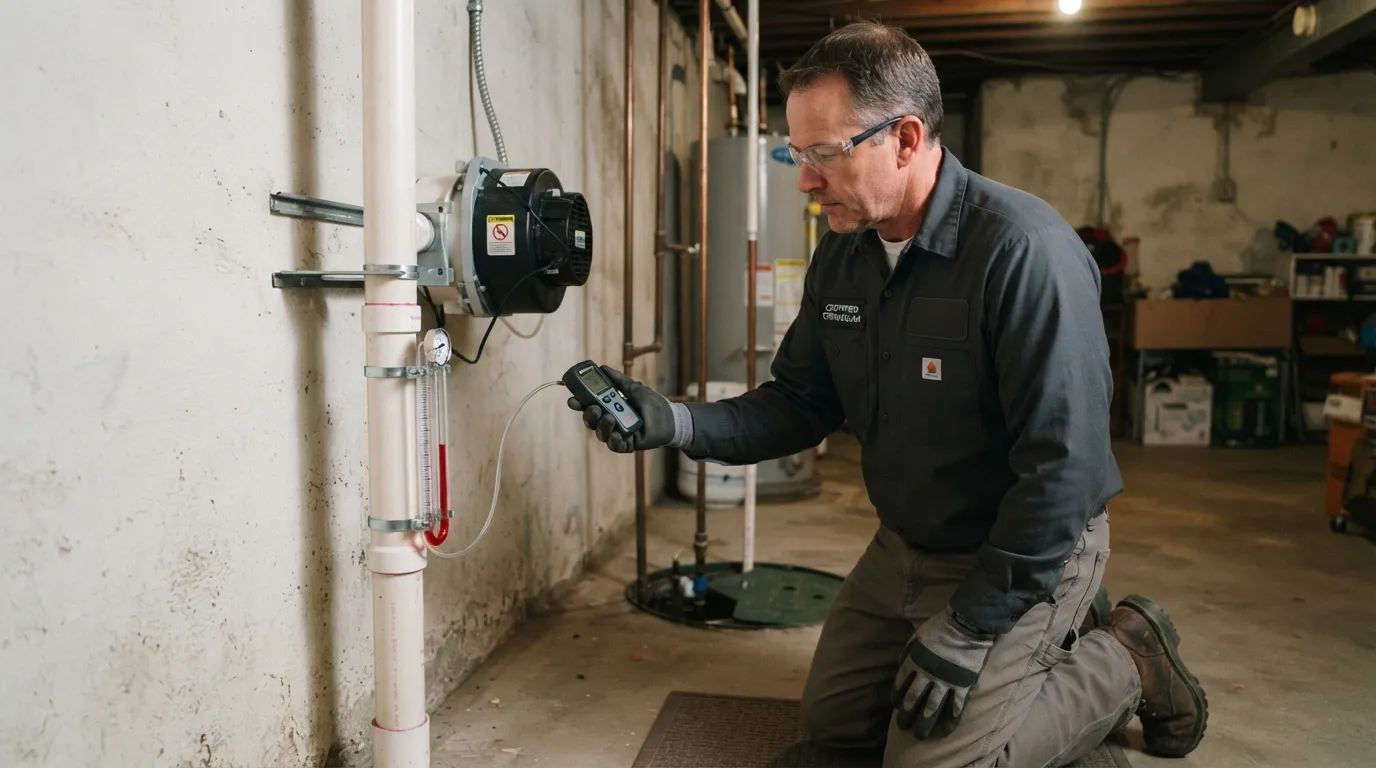

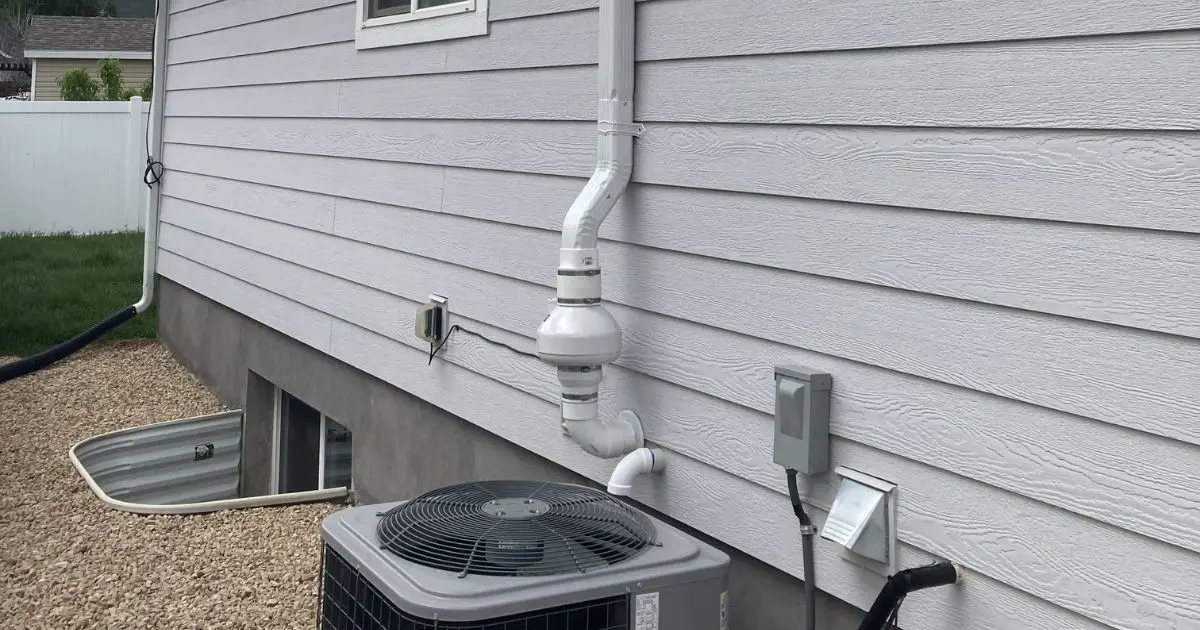
Quick answer: A radon fan runs 24/7, and in Brian’s experience most last 7 to 12 years before the motor or bearings wear out. Location, moisture, sizing and weather all affect it. Brian Thompson of Milwaukee Radon Mitigation (NRPP-certified radon measurement and mitigation professional, West Allis, WI) explains the warning signs and when replacement makes sense.
Key takeaways
- Fans are the only part of a radon system that routinely wears out; pipe and seals last much longer.
- The manometer is your early warning. Even liquid levels usually mean the fan has stopped.
- New noises, water at the fan and a higher retest are the other big signs.
- Moisture, an oversized fan and harsh exposure shorten fan life.
- Never switch the fan off to “save” it. The system only works while it runs.
In this guide
- Radon fan lifespan: what to expect
- 6 signs your radon fan is failing
- What shortens (and extends) fan life
- When to replace a radon fan vs repair the system
- Wisconsin winters and your fan
- FAQ
Radon fan lifespan: what to expect
A radon fan runs about 8,760 hours a year, every year. Few appliances in your home work that hard. The motor and bearings are what eventually give out, not the housing.
| Part | Expected life | What ends it |
|---|---|---|
| Radon fan | Typically 7 to 12 years (Brian’s field experience) | Bearing wear, motor failure, water damage |
| PVC pipe and fittings | Many decades if undamaged | Physical damage, long-term weather exposure |
| Seals and caulk | Years; inspect at retest | Slab movement, new cracks |
| Manometer | Many years | Liquid evaporating, tube cracking |
Warranties give a rough floor for fan life; the fans we install carry a 5-year fan warranty. Many fans keep going well past the warranty; some fail early. That is why you watch the signs below rather than a calendar.
6 signs your radon fan is failing
1. The manometer levels are even
The U-tube on your pipe should show uneven liquid levels, close to the line marked at install. If both sides are level, the fan is likely not pulling. Check that it has power first; then call for service.
2. The reading has drifted
A manometer reading that slowly drops toward zero over months can point to a weakening fan, or to a new air leak such as a cracked pipe or an unsealed sump. Either way, it needs a look.
3. New noises
A steady hum is normal. Grinding, rattling, squealing or a pulsing hum usually means worn bearings or an unbalanced impeller. Our post on radon fan noise explains what each sound means.
4. The fan is silent, or hot to the touch
If you cannot hear or feel the fan running, or the housing is unusually hot, the motor may have failed or be close to it.
5. Water or ice at the fan
Water dripping from the fan, or ice building at the fan or exhaust, suggests condensation is not draining back down the pipe. Water inside a fan shortens its life.
6. Your retest is higher
EPA recommends retesting every 2 years. If a retest comes back noticeably higher than your post-mitigation result, the fan or the seal is the first suspect, even if the fan sounds fine.
Any one of these is a reason to call. Two or more usually means it is time for a new fan.
What shortens (and extends) radon fan lifespan
| Shortens fan life | Extends fan life |
|---|---|
| Water draining into the fan from a flat or back-sloped pipe | Pipe sloped so condensation runs back to the slab |
| An oversized fan running hard against tight soil | A fan sized from diagnostics |
| Constant power cycling (switching it on and off) | Leaving it on 24/7 as designed |
| Fan hung from the pipe with no support | Brackets or straps carrying the weight |
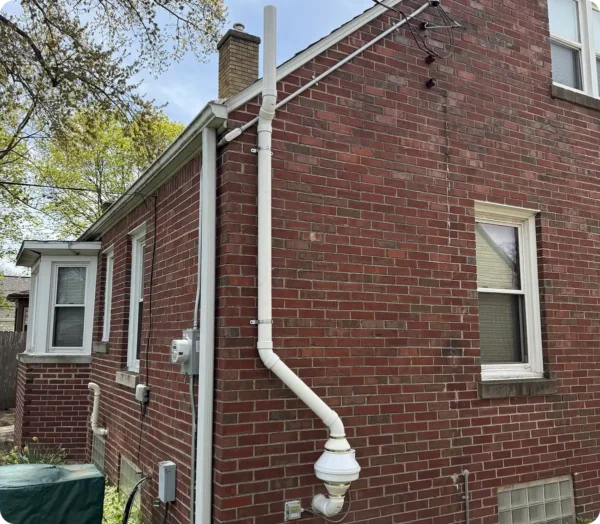
| Poor exhaust routing that restricts airflow | A clean, straight stack above the roof edge |
| Hot, unventilated attic or full sun exposure | A location that suits the fan’s rating |
The biggest single factor we can control at install is moisture. A fan that stays dry tends to last.
When to replace a radon fan vs repair the system
Not every problem means a new fan. Use this as a guide:
- Replace the fan when it has stopped, makes bearing noise, leaks water from the housing, or is well past its warranty with a weak manometer reading.
- Repair the system when the fan runs fine but the manometer has dropped (a pipe crack or open sump), water is pooling (pipe slope), or the exhaust ends too low.
- Redesign when a retest is high even with a good fan: the suction field may not reach the whole slab, or the house has changed (a basement finish or addition).
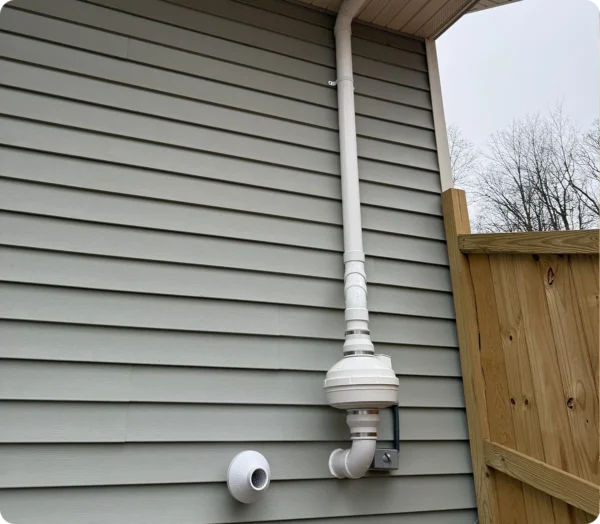
Mike B.’s system is a good example of doing both. His was installed by another party in 2013. Brian replaced the fan, rerouted the stack to improve the exhaust, and reviewed everything. For service details, see radon fan replacement.
Wisconsin winters and your radon fan
A Milwaukee winter is the hardest season for a radon fan. When soil gas leaves the warm ground and hits a pipe that is far below freezing, it condenses fast.
- Dripping: you may see water at the fan or hear dripping in the pipe. Some is normal; a steady leak from the fan housing is not.
- Ice at the exhaust: in long cold snaps, frost can build at the top of an exterior stack. If it narrows the opening, the fan works harder.
- Freezing at the fan: water trapped in a flat section can freeze and stall the fan.
If your system does any of these every winter, the fix is usually the pipe route, not just the fan. We service systems across the south suburbs, including radon mitigation in Oak Creek.
Quick winter check: after a cold snap, glance at the exhaust from the yard and at the manometer in the basement. If the exhaust looks blocked or the reading has dropped, call before the fan has to fight it for weeks.
Manometer reading zero? Fan sounding rough?
Get it checked before your next retest. Brian will tell you whether it needs a new fan, a pipe fix or nothing at all. He carries spare fans, so a swap usually happens on the same visit in under an hour, and 24/7 emergency fan service is available.
FAQ
How often should I replace my radon fan?
Replace your radon fan when it shows signs of failure, not on a fixed schedule. In Brian’s experience, most fans last 7 to 12 years. Watch the manometer monthly, listen for new noises, and retest every 2 years as EPA recommends. Even manometer levels, grinding sounds or a higher retest are the usual signals that the fan is due.
Why does my radon pipe freeze or drip in winter?
Soil gas is warm and humid. When it travels up a pipe that is below freezing, the moisture condenses and can drip or freeze, especially in exterior pipes and at the exhaust. A properly sloped pipe drains water back toward the slab. If you get ice or steady dripping every winter, have the routing checked; rerouting often solves it.
Can I turn off the radon system?
No. An active radon system only lowers radon while the fan is running. Turning it off, even to save electricity or quiet it down, lets radon build back up toward your original level. If the fan is noisy or costly to run, the right fix is a service visit or a better-sized fan, not switching it off.