
Quick answer: Some radon fan noise is normal: a steady, low hum or a soft rush of air at the exhaust. A loud radon fan usually means vibration carried through the pipe into the house, worn bearings, water in the pipe, or a fan that is oversized. Most causes are fixable. Brian Thompson of Milwaukee Radon Mitigation (NRPP-certified radon measurement and mitigation professional, West Allis, WI) diagnoses noisy systems.
Key takeaways
- Normal: a quiet, even hum you notice mostly at night.
- Not normal: grinding, rattling, squealing, gurgling, whistling or a pulsing drone.
- Vibration through pipe straps and framing is the most common cause of noise heard indoors.
- Rubber couplings, isolation mounts, inline mufflers and correct fan sizing fix most cases.
- Do not turn the fan off to stop the noise. Radon levels climb back when it is off.
In this guide
- What a normal radon fan sounds like
- Why is my radon fan so loud? Sound-by-sound guide
- Radon fan humming through the walls
- Fixes that work
- When the noise means the fan is failing
- Noise in Milwaukee-area homes
- FAQ
What a normal radon fan sounds like
A radon fan runs nonstop, so it will make some sound. Normal is:
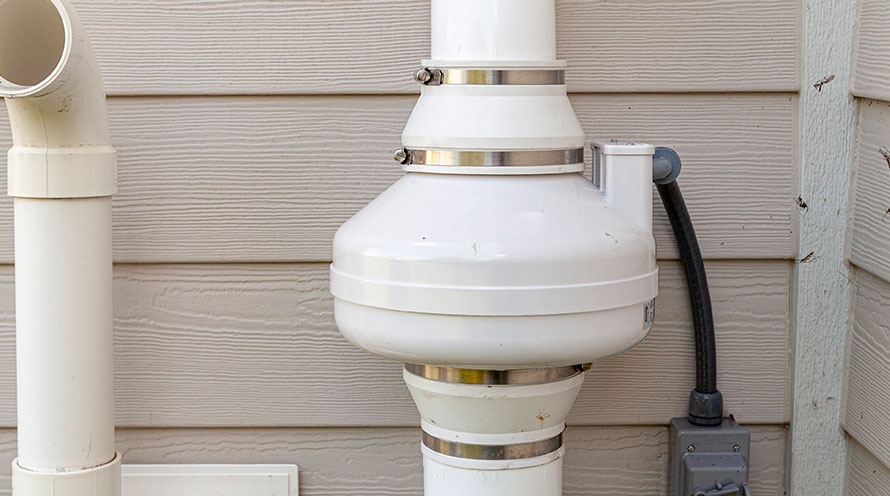
- a low, steady hum near the fan, similar to a refrigerator
- a soft whoosh of air at the exhaust, more noticeable when it is quiet outside
- a faint sound in the pipe in a quiet basement
You should not hear it clearly from a bedroom with the windows closed. If you do, something can usually be improved.
Why is my radon fan so loud? Sound-by-sound guide
| What you hear | Likely cause | What to do |
|---|---|---|
| Deep hum or drone through walls or ceilings | Vibration passing from fan to pipe to straps to framing | Isolate the pipe and fan mounts |
| Rattle or buzz | Loose clamp, coupling, bracket or a pipe touching siding | Tighten and add padding |
| Grinding or squealing | Worn bearings | Fan is near end of life; plan replacement |
| Pulsing or surging hum | Fan struggling against high resistance or ice | Check exhaust and sizing |
| Gurgling or dripping | Water trapped in the pipe | Correct pipe slope |
| Whistle or hiss | Air leak at a joint, crack or seal | Seal the leak |
| Loud rush at the exhaust | Oversized fan or exhaust near a window | Resize fan or move exhaust |
| Silence (and nothing else changed) | Fan stopped | Check power and manometer; call for service |
If the sound is new, think about what changed: a storm, a cold snap, a renovation, or simply age. Sudden grinding on an older fan is a very different problem from a hum that has always been there.
Radon fan humming through the walls
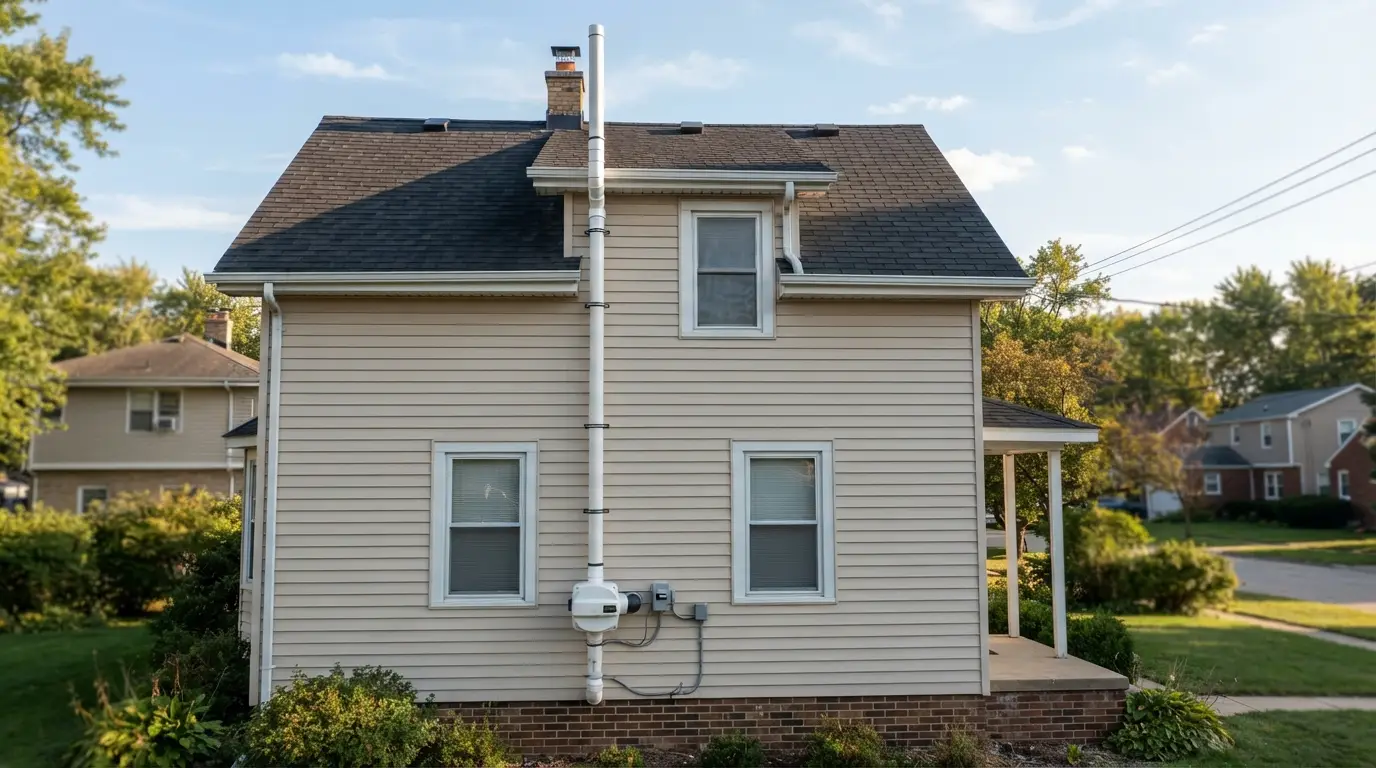
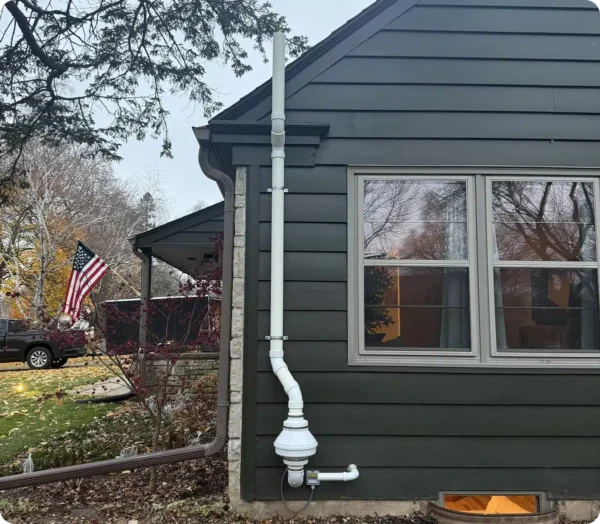
The most common complaint is not the fan itself but a hum you hear inside. The fan may be in the attic or on an outside wall, yet the pipe is strapped tight to joists or studs. Those wooden parts act like a sounding board.
Signs this is your issue:
- The hum is loudest in rooms the pipe passes through or next to.
- Pressing a hand on the pipe changes the sound.
- It got worse after a pipe strap was tightened or the pipe was moved.
The fix is to break the path: rubber-lined pipe hangers, a gap between pipe and framing, flexible couplings at the fan, and an isolation mount for the fan bracket.
Fixes that work
In rough order from simplest to most involved:
- Tighten and pad. Loose clamps and brackets rattle. Snug them and add rubber pads where the pipe touches siding or framing.
- Replace hard connections with flexible couplings. Rubber couplings at the fan absorb vibration before it reaches the pipe.
- Isolate the pipe. Swap rigid straps for rubber-lined hangers and keep a small gap between pipe and studs or joists.
- Add an inline muffler. Radon-rated mufflers can cut the rush of air at the exhaust. Brian installs mufflers and silencers on noisy fans.
- Fix water problems. Re-slope flat sections so condensation drains. Water in the pipe gurgles and can damage the fan.
- Resize the fan. An oversized fan moves more air than the home needs, which means more noise and higher running costs. A smaller fan may hold the same radon level.
- Relocate the fan or exhaust. Moving a fan away from a bedroom wall, or turning an exterior exhaust away from a window, can solve it for good.
- Replace the fan. Grinding and squealing come from worn bearings. Those do not get better. Brian carries spare fans, so a swap usually takes under an hour on the same visit.
After any change to the fan or pipe, check the manometer and retest. The goal is a quieter system that still keeps your level well below 4.0 pCi/L.
When the noise means the fan is failing
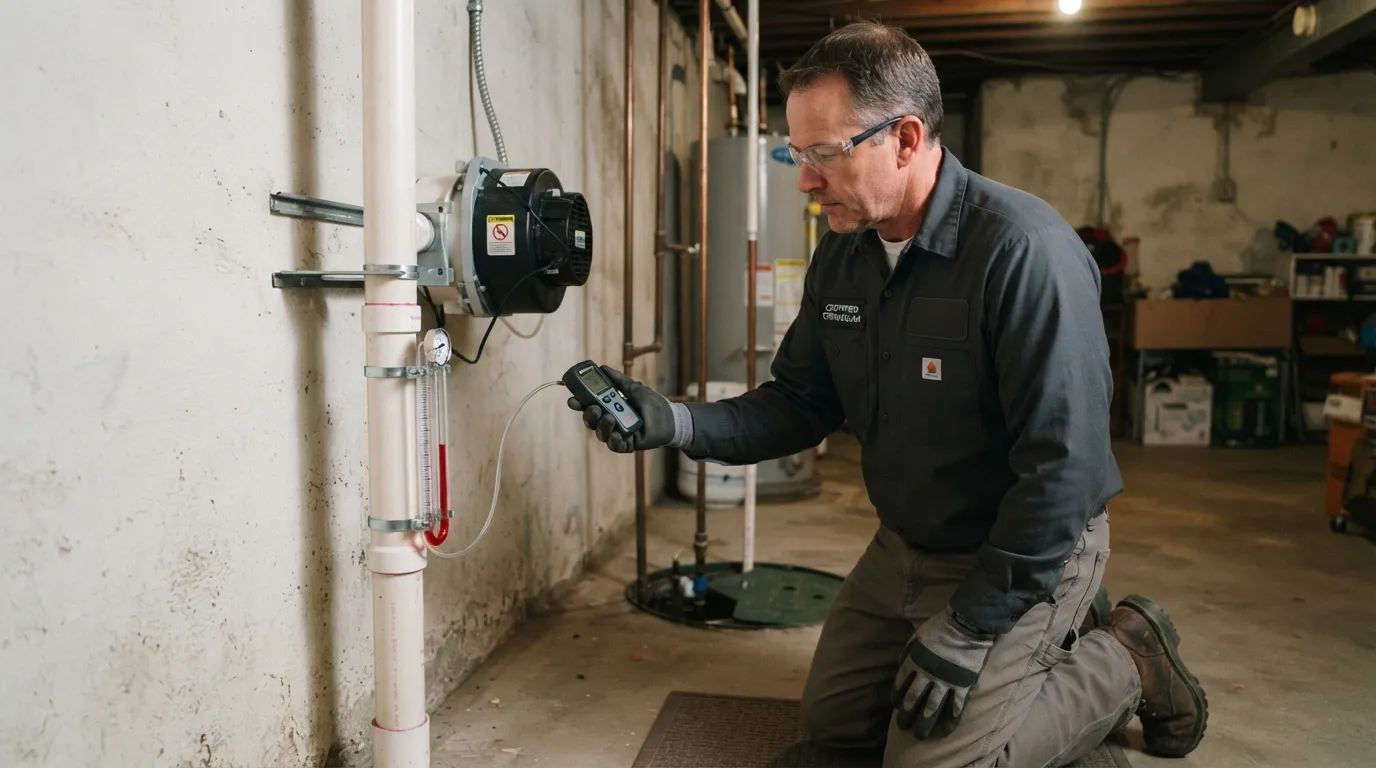
Noise and age often go together. A fan that hummed quietly for years and now grinds, squeals or pulses is wearing out. In Brian’s experience, fans typically last 7 to 12 years. Pair that sound with a manometer that has moved toward zero, and the fan is close to done. Our guide on how long radon fans last lists the other warning signs, and what a radon fan does explains how fans are sized.
Radon fan noise in Milwaukee-area homes
A few local patterns make noise more noticeable here:
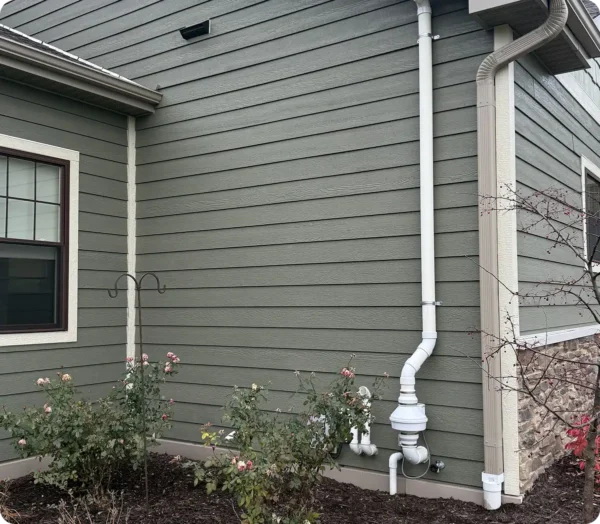
- Close neighbors. On narrow city lots and in older, closely spaced neighborhoods, an exterior fan can be a few feet from someone’s window, yours or a neighbor’s. Placement matters.
- Quiet winter nights. With storm windows shut and the furnace cycling off, a hum you never noticed in July stands out in January.
- Ice and condensation. Cold snaps can narrow an exterior exhaust with frost or trap water in a flat run, and the fan’s note changes as it works harder.
- Renovations. Finishing a basement or adding an attic room can put living space right next to a pipe that used to run through storage.
We help homeowners across Milwaukee County and the North Shore, including radon mitigation in Whitefish Bay, quiet down systems without giving up results. A radon mitigation system inspection is the fastest way to find the source.
Fan keeping you up at night?
Brian will find where the noise is coming from and tell you honestly whether it is a simple fix or a fan at the end of its life.
FAQ
Should you be able to hear a radon fan?
A little. A working radon fan makes a low, steady hum near the fan and a soft rush of air at the exhaust, much like a refrigerator. You may notice it at night or in a quiet basement. You should not hear it clearly from inside a bedroom with the windows closed, and you should never hear grinding, rattling or squealing.
How can I quiet my radon fan?
Start with loose clamps, brackets and spots where the pipe touches siding or framing. Then look at flexible rubber couplings, rubber-lined hangers, an isolation mount for the fan and an inline muffler, which Brian can install. If the fan is oversized, a smaller model may hold the same radon level more quietly. Retest after any change.
Can a radon fan be too strong?
Yes. An oversized fan pulls more air than the home needs. That means more noise, higher electricity use, and more heated or cooled air drawn out through the slab. The right fan is the smallest one that keeps your level well below 4.0 pCi/L, chosen from diagnostics during the install.
Why did my radon system get louder after renovation?
Renovations often change how sound travels or how air moves. New drywall or framing may now touch the pipe, a basement finish can put a bedroom beside it, and new openings can change pressure under the slab so the fan works harder. Have the system inspected and retest radon after any major renovation, as EPA recommends.