
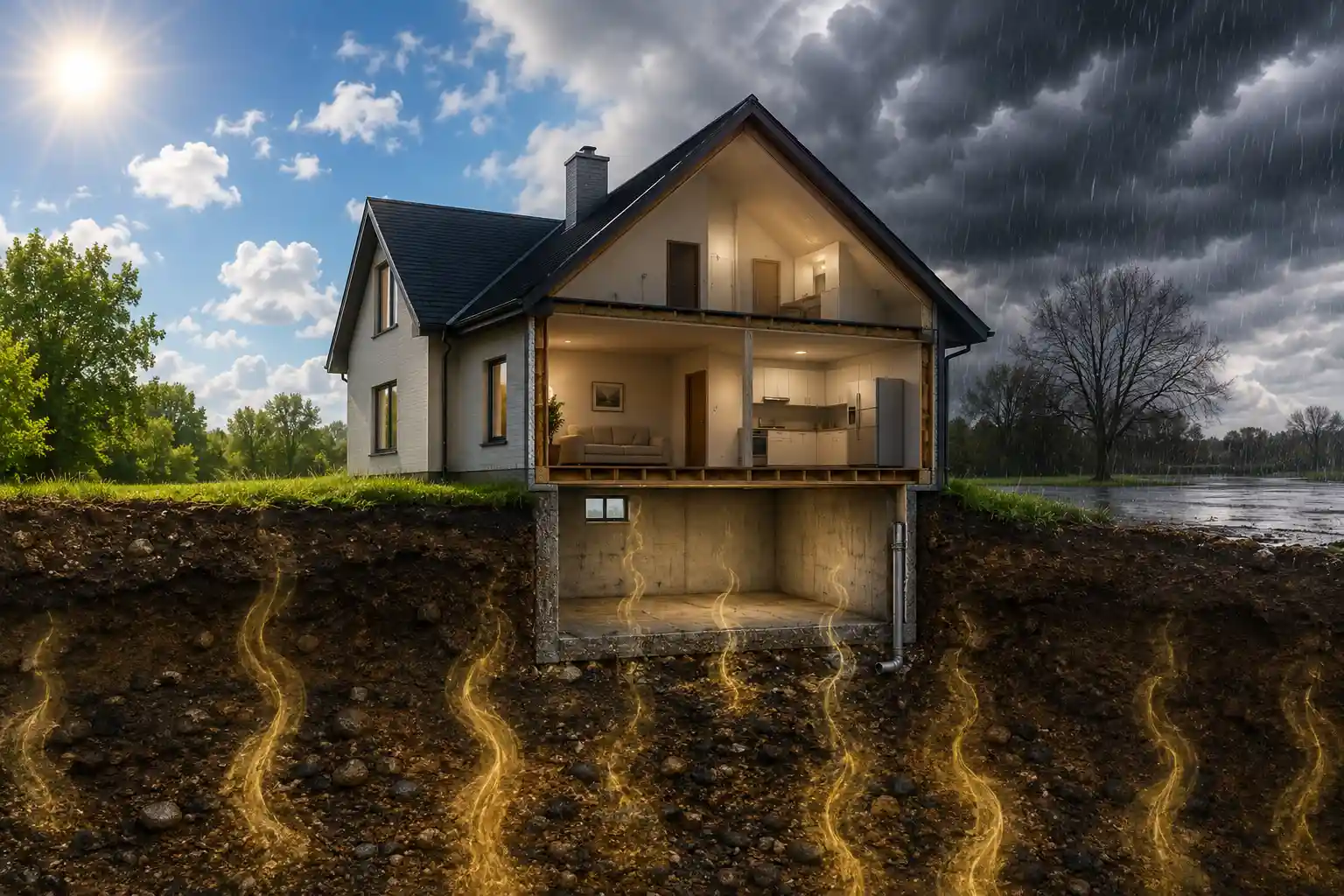
Quick answer: Yes, radon is often higher in winter. In a Wisconsin heating season, warm indoor air rises and leaks out the top of the house, pulling soil gas in through the basement. Windows stay shut, so less fresh air dilutes it. Rain, snow, wind and pressure swings also make radon levels fluctuate from day to day.
Key takeaways
- Radon levels fluctuate by hour, day and season. Winter readings are often the highest.
- The main cause is the stack effect: heated air rising pulls soil gas into the basement.
- Heavy rain and saturated or frozen ground can push short-term readings up.
- You can test any time of year. A winter test shows something close to your worst case.
- One test is a snapshot. A long-term test of 90 days or more shows your year-round average.
In this guide
- Why radon levels fluctuate
- Why radon is often higher in winter
- Does rain raise radon levels?
- Wind, snow and barometric pressure
- Season by season in Wisconsin
- What is the best time of year to test?
- Testing in a Wisconsin winter
- FAQ
Why radon levels fluctuate
Radon is not a fixed number in your house. It rises and falls by the hour, and the pattern changes with the weather.
That is because radon enters the home with soil gas. Anything that changes the pressure difference between the soil and your basement changes how much gas flows in. Heating, wind, rain, frost and even a running dryer all play a part.
Continuous radon monitors show this clearly. On a typical report we see an hourly line that climbs overnight and dips during the day, with bigger jumps when a storm moves through. The average over 48 hours or more smooths that out into one number in pCi/L.
Why radon is often higher in winter
The stack effect
In winter, your furnace warms the air inside. Warm air rises and escapes through the attic, upper floors and gaps around fixtures. As it leaves, the house pulls replacement air in low, and some of that comes from the soil under your slab.
The colder it is outside, the stronger the pull. A January night in Milwaukee can create a much larger indoor-outdoor temperature gap than a mild spring day.
A closed house
In summer, open windows and screen doors dilute radon with outdoor air. In winter, everything is shut tight. Less fresh air means more radon stays inside.
Exhaust appliances
Furnaces, water heaters, dryers, bath fans and range hoods all push air out. The house replaces it, partly from below. You run more of these in winter.
Waukesha County’s environmental health supervisor put it simply in a FOX6 report: “It’s winter and your house is sealed up. You have your furnace on. You have your highest levels of radon this time of year.”
Does rain raise radon levels?
It can, for a while. Heavy or steady rain soaks the top layer of soil. Wet soil holds gas in, which acts like a lid over the ground around the house.
The soil gas still has to go somewhere. The easiest exit is often the drier, more open soil under your slab and foundation, and from there into the basement. That is why short-term readings can rise during and right after a rainy stretch.
The effect is temporary. Once the ground dries, readings usually settle back toward the home’s normal range. That is also why we do not treat one stormy-week test as the final word on a house.
What rain means for your test
- A short test during days of heavy rain may read higher than your average.
- A test during a dry, breezy week may read lower.
- If the result is near 4.0 pCi/L either way, a follow-up test or a long-term test gives a clearer picture.
Wind, snow and barometric pressure
Rain is not the only weather that moves radon around.
- Wind: strong wind against one side of the house can pressurize that side and depressurize the other. Readings can swing either way during a windstorm.
- Snow and frozen ground: a frozen or snow-covered top layer of soil can slow the escape of soil gas into the open air, similar to saturated soil after rain. Many radon professionals see this as one more reason winter readings run high.
- Falling barometric pressure: when outdoor pressure drops before a storm, soil gas tends to flow out of the ground more easily, including into your basement.
None of this means you should panic over one reading. It means you should know what the weather was doing during your test.
Season by season in Wisconsin
| Season | What’s happening | Effect on radon readings |
|---|---|---|
| Winter (Dec–Feb) | Furnace running, house closed, frozen ground | Often the highest readings of the year |
| Spring (Mar–May) | Thaw, heavy rain, windows start opening | Can swing high during wet spells; lower on open-window days |
| Summer (Jun–Aug) | Windows open or AC running, dry soil | Often lower in open homes; air-conditioned closed homes may stay near normal |
| Fall (Sep–Nov) | Heating season starts, fall rain | Readings start climbing as the house closes up |
These are general patterns, not rules. Some homes, especially air-conditioned homes that stay closed year-round, show less seasonal swing. The only way to know your home’s pattern is to measure it.
What is the best time of year to test for radon?
The best time to test is now, whatever the season. Radon can be tested year-round, and waiting months for winter only delays a decision.
That said, each season tells you something different:
- Winter test: closest to a worst-case reading. If a winter test is under 4.0 pCi/L, that is reassuring.
- Summer test: if it comes back high, take it seriously. Winter will likely be at least as high.
- Long-term test (90 days or more): the best estimate of your year-round average. Spanning a heating season gives a fuller picture.
For home sales, you do not get to pick the season. Wisconsin DHS says a real estate test should run at least 48 hours with the house closed for 12 hours before, in the lowest livable level (DHS). Under those conditions, a short test in any season is valid.
Not sure what your number means? Read what pCi/L means and what’s a safe radon level.
Testing for radon in a Wisconsin winter
January is National Radon Action Month, and it lands right in the middle of Wisconsin’s heating season. That timing is no accident. Many county health departments and Wisconsin’s 17 Radon Information Centers promote low-cost test kits in winter for this reason.
A few tips for a winter test in Greater Milwaukee:
- Keep the heat on as normal. Do not turn the thermostat down to save energy while you are away during the test.
- Keep windows and doors closed except for normal coming and going.
- Watch the forecast. If a major storm or blizzard is coming, mention it to your tester or note it on a DIY kit.
- Place the device in the lowest lived-in level, away from the furnace, sump pit and exterior doors.
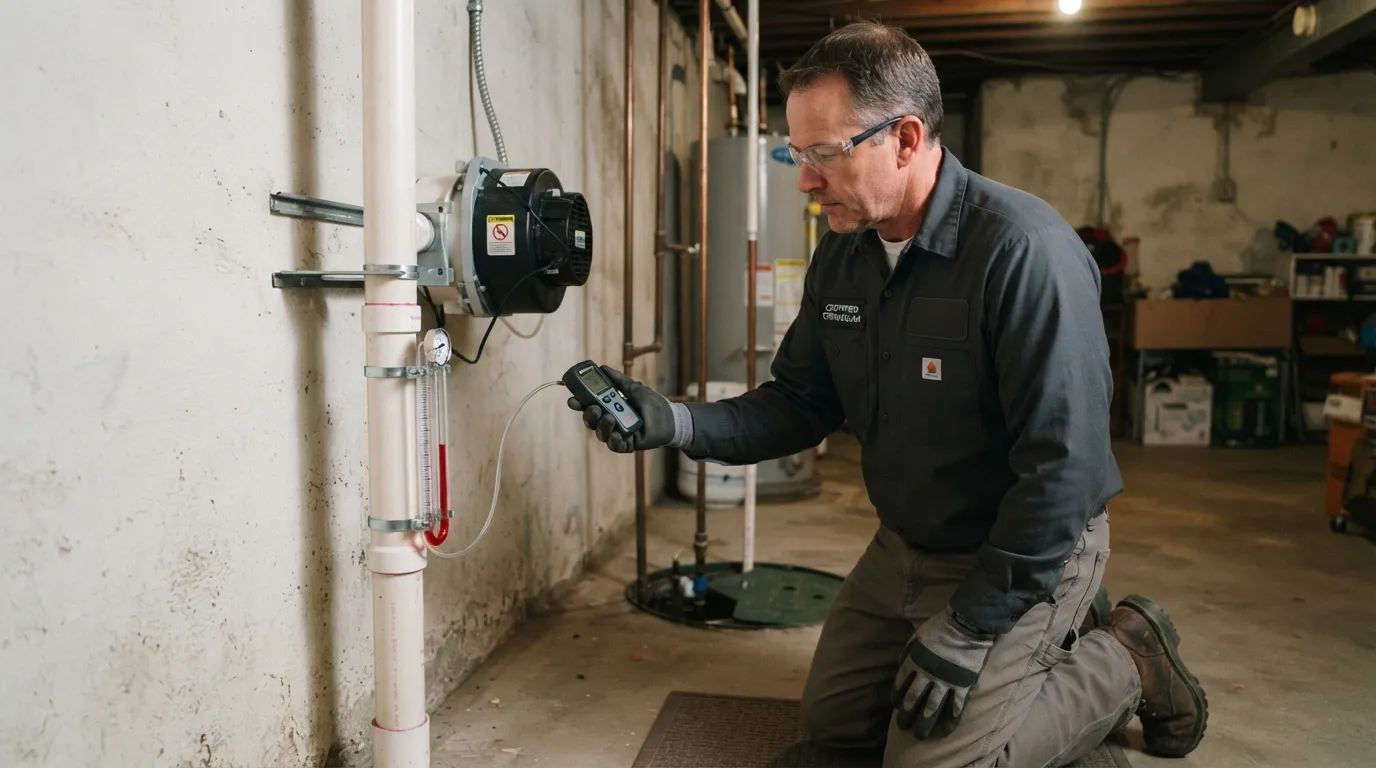
- Retest after mitigation. EPA recommends retesting every 2 years after a system is installed, and a winter retest is a good stress test.
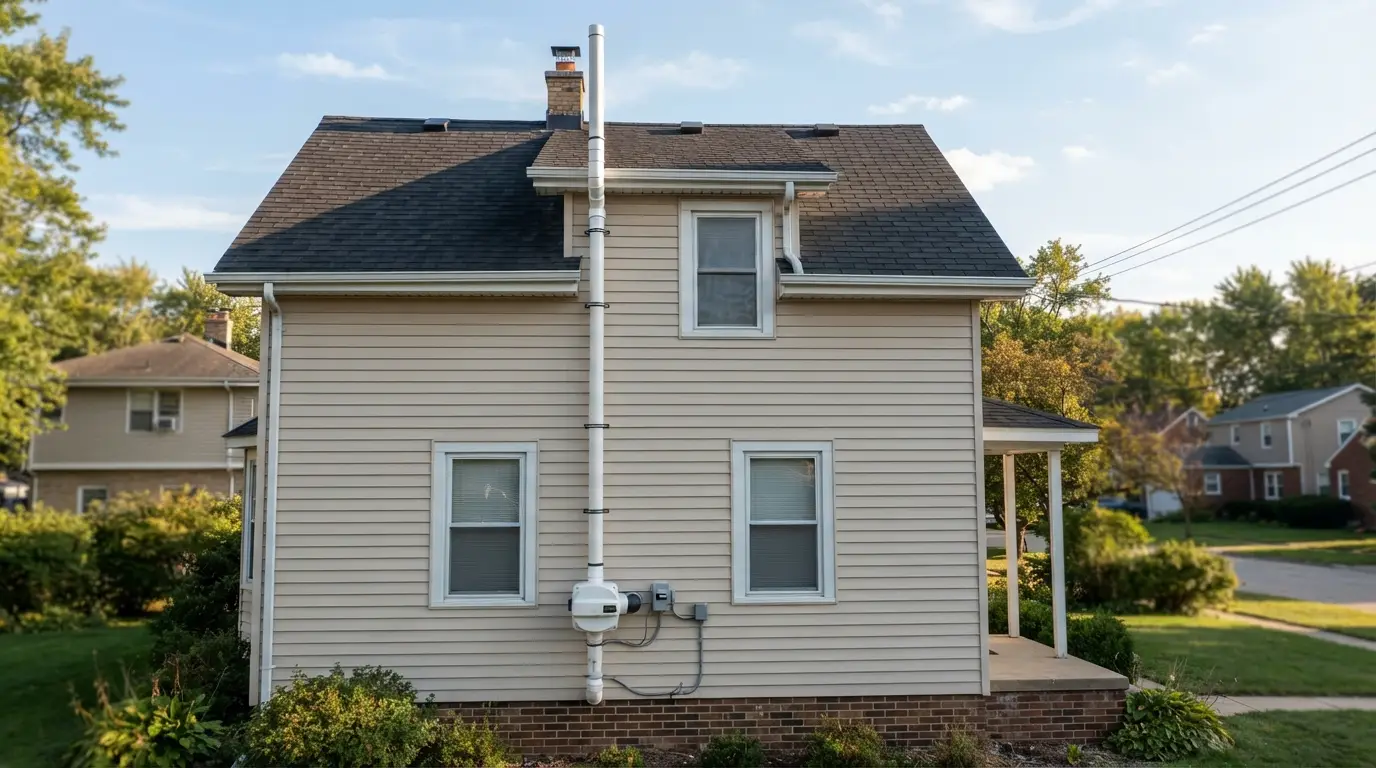
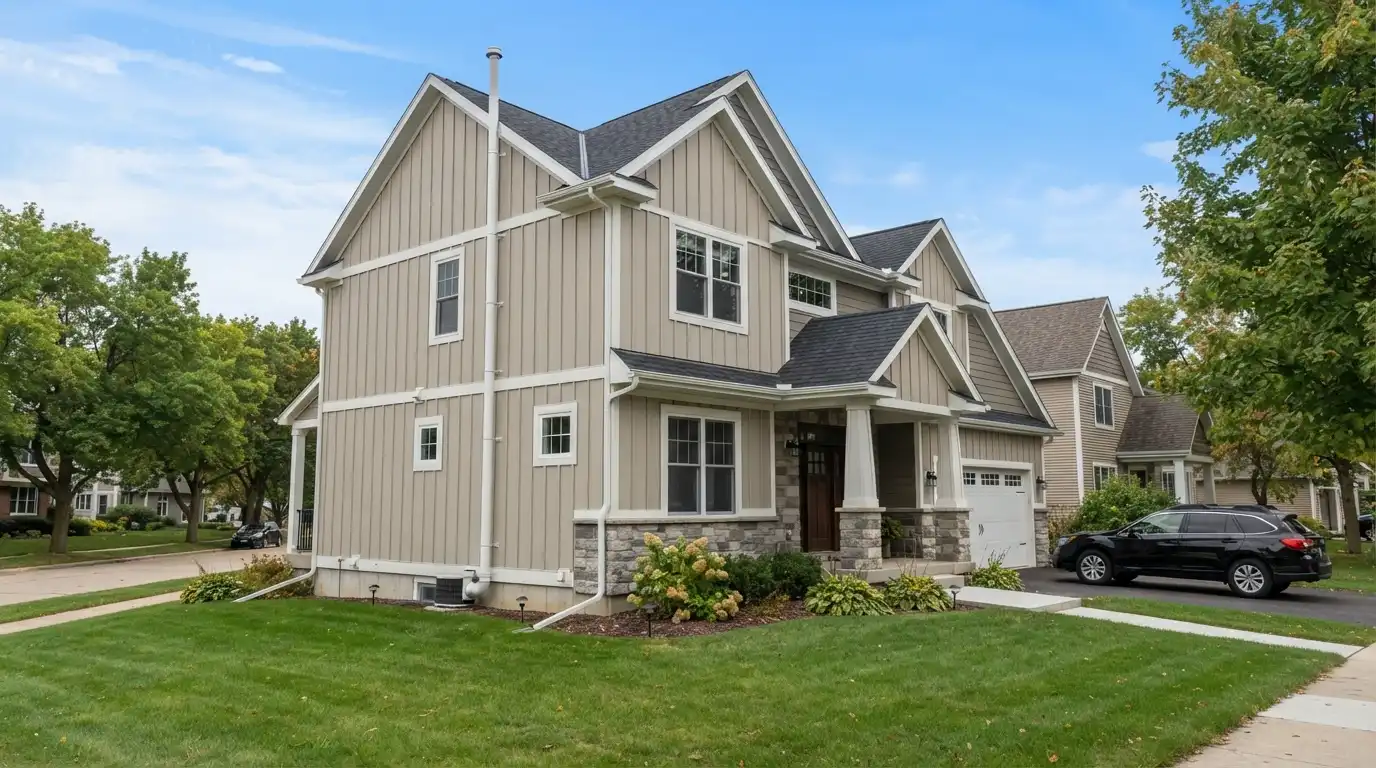
If your home already has a radon system, winter is when it works hardest. Pam, one of our customers, had her system installed in summer and wrote that it was “still working great even during the harsh cold weather.” That is the goal: a system sized for the worst month, not the easiest one. See how our radon mitigation systems in Milwaukee are designed and installed.
Homeowners in Waukesha County can visit our page on radon mitigation in Brookfield, WI.
Test this season
Milwaukee Radon Mitigation runs tests of at least 48 hours with professional continuous monitors that track radon through the whole test, not just one number, and you get the results right after. We will tell you if the weather may have affected your result.
FAQ
In what month is radon highest?
In Wisconsin, radon is often highest in the coldest months, usually December through February. The furnace runs, the house stays closed and warm air rising out of the house pulls soil gas in through the basement. Every home is different, so a winter test or a long-term test shows your own pattern.
Does rain affect radon levels?
Yes, rain can raise radon levels for a short time. Saturated topsoil acts like a cap on the ground, so soil gas looks for an easier way out, often under and into your house. Readings usually return to normal once the ground dries. If you test during heavy rain, note it on your results.
What time of year is best to test for radon?
Any time of year is a good time to test, and sooner is better than waiting. A winter test under closed-house conditions shows something close to your worst case. A long-term test of 90 days or more gives the best estimate of your year-round average. For home sales, a 48-hour closed-house test is valid in any season.
Should I retest if my first test was during a storm?
If your result is close to 4.0 pCi/L, yes. A severe storm or strong winds can push short-term readings up or down. A second short-term test, or a long-term test, gives you a more reliable number before you decide on mitigation.
Sources
- Wisconsin DHS: Radon and real estate
- Wisconsin DHS: Radon
- EPA: Radon
- FOX6 Milwaukee: Health officials encourage Wisconsin residents to test for radon (Jan 2019)