

Quick answer: A short-term radon test takes at least 48 hours, plus 12 hours of closed-house conditions beforehand. Most DIY kits run 2 to 7 days, then need lab time. Long-term tests run 90 days or more. With a professional continuous monitor test in Milwaukee, you get results right after the test ends.
Key takeaways
- Minimum short-term test: 48 hours, per Wisconsin DHS real estate guidance.
- Add 12 hours of closed-house conditions before the test starts.
- DIY kits add mailing and lab time; continuous monitors don’t.
- Long-term tests (90+ days) give a better year-round average.
- Open windows, fans and big weather swings can skew short tests.
In this guide
- Radon test timelines at a glance
- Why 48 hours is the minimum
- How long until you get results?
- Is a 48-hour radon test accurate?
- What can throw off a radon test
- When radon levels peak during the day
- Timing a test around a home sale or a new system
- Radon testing timelines in Wisconsin
- FAQ
Radon test timelines at a glance
| Test type | Prep | Test length | Time to results | Start to answer |
|---|---|---|---|---|
| Professional continuous radon monitor | 12 hrs closed-house | 48 hrs minimum | Right after the test ends | Roughly 3–4.5 days (12 + 48 + up to 48 hrs) |
| DIY short-term kit (charcoal) | 12 hrs closed-house | 2–7 days, per kit instructions | Mail time + lab processing (varies by lab) | Test days + mail + lab time |
| DIY long-term kit (alpha track) | None required | 90 days to 1 year | Mail time + lab processing | 3–13 months |
| Consumer digital monitor | None for long-term use | Readings build over days; best used 90+ days | Shown on the device | Ongoing |
The “start to answer” column is the one most people care about. If you have a deadline, like an inspection window, a professional monitor avoids the mail-and-lab wait.
Why 48 hours is the minimum
Radon levels go up and down through the day and with the weather. A test shorter than 48 hours can catch a quiet day or a spike and miss the bigger picture.
That’s why Wisconsin DHS guidance for real estate testing calls for a test of at least 48 hours, under closed-house conditions that start 12 hours before the test. EPA protocols for short-term tests use the same 2-day minimum. Longer short-term tests (up to 90 days) smooth out swings further.
How long until you get results?
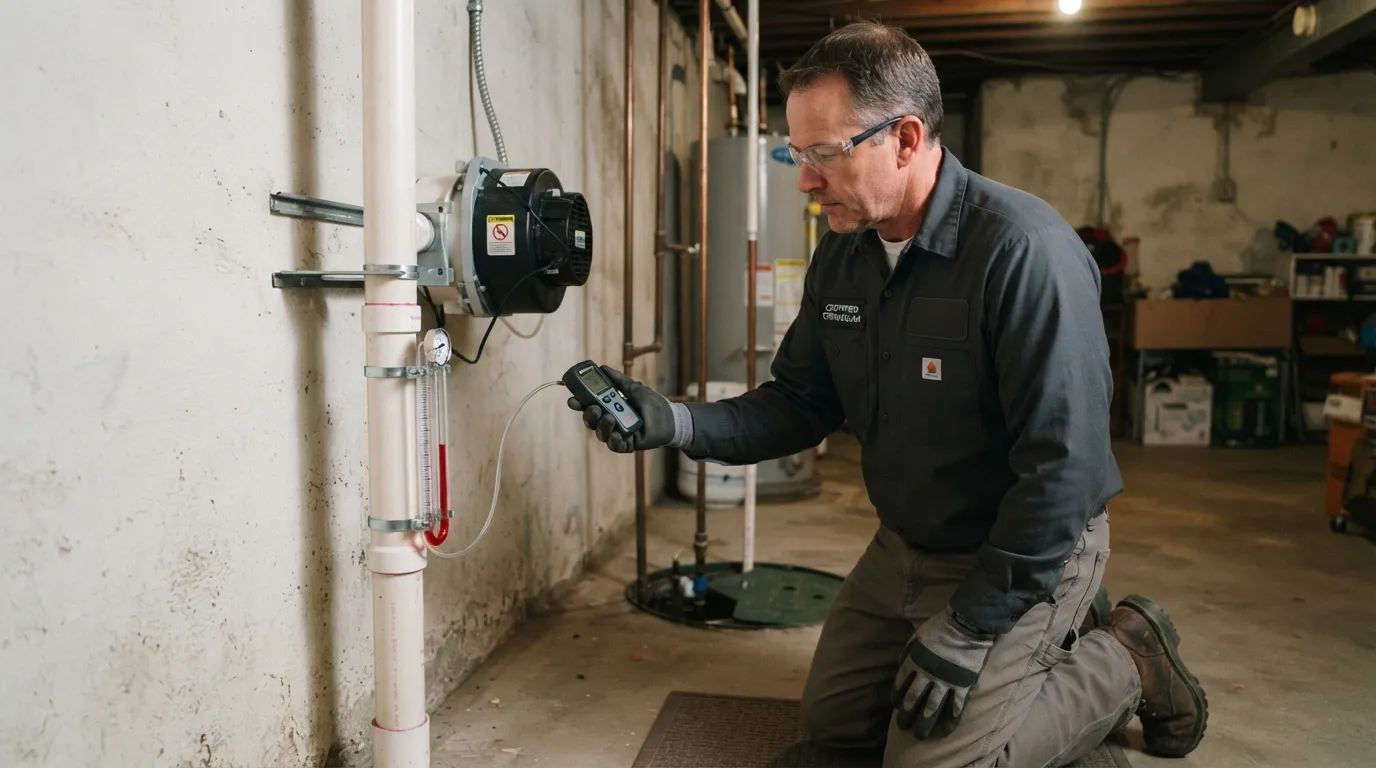
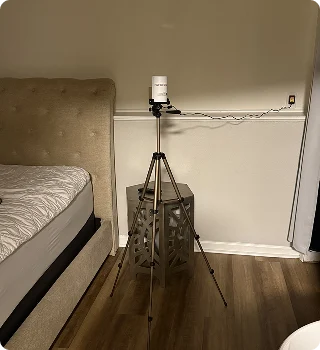
Professional test: a continuous radon monitor stores hourly data. Once the test ends and the monitor is picked up, the report is generated from the device. Our radon testing service in Milwaukee runs at least 48 hours, with results right after and a written report included.
DIY kits: the clock depends on you and the lab. Mail the kit the day the test ends, because charcoal kits lose accuracy if they sit. Lab turnaround varies; check the instructions that come with the kit.
Long-term tests: you’ll wait the full test length plus lab time, but the result reflects months of real living conditions.
Is a 48-hour radon test accurate?
A 48-hour test is accurate for what it measures: the average radon level in that spot during those two days under closed-house conditions. It’s a snapshot, not a year-round average.
To get the most from a short test:
- Follow closed-house conditions strictly.
- Place the device on the lowest livable level, away from drafts and exterior walls.
- Avoid testing during severe storms or unusually high winds when you can.
- Use a calibrated device. Professional monitors are calibrated on a schedule.
If the result is near or above 4.0 pCi/L, EPA suggests a follow-up test before deciding on mitigation, unless a real estate timeline calls for a decision. A continuous monitor’s hourly graph also helps: it shows whether the level was steady or jumped around. Not sure what your number means? See what pCi/L means.
What can throw off a radon test
Most bad results come from conditions, not the device. Watch out for:
| Problem | Effect on the result | How to avoid it |
|---|---|---|
| Open windows or doors | Dilutes radon; reads falsely low | Closed-house conditions 12 hrs before and during the test |
| Whole-house or window fans | Changes air pressure and dilution | Turn them off during the test (normal HVAC is fine) |
| Device moved or bumped | Unreliable data | Place it out of reach; tell everyone in the house |
| Wrong location (kitchen, bathroom, sump area, near a vent) | Humidity, drafts or local hot spots skew results | Lowest livable level, in a regularly used room |
| Severe storms or high winds | Pressure swings can push levels up or down | Avoid test periods with severe weather when possible |
| Late mailing of a charcoal kit | Kit loses accuracy as radon decays | Mail it the same day the test ends |
| Test shorter than 48 hrs | Too short to average out daily swings | Run the full time |
Professional continuous monitors help here, since the hourly data can show sudden drops or spikes that suggest a window was opened or conditions changed.
When radon levels peak during the day
Radon often runs higher overnight and in the early morning. Outside air cools at night, the house heats more, and the stack effect pulls harder on the soil. During the afternoon, warmer outdoor air and more household activity tend to lower levels.
This daily rhythm is exactly why short tests need at least 48 hours: two full day-night cycles. A continuous monitor’s hourly graph usually shows this pattern clearly.
Timing a test around a home sale or a new system
Buying or selling: inspection windows are short, so plan the radon test early. A professional continuous monitor test fits a typical inspection period better than a mailed kit. Sellers can test before listing to avoid surprises.
After a mitigation system goes in: test once the system has been running at least 24 hours. A follow-up test, 24 hours to 30 days after installation, is included with every system we install. After that, retest at least every 2 years, and after major renovations.
For long-term peace of mind: run a long-term test across a Wisconsin winter, or keep a consumer digital monitor running between professional tests.
Radon testing timelines in Wisconsin
Wisconsin’s heating season is long, and that’s good news for testing. From late fall to early spring, closed-house conditions are easy to keep, and results reflect how you actually live for months of the year. Is radon higher in winter? Often, yes. We explain how weather and seasons affect results in is radon higher in winter.
Other Wisconsin points:
- Real estate: testing isn’t required, but DHS highly recommends a test of at least 48 hours under closed-house conditions on the lowest livable level.
- Child care: licensed child care providers must test and mitigate above 4.0 pCi/L (DCF rule since March 2023).
- Low-cost kits: available from Wisconsin’s 17 Radon Information Centers (DHS). Allow for mailing and lab time.
- About 1 in 10 Wisconsin homes has high radon (DHS).
In Oak Creek, where newer subdivisions sit alongside older neighborhoods, timing a test before listing a home can save days during a sale. Our Oak Creek, WI radon mitigation and testing page covers local service.
Need an answer fast?
Brian Thompson, an NRPP-certified radon measurement and mitigation professional, runs continuous monitor tests of at least 48 hours with results right after. He schedules around real estate inspection deadlines, and retest results come within 72 hours. Sarah F. requested a quote on our website and “got it by the end of the day.”
FAQ
How accurate is a 48 hour radon test?
A 48-hour test accurately measures the average radon level during those two days, as long as closed-house conditions are kept and the device is placed correctly. It’s a snapshot, since radon changes with weather and season. If a 48-hour result is near or above 4.0 pCi/L, EPA suggests a follow-up test for confirmation.
What can throw off a radon test?
Open windows and doors, whole-house or window fans, moving the device, poor placement near drafts or humidity, severe weather, and mailing a charcoal kit late can all skew results. Keep closed-house conditions for 12 hours before and during the test, place the device on the lowest livable level, and leave it alone for the full test.
What time of day is radon highest?
Radon is often highest overnight and in the early morning, when cooler outdoor air and indoor heating strengthen the stack effect that draws soil gas into the house. Levels often dip in the afternoon. That’s why short-term tests run at least 48 hours, covering two full day-night cycles.
How long does it take to get radon test results?
A professional continuous monitor test delivers results right after the test ends, because the data is stored on the device. DIY kits depend on mailing and lab processing time. Long-term tests take the full 90+ day test period plus lab time.
Sources
- Wisconsin DHS: Radon and Real Estate
- Wisconsin DHS: Radon
- EPA: A Citizen’s Guide to Radon
- EPA: Consumer’s Guide to Radon Reduction