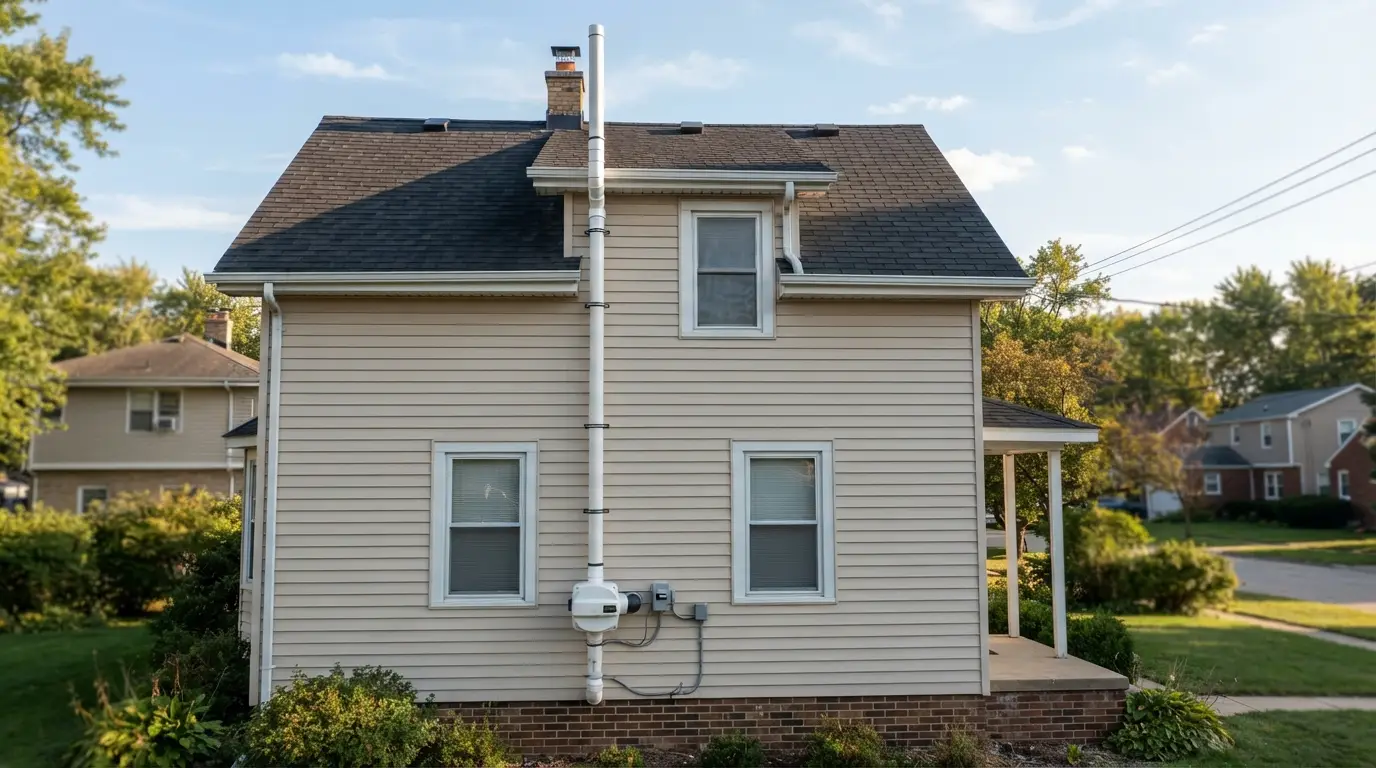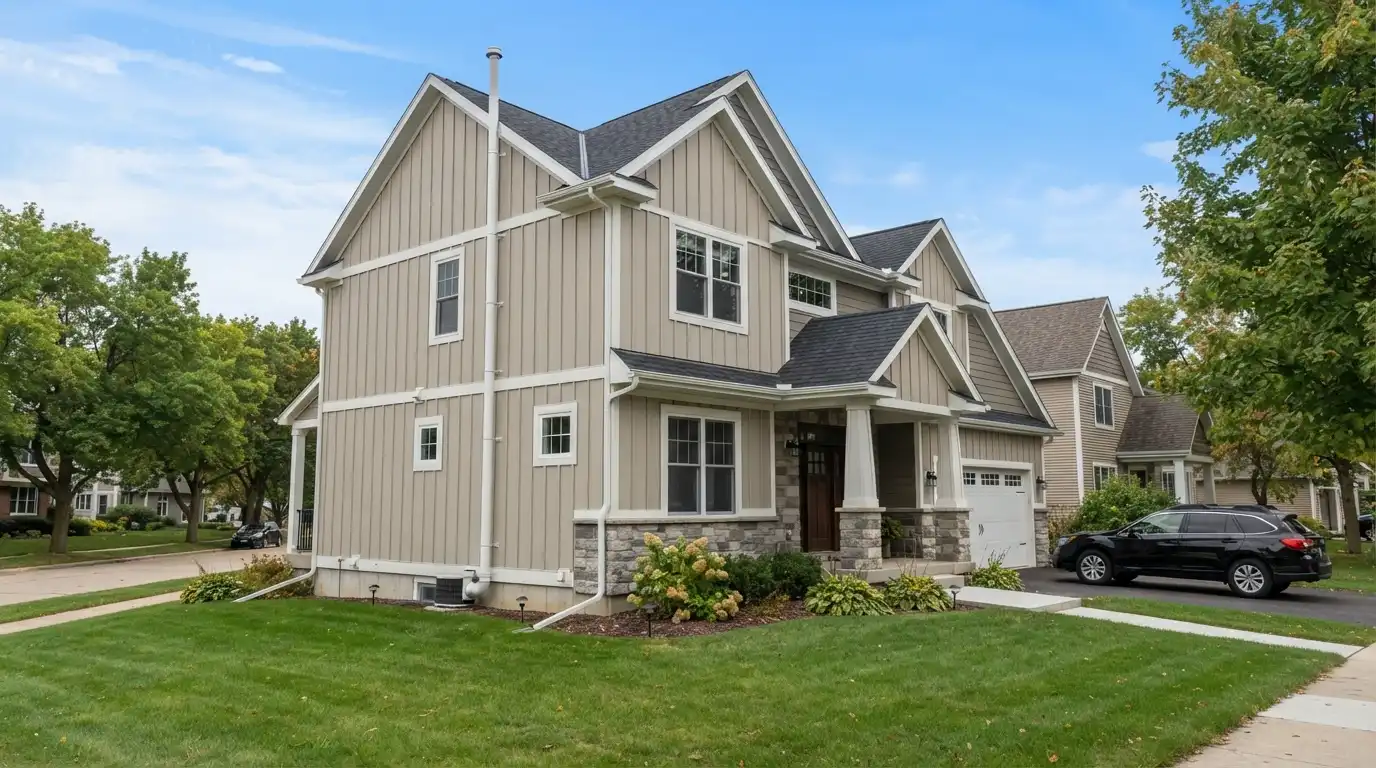


Quick answer: A radon mitigation system works by creating low pressure under your foundation. A fan pulls soil gas from beneath the slab through a sealed pipe and vents it above the roof, so radon goes outside instead of into your home. Brian Thompson of Milwaukee Radon Mitigation (NRPP-certified radon measurement and mitigation professional, West Allis, WI) installs these sub-slab depressurization systems across Greater Milwaukee.
Key takeaways
- The fan does not “filter” radon. It changes air pressure so soil gas is pulled away from your house.
- The core parts are a suction point, PVC pipe, an inline fan, sealing, a manometer and a label.
- The system runs 24/7. Turning it off lets radon build back up.
- A post-mitigation test is the proof, and ours is included with every install. Retest every 2 years (EPA).
- Real results from our customers: about 9.5 to 0.30 pCi/L, and about 7.1 to 1.1 pCi/L. In Brian’s experience, typical results are below 2.0 pCi/L, with more than 90% of homes below 1.0 pCi/L.
In this guide
- Why radon gets in at all
- How sub-slab depressurization works, in 4 steps
- Radon mitigation system parts
- What happens on install day
- Does a radon mitigation system really work?
- How to tell if your system is working
- How Wisconsin winters affect a system
- FAQ
Why radon gets in at all
Radon is a gas that forms naturally as uranium breaks down in soil and rock. It moves through the ground and into the air pockets under your basement floor.
Your house is usually at slightly lower air pressure than the soil around it. Warm air rises and leaks out of the upper floors, and exhaust fans and dryers push air out. That makes the house act like a weak vacuum on the ground. Soil gas, radon included, is pulled in through:
- cracks in the slab and walls
- the joint where the floor meets the foundation wall
- open or loose sump pit lids
- gaps around pipes and floor drains
- bare dirt in crawl spaces
A mitigation system does not fight radon chemically. It flips that pressure balance.
How sub-slab depressurization works, in 4 steps
Active sub-slab depressurization (ASD) is the most common method in the United States and the one we use most in Milwaukee basements. Here is the airflow, start to finish:
- Suction. A hole is drilled through the slab and a small pit is dug out below it. A PVC pipe is sealed into the hole.
- Low pressure. An inline fan on that pipe pulls air from under the slab, so the soil right under your floor is at lower pressure than your basement.
- Redirection. Because the area under the slab is now the “weaker vacuum,” soil gas flows toward the pipe instead of up through cracks into your home.
- Exhaust. The fan pushes that gas up the pipe and out above the roofline, where it dilutes quickly in outdoor air.
The term “sub slab depressurization system” just describes step 2: the space under your slab is depressurized. When a home has a sump pit or a perimeter drain tile loop, those can become part of the suction field, as covered in our guide to types of radon mitigation systems.
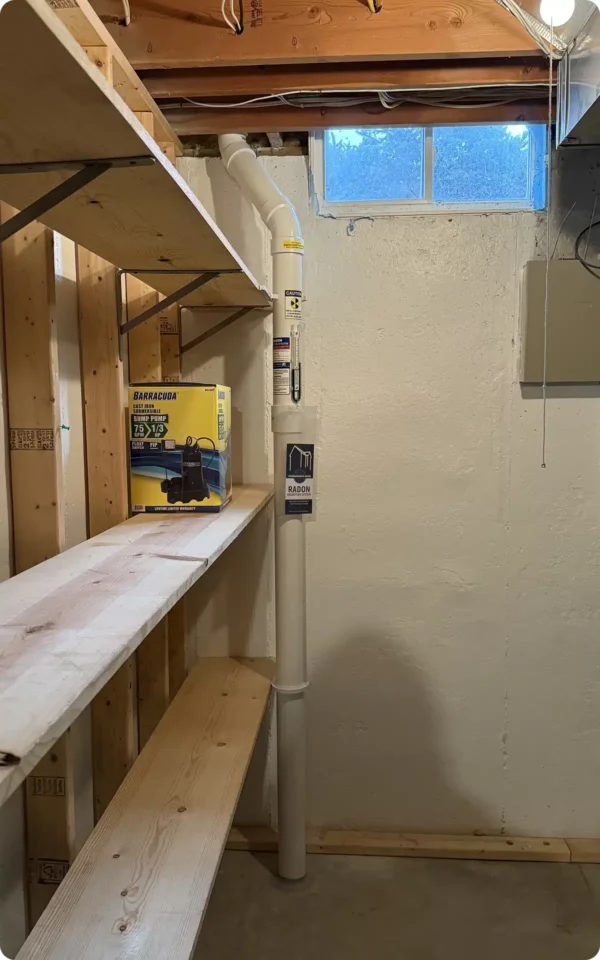
Radon mitigation system parts
| Part | What it does | Where you will see it |
|---|---|---|
| Suction point | Opening through the slab with a small pit below; the “intake” | Basement floor, often in a utility room or corner |
| PVC pipe (often 3″ or 4″ Schedule 40) | Carries soil gas from the slab to the outdoors | Rises from the floor, through a rim joist or garage, up to the roof |
| Radon fan | Inline fan that creates the suction; runs 24/7 | Attic, garage or outside wall, never in living space |
| Sealing | Caulk and covers on cracks, joints and the sump lid | Floor-wall joint, sump pit, slab cracks |
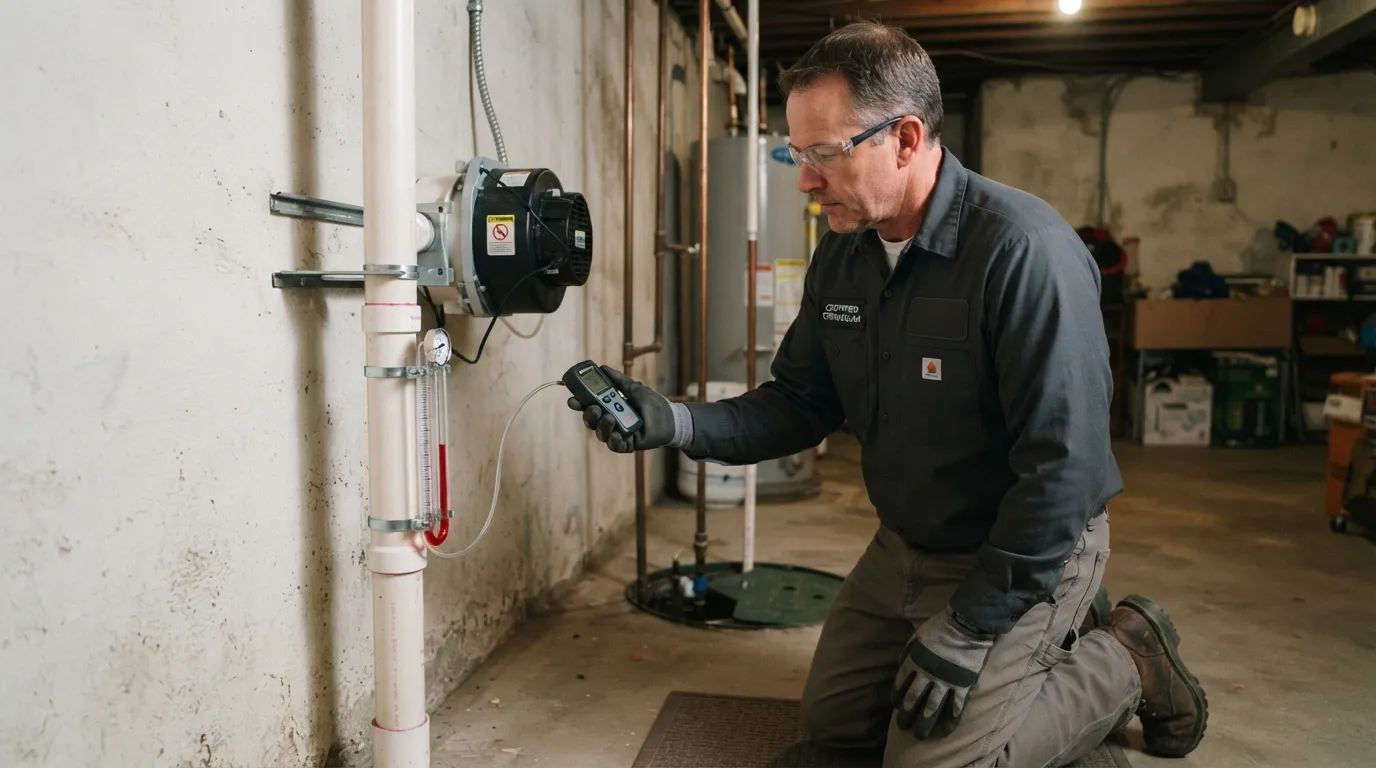
| Manometer | U-tube gauge showing the system is pulling a vacuum | On the pipe near the suction point |
| System label | Names the system, installer and date | On the pipe or electrical panel |
| Exhaust point | Discharge above the roof edge, away from windows and doors | Above the eave line |
The fan is the only moving part. Pipes and seals last for many years; fans are motors and eventually wear out, typically after 7 to 12 years in Brian’s experience. Our radon fan guide covers how fans are sized and where they go.
What happens on install day
Every home is different, but a standard basement install usually follows this order:
- Walk-through. Brian looks at the foundation, sump, finished areas and possible pipe routes, and explains the options.
- Diagnostics. A small test hole lets him check how well suction travels under the slab. This decides where the suction point goes and how many you need.
- Core and pit. The suction hole is drilled and some fill is removed underneath to open up airflow.
- Pipe run. Pipe is installed from the floor to the fan location, then up to the exhaust point.
- Fan and power. The fan is mounted outside the living space, and a licensed electrician makes the electrical connection.
- Sealing. Cracks and the floor-wall joint are sealed where needed. Open sump pits get a custom-cut clear Lexan lid, and floor drains a Dranjer seal where needed.
- Manometer and label. The gauge is set and marked, and the system is labeled.
- Clean-up and walkthrough. You get a short explanation of how to read the gauge.
How long does it take? A standard mitigation install takes about 4 hours. The follow-up test is included: Brian runs it, or orders a third-party lab test he pays for, between 24 hours and 30 days after installation. Customers tend to remember the clean-up: Steve L. said Brian arrived on time, explained everything, and left the area spotless.
Does a radon mitigation system really work?
Yes, when it is designed and installed correctly. EPA’s Consumer’s Guide to Radon Reduction names sub-slab suction as the most common and usually most reliable way to lower radon in homes with a basement or slab.
The best evidence is your own before-and-after test. Two of our customers shared theirs:
| Customer | Before | After |
|---|---|---|
| Andrew S. | about 9.5 pCi/L (peaking near 10) | about 0.30 pCi/L |
| Steve L. | about 7.1 pCi/L | about 1.1 pCi/L |
Both were well above the EPA action level of 4.0 pCi/L before and well below it after. Andrew also noted that Brian did a follow-up test to confirm the result.
When a system does not work, the cause is usually one of these:
- Suction point in the wrong spot, or one point trying to cover a slab that needs two.
- Fan too small for tight soil, or a fan that has stopped.
- Big leaks left open: an unsealed sump, open block-wall cores, or a crawl space with no membrane.
- No post-test, so nobody knows it is underperforming.
Each of these is fixable. If you have an older system and your levels are back up, a radon mitigation system installation in Milwaukee visit can diagnose it before you replace anything.
How to tell if your system is working
You do not need tools to check the basics:
- Look at the manometer. The liquid levels in the U-tube should be uneven and close to the mark set at install. Even levels usually mean no suction.
- Listen for the fan. A steady low hum is normal. Silence, rattling or grinding is not.
- Check the pipe. No cracks, loose joints or disconnected sections. The exhaust should still end above the roofline.
- Retest. EPA recommends retesting every 2 years and after major renovations, such as finishing a basement or adding on.
The manometer tells you air is moving. Only a radon test tells you the level is low. For a professional check of an existing system, see our radon mitigation system inspection service.
How Wisconsin winters affect a radon mitigation system
Milwaukee winters put a system to work. When it is cold outside and the heat is on, warm air rises and escapes through the top of the house. This “stack effect” makes the house pull harder on the soil below. A properly working system keeps the area under the slab at lower pressure than the basement, even then.
Cold weather also brings two practical issues:
- Condensation. Soil gas is moist. In a cold exterior pipe, that moisture condenses. The pipe should slope so water drains back toward the suction point rather than pooling at the fan.
- Ice at the exhaust. Frost can build at the top of an exterior stack in extreme cold. Routing and pipe size help prevent restrictions.
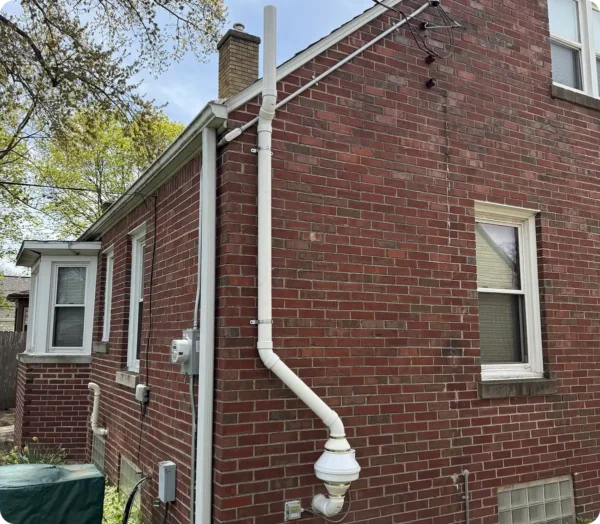
Pam, a customer who had her system installed in summer, said it was “still working great even during the harsh cold weather.” That is the goal: a system designed for January, not just July.
Wisconsin DHS reports that about 1 in 10 Wisconsin homes has high radon, so these systems are a common sight here. We install them throughout the area, from West Allis to radon mitigation in Wauwatosa and the North Shore.
Have a high radon test?
Brian will explain which system fits your home, where the pipe would go and what result to expect, in plain language and with no pressure.
FAQ
What is a radon mitigation system?
A radon mitigation system is a permanent setup that keeps radon from building up indoors. In most homes it is a sealed PVC pipe running from under the basement slab to above the roof, with an inline fan that pulls soil gas out from under the house and vents it outside. It runs continuously and is checked with a manometer.
How long does it take for radon to clear after mitigation?
Radon levels usually drop within hours of the fan starting, because the system immediately starts pulling soil gas away. To confirm, ANSI/AARST practice is to run a post-mitigation test no sooner than 24 hours after the system begins operating. Our follow-up test is included with every install and runs between 24 hours and 30 days after installation. Your test result, not the clock, tells you the level is down.
Do radon mitigation systems run all the time?
Yes. An active system is designed to run 24 hours a day, 365 days a year. Radon enters your home continuously, so the fan has to keep the area under the slab at lower pressure all the time. If you switch it off, radon levels can climb back toward where they were before.
How much does a radon mitigation system lower radon levels?
It depends on the home, the starting level and the design. Our customers have seen drops from about 9.5 to 0.30 pCi/L and from about 7.1 to 1.1 pCi/L. The aim is always to get well below the EPA action level of 4.0 pCi/L, confirmed with a post-mitigation test. In Brian’s experience, typical post-mitigation results are below 2.0 pCi/L, with more than 90% of homes below 1.0 pCi/L.
Sources
- EPA: Consumer’s Guide to Radon Reduction
- EPA: A Citizen’s Guide to Radon
- Wisconsin DHS: Radon
- AARST standards (ANSI/AARST SGM-SF)
- NRPP: certified professionals