
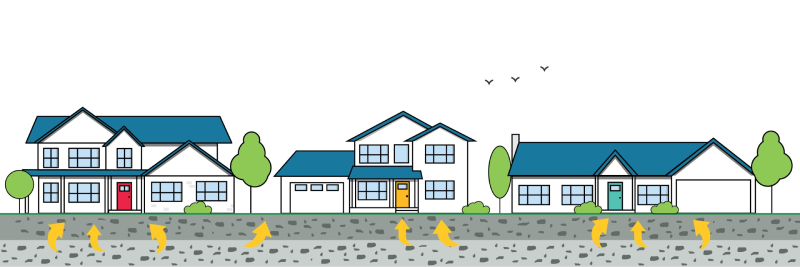
Quick answer: The main types of radon mitigation systems are sub-slab depressurization, sump-pit and drain-tile suction, sub-membrane depressurization for crawl spaces, block-wall suction, and passive stacks. For most Milwaukee basement homes, active sub-slab depressurization is the best fit. Brian Thompson of Milwaukee Radon Mitigation (NRPP-certified radon measurement and mitigation professional, West Allis, WI) chooses the method after on-site diagnostics.
Key takeaways
- Your foundation picks the system more than your radon number does.
- Basements and slabs: sub-slab depressurization (ASD) is the standard.
- Crawl spaces: a sealed plastic membrane with suction underneath.
- Sump pits and drain tile can be used as the suction point when they are sealed.
- Sealing and ventilation help, but EPA does not rely on them alone to fix high radon.
In this guide
- Radon mitigation options at a glance
- Sub-slab depressurization (ASD)
- Sump-pit and drain-tile suction
- Sub-membrane depressurization for crawl spaces
- Block-wall suction
- Passive systems
- Supporting methods: sealing and ventilation
- Which type fits a Milwaukee-area home?
- FAQ
Radon mitigation options at a glance
| Type | Best for | How it works | Active fan? |
|---|---|---|---|
| Sub-slab depressurization (ASD) | Basements, slab-on-grade | Suction pipe through the slab, fan vents soil gas above the roof | Yes |
| Sump-pit suction | Basements with a sump pit | Airtight lid on the pit; the pit becomes the suction point | Yes |
| Drain-tile suction | Homes with a perimeter drain tile loop | Suction on the drain tile, inside or outside the house | Yes |
| Sub-membrane depressurization (SMD) | Crawl spaces with dirt or gravel floors | Sealed plastic sheet over the ground, suction under it | Yes |
| Block-wall suction | Hollow concrete block foundation walls | Suction from inside the block cores | Yes |
| Passive stack | New construction built radon-resistant | Pipe relies on natural draft; no fan | No (fan can be added) |
| Sealing | Every type, as a support step | Caulks cracks, joints and openings | No |
| Ventilation (HRV/ERV) | Some special cases | Brings in outdoor air to dilute radon | Its own fans |
Most homes end up with one main method plus sealing. Homes with mixed foundations, such as a basement with a crawl-space addition, may combine two methods into one system.
Sub-slab depressurization (ASD)
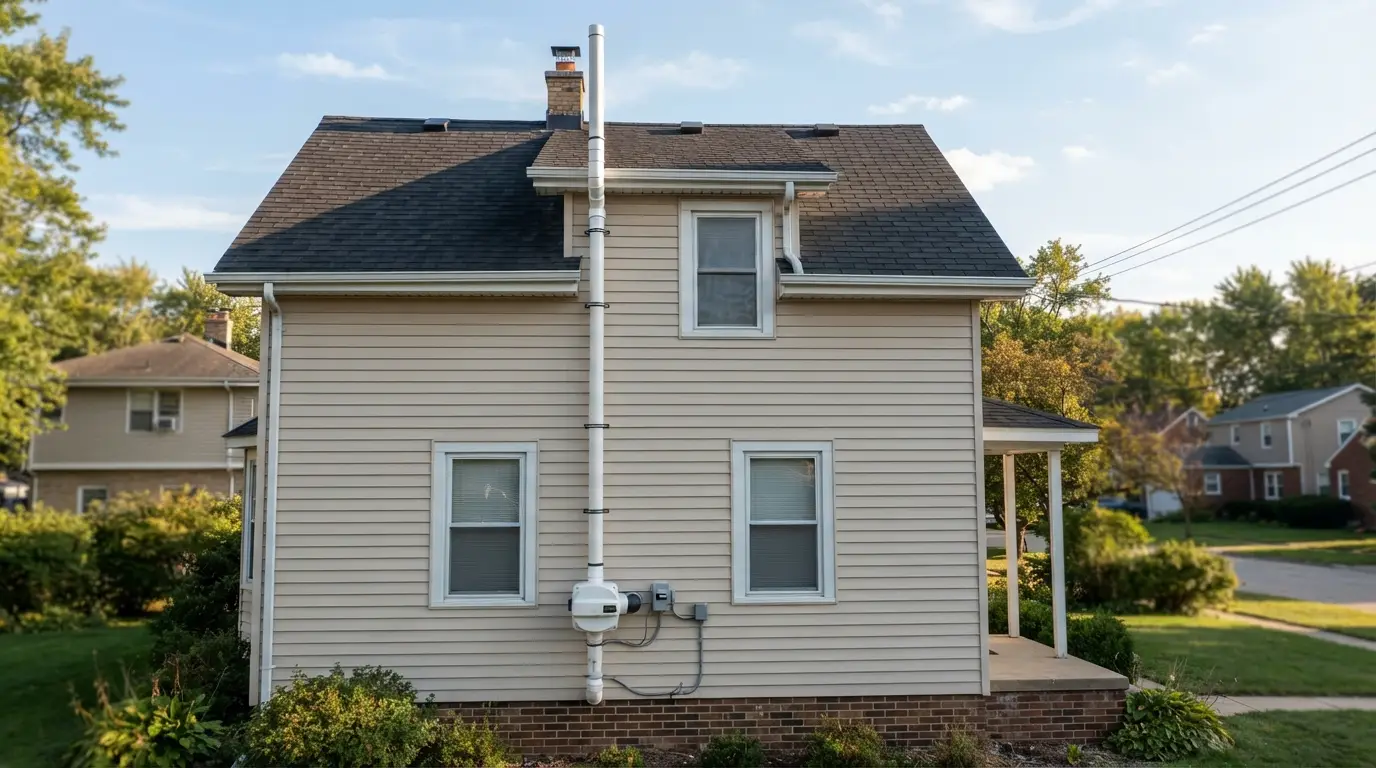
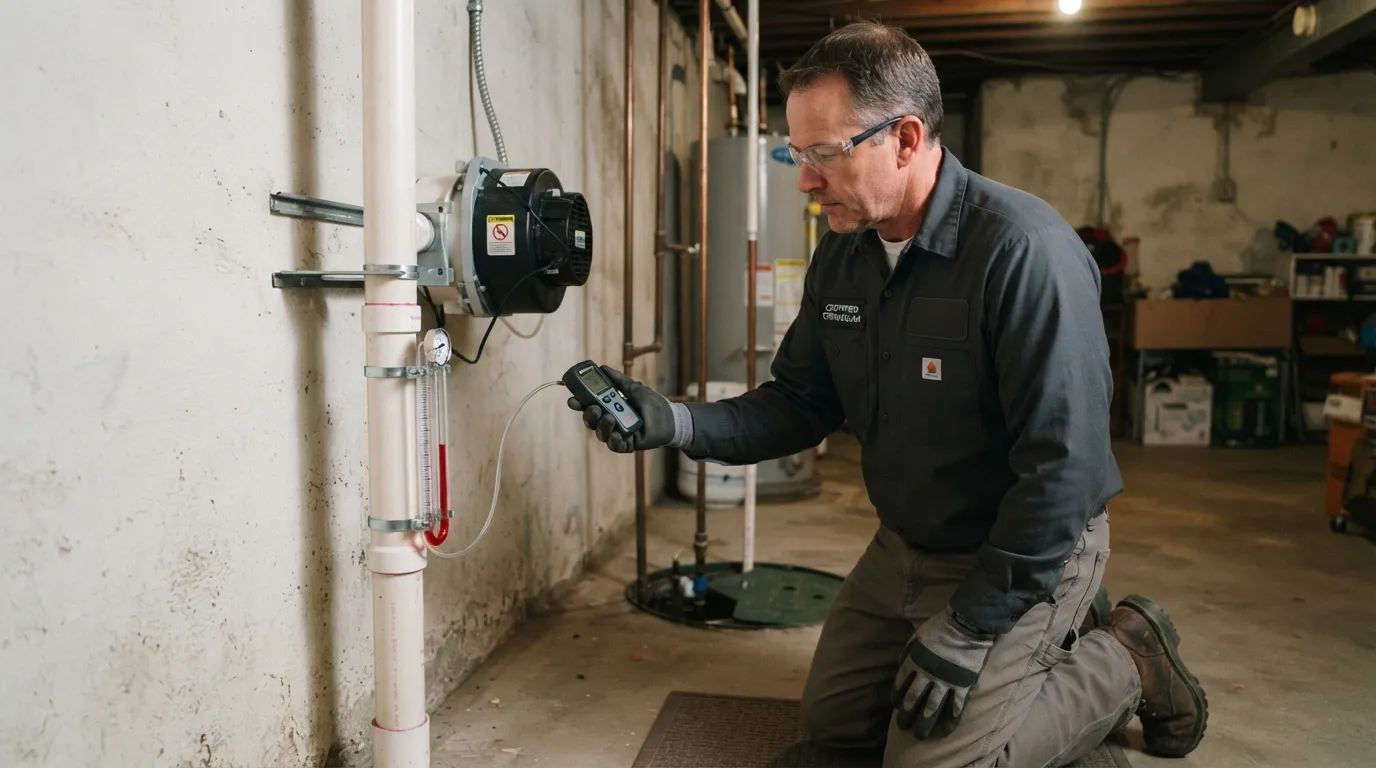
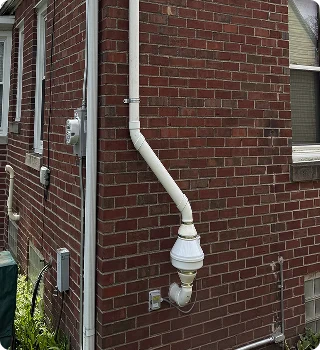
This is the workhorse, and the method EPA describes as the most common for basements and slabs. A hole is cored through the floor, a small pit is dug out below, and a sealed PVC pipe connects it to an inline fan that vents above the roof.
Why it works: the fan makes the soil under your floor lower in pressure than the basement, so soil gas moves toward the pipe instead of into the house. Our guide to how radon mitigation systems work walks through it in detail.
What changes the design: the fill under the slab. Loose gravel lets one suction point cover a big area. Dense clay or no fill may need two points or a stronger fan.
Sump-pit and drain-tile suction
If your basement has a sump pit, it is often connected to a drain tile loop running around the foundation. That loop is a ready-made channel under the slab.
- Sump-pit suction: the pit gets an airtight, removable lid with the pipe attached. Brian uses custom-cut clear Lexan lids so you can still see the pump. The pump stays serviceable.
- Drain-tile suction: the pipe connects to the drain tile itself, sometimes from outside the house.
An open sump is also one of the biggest radon entry points, so sealing it matters even when it is not the suction point. Sump-based systems need care: the lid must stay sealed, and the pump has to keep working. Brian also installs and replaces sump pumps, including battery backups, so the pump and the radon system can be handled by the same contractor.
Sub-membrane depressurization for crawl spaces
A crawl space with a dirt or gravel floor has no slab to pull under. Instead, a heavy plastic membrane is laid over the ground, sealed at the seams and walls, and a suction pipe draws gas from beneath it.
It is more labor than a basement job because the work is done crawling. It is also very effective when the membrane is sealed well. If your crawl space is used for storage, ask about a membrane that can handle foot traffic.
Block-wall suction
Hollow concrete block walls can carry soil gas up through their cores. In some homes, suction is applied to the block cavities, usually alongside sub-slab suction. It requires sealing the top of the wall and any open cores, so it is used only where diagnostics show the walls are a major path.
Passive systems
A passive system is a vent pipe from under the slab to the roof with no fan. It relies on natural draft, which is strongest when the house is warm and the outside is cold. Passive pipes are usually installed during construction as part of radon-resistant new construction (RRNC).
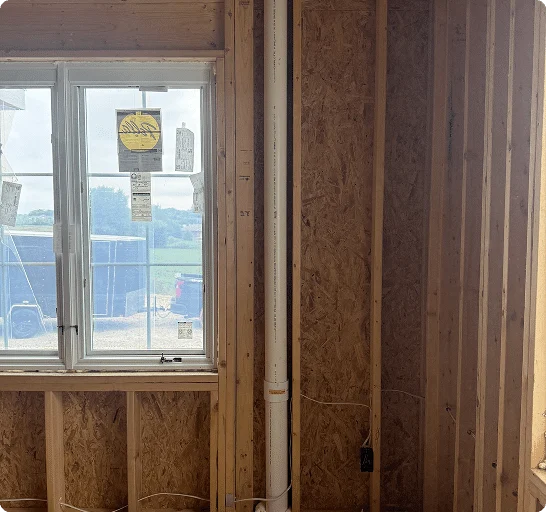
If a passive system is not enough, the fix is usually simple: add a fan. Wisconsin DHS notes that when piping is already in place, a contractor can add a fan to turn a passive system into an active one. See passive vs active radon systems for the full comparison.
Supporting methods: sealing and ventilation
Sealing cracks, joints and openings makes every active system more efficient, because the fan is not pulling basement air back through leaks. On its own, EPA says sealing has not been shown to lower radon significantly or consistently.
Ventilation with a heat recovery ventilator (HRV) or energy recovery ventilator (ERV) dilutes indoor radon with outdoor air. It can help in specific cases but costs more to run and is rarely the first choice for a high basement reading.
Which type fits a Milwaukee-area home?
Across Greater Milwaukee you find almost every foundation on this list: older city homes with full basements, post-war ranches, newer subdivisions with sump pits and drain tile, and additions built on slabs or crawl spaces. The setup we see most is block foundation walls with an older sump and clay or concrete drain tile. That variety is why we do not quote a system type over the phone.
Use this quick decision guide as a starting point:
| If your home has… | Likely system | Watch for |
|---|---|---|
| A full basement with a poured floor | Sub-slab depressurization | Finished areas that limit the pipe route |
| A basement with a sump pit | Sub-slab or sump-pit suction, plus a sealed sump lid | Keeping the pump serviceable |
| A crawl space with a dirt or gravel floor | Sub-membrane depressurization | Storage use, membrane durability |
| A basement plus a crawl space or slab addition | Combined system, 2+ suction points | Tying both into one fan |
| Block foundation walls with open cores | Sub-slab plus block-wall sealing or suction | Open tops of block walls |
| A new build with a passive pipe | Add a fan if a test is high | Confirming the pipe reaches under the slab |
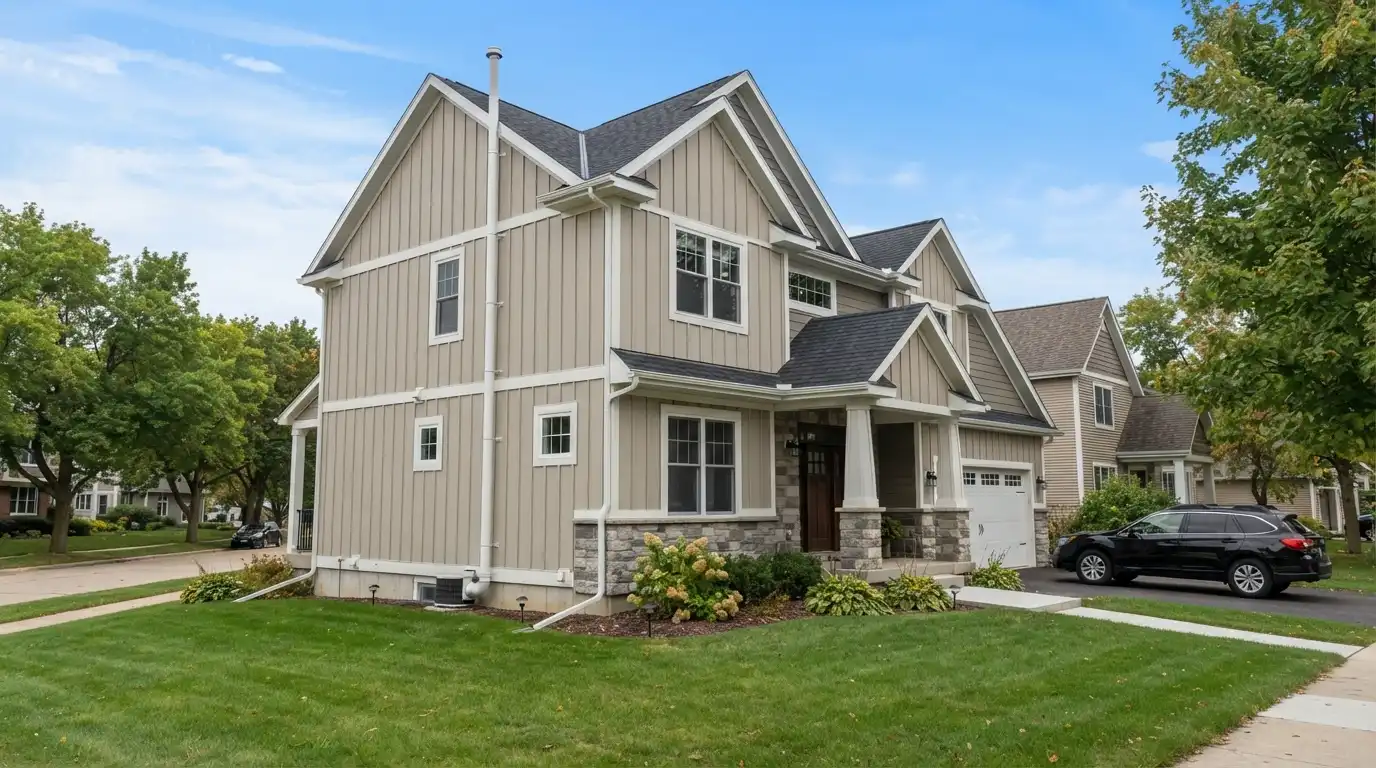
Wisconsin winters also shape the choice of pipe route. Exterior pipes are simpler to install; interior routes through a garage or attic stay warmer and out of sight. Either works when the pipe is sloped to drain condensation and the exhaust ends above the roof edge.
In Brookfield, New Berlin and other Waukesha County suburbs, as well as Milwaukee County, every system starts the same way: a test, a walk-through and diagnostics. See our radon mitigation in Brookfield page for local details.
Matt F. put it well after his install: Brian “went above and beyond to create a unique solution for our unique situation.” Not every home fits the textbook.
If your home uses a private well, radon can also come from water. That is a separate test and a separate fix. We do not test or treat water; we refer you to a water-treatment specialist. See radon in well water.
Not sure which system your home needs?
Brian will look at your foundation, run diagnostics, and recommend the simplest system that will get your level below 4.0 pCi/L. Learn more about our radon mitigation system installation in Milwaukee.
FAQ
What is the best type of radon mitigation system?
For most homes with a basement or slab, active sub-slab depressurization is the best type of radon mitigation system. EPA describes it as the most common method, and it reliably lowers radon when designed from on-site diagnostics. Crawl spaces need sub-membrane depressurization instead, and mixed foundations may need a combination.
Is a 3 or 4 inch pipe better for radon mitigation?
Neither is better in every home. A 4-inch pipe moves more air with less resistance, which helps when the soil under the slab is open and lets a lot of air through. A 3-inch pipe can be enough where airflow is low and is easier to route. Diagnostics during the visit decide the size, and the fan is matched to it.
What is the average lifespan of a radon mitigation system?
The pipe, seals and suction point usually last for decades if they are not damaged. The fan is the part that wears out, because it runs 24/7. Plan on replacing the fan at some point and retesting every 2 years, as EPA recommends. In Brian’s experience, fans typically last 7 to 12 years.
Can one house need more than one type of system?
Yes. A home with a basement and a crawl-space addition, for example, may need sub-slab suction under the basement floor and a sealed membrane in the crawl space, both connected to one fan. Diagnostics show whether one suction point can reach the whole footprint.