

Quick answer: Radon testing cost depends on the type of test. DIY kits are the cheapest, and Wisconsin’s 17 Radon Information Centers offer low-cost kits. A professional test in Milwaukee costs more but uses a professional continuous monitor for at least 48 hours, with results right after. Our standard home radon test is $150, written report included.
Key takeaways
- Three price tiers: low-cost DIY kits, retail kits with lab fees, and professional continuous monitor tests.
- Watch for add-ons on DIY kits: lab fees and postage aren’t always included.
- Professional testing costs more because you’re paying for calibrated equipment, placement, data and an explanation.
- Wisconsin residents can get low-cost kits through DHS Radon Information Centers.
- About 1 in 10 Wisconsin homes has high radon (DHS), so the test is the cheapest part of the decision.
In this guide
- What you’re paying for in a radon test
- Radon test cost by type
- What affects the cost of a professional radon test
- DIY kit or professional test: which is worth it?
- Hidden costs of a cheap test
- Radon testing cost vs. mitigation cost
- Low-cost radon kits in Wisconsin
- FAQ
What you’re paying for in a radon test
Every radon test has the same goal: an accurate average radon level, in pCi/L, for the lowest livable level of your home. What changes with price is who does the work and how much information you get back.
- With a DIY kit, you do the placement, timing and mailing. The kit price may or may not include lab analysis.
- With a professional test, you pay for a certified tester, a calibrated electronic monitor, correct placement, hourly data and someone to explain the result.
Neither is “wrong.” They fit different situations.
Radon test cost by type
We don’t publish other companies’ prices or guess at national averages, because they change and vary by store and lab. Here’s how the options compare on what matters:
| Test type | Relative cost | What’s included | Extra costs to check | Best for |
|---|---|---|---|---|
| Low-cost kit from a Wisconsin Radon Information Center | Lowest | Short-term test kit; ask the center what the price covers | Lab analysis and postage, if not included | A first screening on a budget |
| Retail short-term kit (charcoal) | Low | Test device and instructions | Lab fee and postage on some kits | Quick DIY screening |
| Retail long-term kit (alpha track) | Low to moderate | Device for 90+ days | Lab fee and postage on some kits | Year-round average |
| Consumer digital radon monitor | Moderate (one-time purchase) | Ongoing readings on the device | None after purchase | Ongoing tracking between tests |
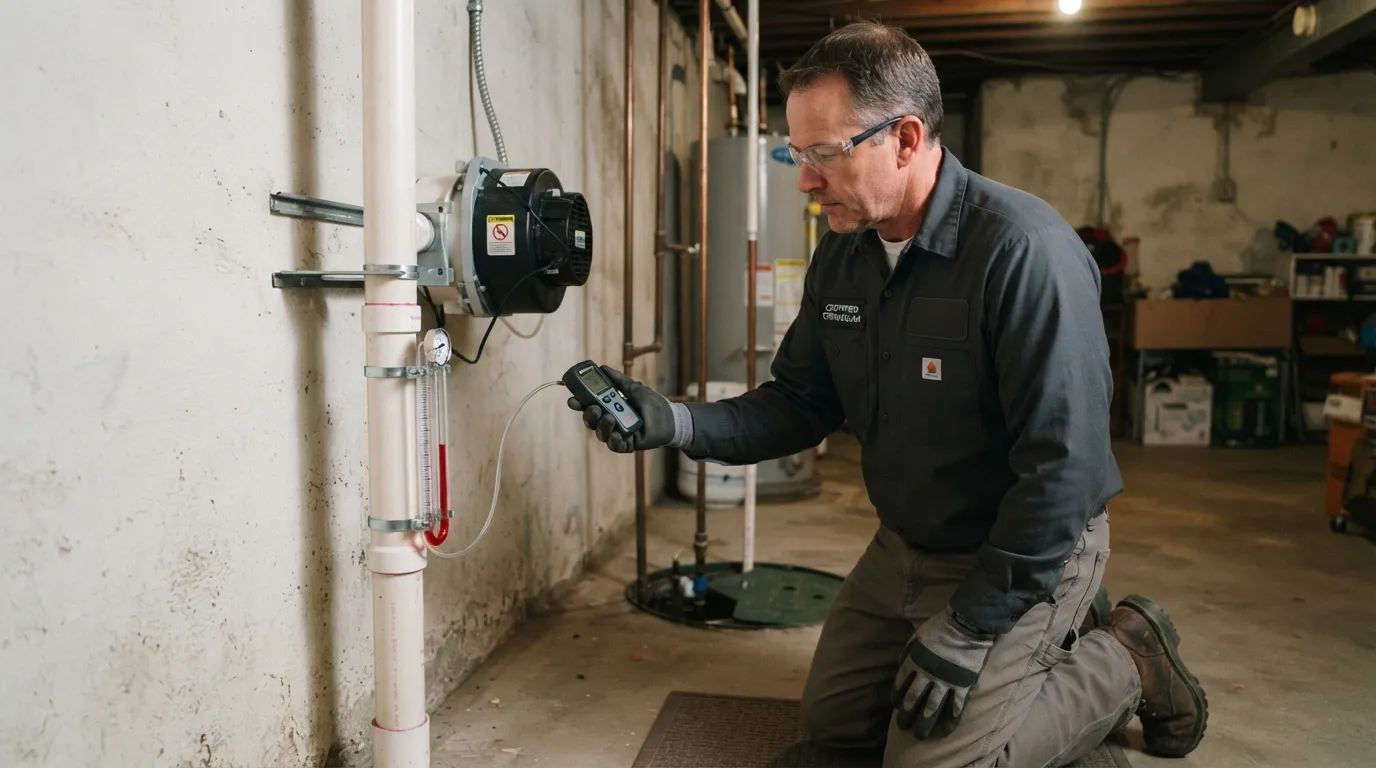
| Professional continuous monitor test (Milwaukee Radon Mitigation) | $150 (standard home test) | NRPP-certified placement and pickup, Ecosense RadonEye Pro monitor, 48+ hour test, results right after, written report | Long-term (90+ day) tests and other options quoted per job | Real estate, borderline results, post-mitigation checks |
Tip: before you buy a retail kit, read the box for “lab fee included.” A kit that looks cheap can cost more once the lab fee is added.
What affects the cost of a professional radon test
Professional pricing varies from company to company. These are the factors that usually move the number:
- Number of test locations. A home with a basement and a separate slab addition may need two monitors.
- Home size and foundation types. More foundation types can mean more test points.
- Real estate timelines. Tight inspection windows may need priority scheduling.
- Follow-up or post-mitigation tests. Some companies bundle these with a system install.
- Commercial or multi-unit buildings. Larger buildings need more devices and a different protocol.
Our standard home test is $150 with a written report included. Long-term tests and anything beyond a standard home test are quoted per job — request a free quote.
DIY kit or professional test: which is worth it?
| Your situation | Best value |
|---|---|
| You’ve never tested and there’s no deadline | A low-cost DIY kit is a sensible first step |
| You’re buying or selling a home | Professional test: fixed timeline, hourly data, a report both sides can review |
| A DIY kit came back near 4.0 pCi/L | Professional or long-term follow-up test to confirm before spending on a system |
| You just had a mitigation system installed | Professional test to confirm the reduction (included with every system we install) |
| You run a daycare, rental or business | Professional testing; Wisconsin child care providers must test under the DCF rule |
| You want to track levels over time | A consumer digital monitor between periodic professional tests |
The honest answer: for a first screening, a DIY kit is often enough. When a decision or a deadline depends on the result, a professional test is worth the higher cost.
Hidden costs of a cheap test
A test that’s done wrong isn’t cheap. It just costs you later. Watch for:
- Lab fees and postage not included in the box price.
- Late mailing. Charcoal kits lose accuracy if they sit before reaching the lab, which can mean buying another kit.
- Bad placement or open windows, which can produce a falsely low result and false comfort.
- Retesting a borderline result, which doubles the cost of a test that wasn’t conclusive.
- Delays in a home sale while waiting on mail-in results.
None of this is a reason to skip DIY testing. It’s a reason to follow the instructions carefully. For timing details, see how long a radon test takes.
Radon testing cost vs. mitigation cost
Testing is the small, first cost. If your result is 4.0 pCi/L or higher, EPA recommends a mitigation system, which is a bigger decision with its own cost factors: foundation type, number of suction points, fan location, pipe routing and finish work.
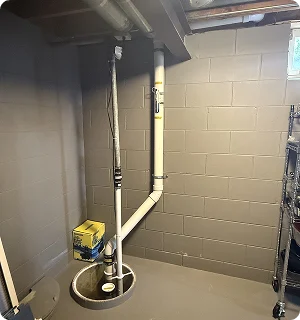
We break those factors down in our radon mitigation cost guide. If you want a firm number for your home, a free quote is the quickest way to get one. As one customer, Pam, wrote: “The estimate was fair and that is what we paid.”
Learn more about how we test on our radon testing in Milwaukee page.
Low-cost radon kits in Wisconsin
Wisconsin makes affordable testing easy. The Wisconsin Department of Health Services supports 17 Radon Information Centers around the state that offer low-cost test kits and answer radon questions. Find the center for your county on the Wisconsin DHS radon page.
Other Wisconsin points that affect testing cost and timing:
- About 1 in 10 Wisconsin homes has high radon, according to DHS.
- Real estate: testing isn’t required for Wisconsin home sales, but DHS highly recommends it, using a test of at least 48 hours under closed-house conditions (DHS real estate guidance).
- Child care: since March 2023, licensed providers must test and mitigate above 4.0 pCi/L.
- January is National Radon Action Month, a good time to watch for kit promotions and local awareness events.
In Ozaukee County suburbs like Mequon, homeowners often ask whether the drive affects price. Our Mequon, WI radon testing and mitigation page covers local service.
Want a clear price for a professional test?
Tell us about your home and timeline, and Brian Thompson, an NRPP-certified radon measurement and mitigation professional, will give you a straightforward price, usually the same day or within 24 hours.
FAQ
How much does a radon test cost?
It depends on the test. Low-cost DIY kits are available through Wisconsin’s 17 Radon Information Centers, and retail kits cost a bit more once lab fees are added. A professional continuous monitor test costs more but includes certified placement, at least 48 hours of monitoring and results right after. Our standard home test is $150, written report included.
What percent of houses have high radon?
In Wisconsin, about 1 in 10 homes has radon at or above EPA’s 4.0 pCi/L action level, according to the Wisconsin Department of Health Services. That means most homes test below the action level, but there’s no way to tell which group yours is in without testing.
Where can I get a free or low-cost radon test kit in Wisconsin?
Wisconsin’s 17 Radon Information Centers, supported by the Department of Health Services, offer low-cost radon test kits and advice. Find your local center on the DHS radon page. It’s also worth asking your local health department about free kit events, especially in January, National Radon Action Month.
Is a professional radon test worth the extra cost?
It’s worth it when a decision depends on the result: buying or selling a home, confirming a borderline DIY result, or checking a new mitigation system. You get professional equipment, correct placement, a written report and an expert explanation. For a first screening with no deadline, a low-cost kit is a reasonable start.
Sources
- Wisconsin DHS: Radon
- Wisconsin DHS: Radon and Real Estate
- EPA: A Citizen’s Guide to Radon
- EPA: Radon